The Wolf on the Name Tag
一个面向英语学习者的免费 B1 级英语故事,可用 7 种语言在线阅读,也可以在免费的 Storyteller 应用中收听。
At a riverside camping weekend, a first-time camper with a misprinted name tag helps an experienced camper with a hurt wrist put up her tent.
试听结束!在免费的 Storyteller 应用中收听完整故事。 下载应用
音频暂时无法播放。
Wilf stands at the check-in table of the River Weekend and looks at the sticker on his chest. It says WOLF in thick black letters.
威尔夫站在“河畔周末”的签到桌前,低头看着胸前的贴纸。上面用粗黑的字写着“狼”。
"That is not my name," he says.
“这不是我的名字,”他说。
"It's what you wrote on the form," says the girl behind the table.
“这是你在表格上写的呀,”桌子后面的姑娘说。
"I wrote Wilf. W, I, L, F."
“我写的是威尔夫。W、I、L、F。”
"Then someone at the printer thought you were a wolf." She shrugs and hands him a map. "It's only for the weekend. Tents are down by the water."
“那就是印刷厂的人以为你是一匹狼。”她耸耸肩,递给他一张地图。“只是这个周末用用而已。帐篷区在河边。”
Wilf wants to ask for a new sticker, but a line is growing behind him. He picks up his bag and walks down the grass slope toward the river. Three small children run past in yellow jackets. One of them points at his chest and howls. The other two join in.
威尔夫想要一张新贴纸,可身后的队伍越排越长。他拎起包,沿着草坡朝河边走去。三个穿黄色外套的小孩从他身边跑过。其中一个指着他的胸口嚎叫起来,另外两个也跟着嚎了起来。
"Great," Wilf mutters. "A pack."
“太好了,”威尔夫嘀咕道,“一群狼。”
The campsite is long and quiet. Trees stand on one side, and a slow, shallow river runs on the other. Wilf has never camped before. His office team booked this trip, and then four of them cancelled, so he came alone. This morning he watched three videos about tents. He feels ready, in the way a person feels ready before an exam.
营地又长又安静。一侧是树林,另一侧是一条缓缓流淌的浅河。威尔夫从没露营过。这趟行程是公司团队订的,后来有四个人取消了,所以他一个人来了。今天早上他看了三个关于帐篷的视频。他觉得自己准备好了,就像考试前的人觉得自己准备好了一样。
He finds a flat patch of ground under a tall tree and opens the bag. Tent poles spill out onto the grass. They are all the same colour, and there seem to be too many of them.
他在一棵高大的树下找到一块平地,打开了包。帐篷杆哗啦啦地散落在草地上。它们颜色都一样,而且似乎多得过分。
"Which one goes where?" he says to nobody.
“哪根装在哪儿呢?”他对着空气说。
"That depends on what you are building," says a voice nearby.
“那得看你要搭什么,”附近有个声音说。
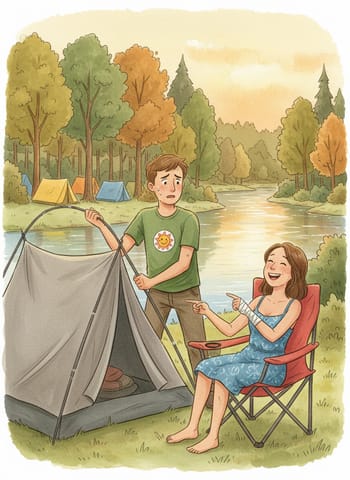
Wilf looks up. A woman sits on a folding chair about ten metres away. A large grey tent lies folded beside her. Her right wrist is wrapped in a white bandage. Her name tag says WANDA, and underneath, in small letters, it says BEGINNER.
威尔夫抬起头。大约十米外,一个女人坐在折叠椅上,身旁放着一顶叠好的灰色大帐篷。她的右手腕缠着白色绷带。她的名牌上写着“旺达”,下面还有一行小字:“新手”。
"You're a beginner too?" he asks, with relief.
“你也是新手?”他松了口气问道。
"No," she says. "That's the printer again. I've camped for twenty years. But I carried a cool box up the hill this morning and my wrist said no."
“不是,”她说,“又是印刷厂搞的鬼。我露营二十年了。可今天早上我扛着冰盒爬坡,手腕就罢工了。”
"Oh. Does it hurt?"
“哦。疼吗?”
"Only when I try to put up a tent." She looks at him and then at his chest. "Hello, Wolf."
“只有我想搭帐篷的时候才疼。”她看看他,又看看他的胸口。“你好,狼。”
"It's Wilf. Please."
“是威尔夫。拜托了。”
"Wilf. I like Wolf better, but I'll try."
“威尔夫。我更喜欢叫你狼,不过我试试看。”
He sits down on the grass near her, partly out of politeness. Mostly his legs are tired. She tells him that she came with friends. They went to the village for supplies and will be gone for hours. Until then, her tent is a big grey heap on the ground.
他在她附近的草地上坐了下来,一半是出于礼貌,主要是因为腿累了。她告诉他,她是和朋友一起来的,他们去村里采购了,要好几个钟头才回来。在那之前,她的帐篷只是地上一大堆灰色的东西。
"I can't tighten the pegs," she says. "I can't hold the poles. I can't even open the zip. Which is embarrassing, because I told everyone I'd camp alone this weekend."
“我拧不紧地钉,”她说,“握不住帐篷杆,连拉链都拉不开。真丢人,因为我跟大家说好了,这个周末我要一个人露营。”
"Is that a good idea with a sore wrist?"
“手腕疼还这样,是个好主意吗?”
"It's a stubborn idea. I'm known for those."
“是个倔主意。我可是出了名的倔。”
Wilf looks at her tent. Then he looks at his own poles, which still lie in a messy pile. A strange thought comes to him. He has watched three videos this morning. She has twenty years of experience, but she has only one working hand.
威尔夫看看她的帐篷,又看看自己那堆乱七八糟的帐篷杆。一个奇怪的念头冒了出来:他今天早上看了三个视频,而她有二十年的经验,却只剩一只手能用。
"I might be able to help you," he says. "I'm not good at much. But I did learn how to put up a tent at breakfast."
“也许我能帮你,”他说,“我没什么特别擅长的。不过我吃早饭的时候确实学过怎么搭帐篷。”
Wanda raises an eyebrow. "From a person?"
旺达挑起一边眉毛。“跟人学的?”
"From a screen."
“跟屏幕学的。”
"Well, that's a start. Show me what you've got."
“嗯,总算是个开头。让我看看你的本事。”
They decide to build her tent first, because it is bigger and she can guide him. Wilf carries the grey heap to a flat spot near the water. Wanda follows with her chair and sits down at the edge of the ground sheet.
他们决定先搭她的帐篷,因为它更大,而且她可以在旁边指点他。威尔夫把那堆灰色的东西搬到河边的一块平地上。旺达拖着椅子跟过来,在地布边上坐下。
"Lay it flat," she says. "Corners first. Don't pull too hard."
“先铺平,”她说,“先压四个角。别拉得太狠。”
He does as he is told. The fabric flaps open, and he chases it twice. Wanda laughs, and the sound is surprisingly warm. Then she shows him how to thread the long pole through the sleeve. He must push from the middle so the cloth does not catch.
他照她说的做。帐篷布被风吹得鼓起来,他追着它跑了两趟。旺达笑了,笑声出乎意料地温暖。接着她教他怎么把长杆穿过杆套。他必须从中间往前推,布才不会卡住。
"Now the second pole," she says. "Cross them at the top. Yes, like that. You've got it."
“现在是第二根杆,”她说,“在顶上交叉。对,就是这样。你学会了。”
"Is it supposed to lean this much?"
“它应该歪得这么厉害吗?”
"If it leans, we fix it. Tents are very forgiving, if you are patient."
“歪了就调一调。帐篷很宽容的,只要你有耐心。”
The tent rises slowly, like a tired animal getting to its feet. Wilf hammers the pegs with a rubber mallet. Wanda points at the places where the ground is soft. When a peg bends, she shows him how to pull it out. He tries again at a sharper angle.
帐篷慢慢立了起来,像一头疲惫的动物站起身来。威尔夫用橡胶锤敲打地钉。旺达指出哪些地方的土比较软。有一根钉子弯了,她教他怎么把它拔出来。他换了个更陡的角度再试一次。
"My video didn't say that," Wilf admits.
“我的视频里没讲这个,”威尔夫承认道。
"Videos never do. The ground is always a surprise."
“视频从来不讲。地面总是会给你惊喜。”
By the time the grey tent stands straight, the sun is low over the river. The children have gone to eat. Wilf steps back and wipes his hands on his trousers. He feels strangely proud, as if he has built a house.
等灰色帐篷笔直立好时,太阳已经低低地挂在河面上。孩子们都去吃饭了。威尔夫退后一步,在裤子上擦了擦手。他有种奇怪的自豪感,好像盖了一座房子。
"It's a good tent," Wanda says. "Better than I would have done with two hands."
“这顶帐篷不错,”旺达说,“比我用两只手搭的还好。”
"That's not true."
“才不是。”
"It's a little true." She smiles. "Now do yours. I'll sit here and shout at you."
“有一点是真的。”她笑了。“现在搭你的吧。我坐在这儿冲你吆喝。”
It takes him half an hour. She tells him to face his tent door toward the trees. She tells him to keep his shoes outside and never, ever to put the stove inside. Then he drops the pole bag into the river. She laughs so hard that she has to hold her wrist.
他花了半个钟头。她叫他把帐篷门朝向树林。她叫他把鞋子放在外面,而且无论如何,绝对、绝对不能把炉子放进帐篷里。然后他把杆袋掉进了河里。她笑得太厉害,不得不用手托着手腕。
"I'm sorry," she says between breaths. "It's not funny."
“对不起,”她喘着气说,“这不好笑。”
"It's a little funny."
“有一点好笑。”
"It's a lot funny."
“非常好笑。”
He fishes the bag out with a stick and shakes it dry. She makes a small noise of approval, like a teacher with a good student.
他用一根树枝把袋子捞上来,甩干了水。她发出一声小小的赞许,像老师看到好学生一样。
When both tents stand side by side, Wanda stays in her chair a moment longer. Then she opens a small tin from her bag and holds it out. Inside are two thick biscuits, wrapped in paper.
两顶帐篷并排立好后,旺达在椅子上又坐了一会儿。然后她从包里拿出一个小铁盒,递了过来。里面是两块厚厚的饼干,用纸包着。
"My emergency supply," she says. "I only share it with people who rescue me."
“我的应急储备,”她说,“我只和救过我的人分享。”
"I didn't rescue you. I lifted some poles."
“我没救你。我只是搬了几根杆子。”
"You gave me back my weekend. That counts."
“你把我的周末还给了我。这就算数。”
They eat the biscuits by the water. The river moves slowly past, brown and shining, and a pair of ducks drifts by without a sound. For a while, neither of them says anything, and it feels completely comfortable.
他们在河边吃着饼干。河水缓缓流过,棕色的水面闪着光,一对鸭子悄无声息地漂过。有一阵子,两个人谁也没说话,却一点也不觉得尴尬。
Then Wanda takes a marker from her pocket. She peels the sticker off her shirt and turns it over. On the back, she writes in big letters. WANDA. NOT A BEGINNER. She presses it carefully back onto her chest.
然后旺达从口袋里掏出一支马克笔。她把胸前的贴纸撕下来,翻到背面,用大大的字写道:“旺达。不是新手。”她小心地把它按回胸口。
"Give me yours," she says.
“把你的给我,”她说。
Wilf peels off his sticker and hands it to her. She writes under the word WOLF, stops, crosses it out, and writes again. She hands it back.
威尔夫撕下自己的贴纸,递给她。她在“狼”字下面写了几个字,停住,划掉,又重新写了一遍。她把贴纸递了回来。
He reads it aloud. "WILF. NOT A WOLF."
他大声念了出来。“威尔夫。不是狼。”
"Now everyone will know."
“这下大家都知道了。”
"I think I preferred the old one," he says. "The children seemed to like it."
“我想我还是更喜欢原来那张,”他说,“孩子们好像挺喜欢的。”
As if they heard him, three small voices rise from the hill behind the trees. A long, wobbly howl rolls across the campsite and out over the river.
仿佛听到了他的话,树林后面的山坡上响起三个细小的声音。一声长长的、颤颤悠悠的嚎叫滚过营地,飘向河面。
Wilf looks at Wanda. Wanda looks at Wilf.
威尔夫看看旺达。旺达看看威尔夫。
Then he stands, lifts his chin toward the sky, and howls back.
然后他站起身,把下巴朝天空扬起,嚎叫着回应了他们。