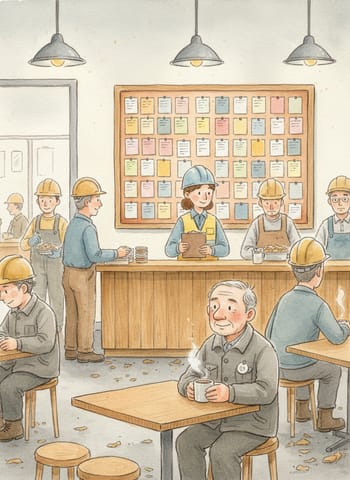
The canteen on the building site is a long metal box with a steel counter at one end and forty plastic chairs at the other. Neil starts work there at half past six on a Monday, wearing boots that are still too clean. He is the new site clerk, and his first job, according to the manager, is to learn how the place breathes.
工地上的食堂是一个长长的铁皮盒子,一头是钢制的柜台,另一头摆着四十把塑料椅。尼尔周一早上六点半来这里上班,脚上的靴子还太干净。他是新来的工地文员,据经理说,他的第一项工作是弄明白这个地方是怎么“呼吸”的。
"Start with the canteen," the manager says. "If you understand the canteen, you understand the site."
“从食堂开始,”经理说,“你懂了食堂,就懂了工地。”
Adel, who runs the counter, hands him a mug of black coffee before he has even asked. She is small and quick, with a pencil behind one ear and a laminated menu she has not changed in years. She watches Neil look around the room, and then she points at the wall.
负责柜台的阿黛尔,不等他开口就递来一杯黑咖啡。她个子小,动作快,耳朵后面夹着一支铅笔,手里的塑封菜单好几年没换过。她看着尼尔打量房间,然后指了指墙。
"Tell me what you see," she says.
“告诉我你看到了什么,”她说。
Neil sees a notice about hard hats, a calendar from a concrete supplier, and a pinboard full of paper. On the pinboard hangs a small plastic badge on a string. It says FIRST DAY in capital letters, with a blank space where a name should be.
尼尔看到一张关于安全帽的通知,一份混凝土供应商送的日历,还有一块贴满纸张的布告板。布告板上挂着一块系着绳子的小塑料胸牌。上面用大写字母写着“第一天”,本该写名字的地方是空白的。
"It's a badge for new workers," he says. "They give them out on the first day, so everyone knows to be patient."
“这是给新工人的牌子,”他说,“第一天发给他们,让大家知道要有耐心。”
"Correct," Adel says. "Now count how many new workers have started here this month."
“没错,”阿黛尔说,“现在数一数,这个月有多少新工人来上班。”
He asks the manager's assistant, who checks a spreadsheet. The answer comes back in ten minutes. No one has joined the site since the start of the month, and the last new face arrived seven weeks ago. Neil returns to the counter with a puzzled expression.
他去问经理的助理,助理查了一张电子表格。十分钟后答案回来了。这个月月初以来没有人加入工地,上一张新面孔是七周前来的。尼尔带着困惑的表情回到柜台。
"So why does the badge leave its hook every single day?" Adel asks, pleased. "Look at it at lunchtime. Look at it at the end of the day. You will see."
“那为什么这块牌子每天都会离开它的挂钩?”阿黛尔问,一脸得意。“中午的时候看看它。下班的时候再看看。你就明白了。”
That is the puzzle. Adel has been watching it for a month, and she has failed to solve it. She is always behind the counter when the interesting part happens. Neil, who spends his days between the office and the canteen, is the first person with the freedom to follow it.
这就是那个谜。阿黛尔已经观察了一个月,却始终没能解开。有趣的那一幕发生时,她总是在柜台后面。而尼尔白天在办公室和食堂之间来回,是第一个有自由去追踪它的人。
At noon the canteen fills with the noise of boots and cutlery. Neil sits at a corner table with a notebook and writes the first clue. The badge is not on its hook. It was taken at some point during the morning, and it has not come back yet.
中午,食堂里充满了靴子声和刀叉声。尼尔坐在角落的桌子旁,拿着笔记本写下第一条线索。牌子不在挂钩上。上午某个时候它被拿走了,到现在还没回来。
At twelve fifteen a tall man in a spotless yellow vest walks to the counter. He wears the badge around his neck, and he does not seem to notice that the men at the next table are smiling at him. He takes his tray, receives a bigger portion of stew than anybody else, and sits alone by the window. Neil writes the second clue. Everyone is being gentle with him.
十二点一刻,一个穿着一尘不染的黄色背心的高个男人走到柜台前。他脖子上戴着那块牌子,似乎没注意到邻桌的人在对他微笑。他端起托盘,得到的炖菜比任何人的都多,然后独自坐在窗边。尼尔写下第二条线索。每个人对他都很温和。
The cook who ladles the stew does it without a word. A plasterer slides a free piece of cake onto the man's tray as he passes. A crane operator nods at him and says, "Good to have you, mate." It is the voice people use for a nervous child at school.
给他盛炖菜的厨师一言不发。一个抹灰工在他经过时,把一块免费的蛋糕滑到他的托盘上。一个吊车司机朝他点点头,说:“欢迎你来,伙计。”那是人们对学校里紧张的孩子说话的语气。
The tall man looks embarrassed, but he says thank you and keeps eating. Neil writes the third clue. The man does not just wear the badge. He accepts every kindness it earns, as though he were afraid of insulting the site by refusing.
高个男人看上去有些尴尬,但他道了谢,继续吃饭。尼尔写下第三条线索。这个男人不只是戴着那块牌子。他接受了它带来的每一份善意,仿佛怕拒绝了会冒犯整个工地。
At one o'clock the man stands, returns his tray, and hangs the badge on its hook. Then he walks out through the door that leads to the scaffolding. Neil closes his notebook and thinks. The man is not new. The cook ladles his stew the same way each day, which means he is a regular. The men tease him in a friendly way, which means they know him. Yet the badge still says first day.
一点钟,男人站起来,归还托盘,把牌子挂回挂钩。然后他从通向脚手架的那扇门走了出去。尼尔合上笔记本,思索起来。这个男人并不是新人。厨师每天都用同样的方式给他盛炖菜,这意味着他是常客。工人们友善地逗他,这意味着他们认识他。可牌子上依然写着“第一天”。
He walks back to the counter, where Adel is wiping a tray.
他走回柜台,阿黛尔正在擦一个托盘。
"Three clues," he says. "He gets extra food. He gets extra kindness. And he never looks surprised by either. This is not his first day. It might be his thirtieth."
“三条线索,”他说,“他多得一份饭。他多得一份善意。而且他对这两样都毫不意外。今天不是他的第一天。也许是第三十天。”
"That is what I thought," Adel says, "but it doesn't explain why he wears it."
“我也是这么想的,”阿黛尔说,“可这解释不了他为什么要戴。”
"No," Neil agrees. "But I think I know who can explain it."
“是解释不了,”尼尔同意,“不过我想我知道谁能解释。”
The next morning Neil waits at the gate at ten to six. The tall man arrives first, as always, carrying a flask and a bag of tools. Neil greets him and shows him his own clerk's badge. Then he asks, as politely as he can, why the man wears a first day badge after a month of work.
第二天早上,尼尔五点五十分等在大门口。高个男人像往常一样第一个到,带着一只水壶和一袋工具。尼尔向他打招呼,并给他看自己文员的工牌。然后他尽可能礼貌地问,这个人干了一个月活,为什么还戴着“第一天”的牌子。
The man stops walking. For a moment he looks like someone who has been caught with his hand in a jar. Then he lets out a long breath.
男人停住了脚步。有那么一会儿,他像是被人抓到手伸在罐子里的人。接着他长长地呼了一口气。
"On my first day, the office gave me a temporary badge," he says. "They told me they would print the proper one on Friday. Friday came, and the printer was broken. Then the printer was fixed, and the woman who prints the badges was ill. Then the new vests arrived, and everyone forgot."
“我第一天上班时,办公室给了我一块临时工牌,”他说,“他们说周五会印正式的。周五到了,打印机坏了。后来打印机修好了,印工牌的那位女士又病了。再后来新背心到了,大家就都忘了。”
"So you wear the temporary one," Neil says.
“所以你就戴着临时的,”尼尔说。
"It is the only badge I have. The guard at the gate knows me and checks a list, but the canteen counter serves only people who wear one." The man shrugs, a little sadly. "After the first week I wanted to say something. By then the cook had started giving me extra stew, and the plasterer gave me cake every day. How do you tell people that you have been a fake newcomer for a month?"
“这是我唯一的牌子。门口的保安认识我,会对着名单查,可是食堂柜台只招待戴牌子的人。”男人耸耸肩,有点难过。“第一周之后我想说点什么。可那时候厨师已经开始多给我炖菜,抹灰工每天都给我蛋糕。你要怎么告诉大家,你已经假装了一个月的新人?”
Neil tries very hard not to laugh, and he nearly manages. "You have been getting special treatment for thirty days because of a broken printer?"
尼尔拼命忍着不笑,差点就忍住了。“因为一台坏掉的打印机,你享受了三十天的特殊待遇?”
"The stew is very good," the man says, with dignity.
“炖菜非常好吃,”男人庄重地说。
They walk to the office together. The woman who prints the badges is back at her desk, and she goes pale when Neil explains. She apologises three times and spends ten minutes finding the right file. Then the printer, which has apparently worked for weeks, produces a neat plastic card. It shows the man's photograph and his full name in black letters.
他们一起走去办公室。印工牌的女士已经回到她的办公桌前,听了尼尔的解释,她脸色发白。她连声道歉三次,花了十分钟找到正确的文件。然后那台据说已经修好几个星期的打印机,吐出了一张整洁的塑料卡片。上面是男人的照片,和用黑字印的全名。
At lunchtime Neil sits in his corner again with a mug of coffee. He watches the tall man enter the canteen wearing his new badge, and he sees the room slowly notice the change. The cook looks twice and, with a straight face, gives him a normal portion of stew. The plasterer keeps the cake for himself. The crane operator says only, "Afternoon," as though the man has always been there.
午饭时间,尼尔又坐回他的角落,端着一杯咖啡。他看着高个男人戴着新工牌走进食堂,看着整个房间渐渐注意到这一变化。厨师看了两眼,板着脸给他盛了一份正常分量的炖菜。抹灰工把蛋糕留给了自己。吊车司机只说了一句:“下午好,”仿佛这个男人一直都在这里。
The man collects his tray and stands for a moment, looking at the room. Then he walks to the table by the window, and for the first time in a month he sits with other people. The plasterer pulls out a chair for him without being asked.
男人端着托盘,站了一会儿,看着房间。然后他走向窗边的那张桌子,一个月来第一次,和其他人坐在一起。抹灰工没等他开口,就为他拉出一把椅子。
Adel comes out from behind the counter and stands next to Neil. She holds the old FIRST DAY badge in her hand. She turns it over twice, and then she hangs it back on the pinboard, because someone, someday, will need it.
阿黛尔从柜台后走出来,站在尼尔身旁。她手里拿着那块旧的“第一天”牌子。她把它翻来覆去看了两遍,然后把它挂回布告板,因为总有一天,会有人需要它。
The sun comes through the dirty window and falls across the tables. The stew steams in forty bowls. At the end of the long room, a man in a yellow vest laughs at something, and nobody turns to look.
阳光穿过脏兮兮的窗户,洒在桌子上。四十只碗里的炖菜冒着热气。长长房间的尽头,一个穿黄背心的男人被什么逗得笑了起来,没有人转头去看。