Every afternoon at four, Pria walks to the post box. It stands by the village well. She carries a bag and a small key. She is fifteen, and she is the village mail collector. Nobody else wants the job.
每天下午四点,普丽娅都会走到邮筒那里。邮筒立在村里的水井边。她带着一只袋子和一把小钥匙。她十五岁,是村里的收信员。没有别人想干这份差事。
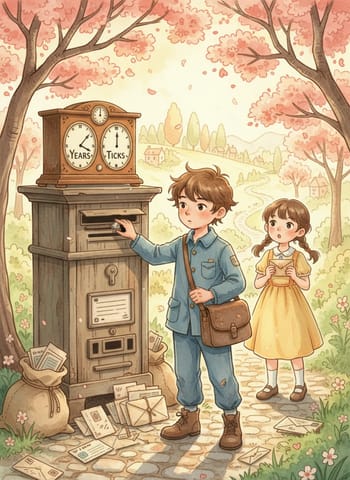
The post box is old and green. A chess clock sits on top of it. It has two faces and two big buttons. It is tied to the lid with wire.
邮筒又旧又绿。顶上放着一只国际象棋计时钟。它有两个钟面和两个大按钮,用铁丝拴在筒盖上。
Every day, the same thing happens. Pria opens the box with her key. She empties the letters into her bag. Then she presses the button on the right side of the clock.
每天都是同样的事。普丽娅用钥匙打开邮筒,把信倒进袋子。然后她按下钟右边的那个按钮。
Click.
咔嗒。
Nobody tells her why she does this. Pria does not know either. The last collector told her, "Always press the button. Never ask." Then he moved to the city.
没有人告诉她为什么要这样做。普丽娅自己也不知道。上一任收信员对她说:“一定要按按钮,别问为什么。”然后他搬去了城里。
So Pria presses the button. For three years, she does not ask.
所以普丽娅就按按钮。三年来,她从来没有问过。
On a bright Tuesday, a girl stops at the well. She has a suitcase with a broken wheel. She watches Pria for a while.
一个晴朗的星期二,一个女孩在井边停了下来。她拖着一只坏了轮子的行李箱。她看了普丽娅好一会儿。
"Hello," says the girl. "I am Neha. We just moved here."
“你好,”女孩说,“我叫内哈。我们刚搬来。”
"I am Pria," says Pria. "Welcome."
“我叫普丽娅,”普丽娅说,“欢迎你。”
Neha points at the post box. "Why does the box have a chess clock?"
内哈指着邮筒。“这个邮筒上为什么有个象棋计时钟?”
Pria opens her mouth. Then she closes it. Nobody ever asks her this. The question hangs in the air.
普丽娅张开嘴,又闭上了。从来没有人问过她这个。这个问题悬在空中。
"I do not know," she says.
“我不知道,”她说。
"But you press the button."
“可你还在按按钮。”
"Yes. Every day."
“对。每天都按。”
"For how long?"
“按了多久了?”
"Three years."
“三年。”
Neha looks at her with wide eyes. "And you never asked?"
内哈睁大了眼睛看着她。“你从来没问过?”
"The man who had the job said not to ask."
“以前干这份活的人说,别问。”
"That is a strange rule," Neha says. "A good rule gives a reason."
“这规矩真怪,”内哈说,“好规矩应该给个理由。”
Pria laughs. It is a small, surprised laugh. For three years, she waits for someone to say this.
普丽娅笑了。那是一声小小的、带着惊讶的笑。三年了,她一直在等有人说出这句话。
"Come with me," says Pria. "I finish my round at five. We can look for the answer."
“跟我来,”普丽娅说,“我五点收完信。我们可以去找答案。”
Neha leaves her suitcase by the well. They walk together through the village. Pria stops at every gate and every door. She knows each family by their letters. There are blue ones, thin ones, and very fat ones with string.
内哈把行李箱留在井边。她们一起穿过村子。普丽娅在每一扇门、每一道篱笆门前停下。她凭信件认得每一户人家。有蓝色的信,有薄薄的信,还有用绳子捆着的、鼓鼓囊囊的信。
At the last house, a woman waits at the door. She is the village potter. Her hands are always gray with clay. Today, she holds a long white envelope.
最后一户人家,一位女士在门口等着。她是村里的陶工。她的双手总是沾着灰色的陶土。今天,她拿着一只白色的长信封。
"One for the city, please," she says.
“麻烦寄一封去城里,”她说。
Pria takes it. On the front is a small drawing. It shows a horse on a square board.
普丽娅接过来。信封正面有一幅小小的画,画的是棋盘上的一匹马。
Neha leans closer. "That is a chess piece."
内哈凑近看。“那是一枚棋子。”
"A knight," says the potter. She looks surprised. "You know chess?"
“是骑士,”陶工说。她显得很惊讶。“你懂象棋?”
"A little," Neha says. "Do you play?"
“懂一点,”内哈说,“你下棋吗?”
"I play one game. It is three years old now." The potter smiles. "My friend lives far away, in another country. We play by post."
“我只下一盘,已经下了三年了。”陶工笑了。“我的朋友住得很远,在另一个国家。我们用邮寄来下。”
Pria stares at her. "By post?"
普丽娅盯着她。“用邮寄?”
"Each of us sends one move at a time, in a letter. I write mine, and it goes across the sea. Then I wait for his."
“我们各自把每一步写在信里寄出去。我写好我的一步,信就漂洋过海。然后我等他的。”
"That sounds slow," says Neha.
“听起来好慢,”内哈说。
"It is very slow," the potter agrees. "That is why I like it."
“非常慢,”陶工同意道,“所以我才喜欢。”
Pria cannot stop herself. "And the clock on the post box?"
普丽娅忍不住了。“那邮筒上的钟呢?”
The potter's face changes. She looks at Pria for a long moment, and then she laughs.
陶工的神情变了。她看了普丽娅很久,然后笑了起来。
"Oh, dear. Nobody told you?"
“哎呀,天哪。没人告诉过你吗?”
"Nobody told me anything," Pria says.
“没有人告诉过我任何事,”普丽娅说。
The potter wipes her hands on her dress. She sits down on her step and pats the stone beside her. The girls sit.
陶工在裙子上擦了擦手。她在台阶上坐下,拍了拍身边的石头。两个女孩坐了下来。
"Years ago, my friend and I made a rule," she says. "A letter takes many days to cross the sea. That time is not fair for either of us. So the clock must count only the time a person thinks."
“很多年前,我和朋友定了一条规矩,”她说,“一封信要好多天才能漂洋过海。这段时间对我们俩都不公平。所以钟只能计算一个人思考的时间。”
"So how does the clock work?" asks Neha.
“那钟是怎么走的?”内哈问。
"When my letter goes into the bag, you press the right button. That stops my side. It starts his side. When his letter comes, you press the left button. That stops his side. It starts mine."
“我的信一放进袋子,你就按右边的按钮。这样我这一边就停了,他那一边就开始计时。他的信一到,你就按左边的按钮。这样他那一边停了,我这一边开始。”
Pria thinks about the three years of clicks. "I only press the right one," she says. "Every day."
普丽娅想着这三年来的咔嗒声。“我只按过右边那个,”她说,“每天都是。”
The potter's face goes soft. "Oh, Pria. The last collector knew the rule. He moved away before he told you about the left button."
陶工的脸变得柔和了。“哦,普丽娅。上一任收信员知道规矩。他搬走之前,没来得及告诉你左边按钮的事。”
"So for three years, his side runs and runs?"
“那这三年来,他那一边的钟一直在走?”
"Yes, for three years." The potter laughs again, kindly now. "My poor friend thinks very slowly."
“是啊,整整三年。”陶工又笑了,这次笑得很和善。“我可怜的朋友,想得可真慢。”
Neha puts both hands over her mouth. Pria tries not to smile, but she cannot stop.
内哈用双手捂住嘴。普丽娅想忍住不笑,可是怎么也忍不住。
"I am so sorry," Pria says.
“我真的很抱歉,”普丽娅说。
"Do not be. I like it. Last month, my friend wrote to me. He said, 'Your clock says I thought for three years. I am proud of myself.'"
“别这样。我很喜欢。上个月,我的朋友给我写信。他说:‘你的钟显示我想了三年。我为自己感到骄傲。’”
Now all three of them laugh together. The sound rolls down the village road. It passes the well and the green post box.
这下,三个人一起笑了起来。笑声沿着村路滚过去,经过水井,经过绿色的邮筒。
At five, Pria and Neha walk back to the well. The clock is still on top of the box. The left face shows a small number. The right shows a bigger one.
五点钟,普丽娅和内哈走回水井边。钟还在邮筒顶上。左边的钟面显示一个小数字,右边的显示着一个大得多的数字。
"What do you do now?" asks Neha.
“你现在怎么办?”内哈问。
Pria thinks. "Today the potter's letter went in. So I press the right button. When her friend writes back, I press the left one."
普丽娅想了想。“今天陶工的信放进去了,所以我按右边的按钮。等她朋友回信,我再按左边的。”
"And you will ask her about the days?"
“你还会问她日子的事吗?”
"I will ask her. Every time." Pria turns to Neha. "Do you want to press it?"
“我会问她。每一次都问。”普丽娅转向内哈。“你想按吗?”
Neha steps forward. She puts one finger on the big right button. For a moment, she looks at Pria, and Pria nods.
内哈走上前。她把一根手指放在大大的右按钮上。她看了普丽娅一眼,普丽娅点了点头。
She presses it. The small hand jumps forward. Both of them smile.
她按了下去。小指针向前跳了一格。两个人都笑了。