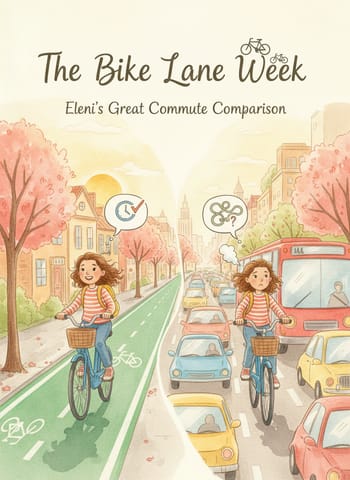
A new bike lane opened on Eleni's street in March. It was wide and painted green. Every morning she saw people ride past her window. She had an old bike in the hall. So she made a plan.
三月,埃莱妮家那条街上新开了一条自行车道。它很宽,漆成了绿色。每天早上,她都能看到有人骑车从窗前经过。她的走廊里有一辆旧自行车。于是她有了一个计划。
For one week, she rode her bike to work. For the next week, she took the bus. She wrote notes on her phone every day.
有一个星期,她骑车去上班。下一个星期,她坐公交车。她每天都在手机上记笔记。
In the first week, the weather was dry. The ride took twenty-five minutes. It cost nothing. She arrived at the office with red cheeks and plenty of energy. But on Thursday, her legs hurt a little.
第一周,天气干燥。骑车花二十五分钟。不用花钱。她到办公室时脸蛋红红的,精力充沛。可是到了星期四,她的腿有点疼。
In the second week, it rained on two days. The bus took thirty-five minutes because of the traffic. A ticket cost three euros each way, so she spent thirty euros. But she could read her book on the bus. Her shoes stayed dry. At work, she felt tired and slow.
第二周,有两天下了雨。因为堵车,公交车要三十五分钟。车票每趟三欧元,所以她花了三十欧元。不过她可以在公交车上看书。她的鞋子也保持干爽。上班时,她觉得又累又迟钝。
On Sunday, Eleni looked at her notes. The bike was faster and cheaper. The bus was better in the rain and easier for tired legs. She thought about it for a long time.
星期天,埃莱妮看了看自己的笔记。骑车更快也更便宜。下雨天坐公交车更好,腿累的时候也更轻松。她想了很久。
On Monday morning, she took her bike from the hall. She put on her helmet. She also put her bus card in her bag.
星期一早上,她把自行车从走廊里推了出来。她戴上头盔。她也把公交卡放进了包里。
"Bike when it is dry," she said to herself. "Bus when it rains."
“天干就骑车,”她对自己说,“下雨就坐公交车。”
Then she rode down the green lane in the morning sun.
然后,她在早晨的阳光里,沿着那条绿色的车道骑了下去。