The gift shop sits at the foot of the old white lighthouse. It has a blue door and a creaky floor. Dalila owns it. She sells postcards, shell boxes and tiny lighthouse magnets. Most of all, she sells bicycle bells.
礼品店坐落在那座古老的白色灯塔脚下。它有一扇蓝色的门和一块吱呀作响的地板。店主是达莉拉。她卖明信片、贝壳盒和小小的灯塔冰箱贴。最主要的是,她卖自行车铃。
The bells are her best idea. Hundreds of people cycle along the sea path every summer. They stop at the lighthouse to look at the water. Many of them buy a bell shaped like a little tower. It goes ting when you press it.
这些铃是她最棒的主意。每年夏天,成百上千的人沿着海边小路骑车。他们在灯塔前停下来看海。很多人会买一只做成小塔形状的车铃。一按它就会“叮”一声。
Today is Zahra's first week. She is young and quick, and she asks a lot of questions. Dalila likes that. She does not like one kind of question. It starts with, "What happens if I press this?"
今天是扎赫拉上班的第一周。她年轻又机灵,问题很多。达莉拉喜欢这一点。但有一种问题她不喜欢。那种问题以“如果我按一下这个会怎样?”开头。
"Rule one," says Dalila. She points at the glass cupboard behind the counter. "Do not touch the cupboard."
“第一条规矩,”达莉拉说。她指了指柜台后面的玻璃柜,“别碰那个柜子。”
"Why not?"
“为什么不能碰?”
"Because I say so. Rule two. Do not open the bottom drawer under the counter."
“因为我说了算。第二条规矩。别打开柜台下面最底下的那个抽屉。”
"Why not?"
“为什么不能开?”
"Because I say so, again." Dalila puts on her coat. "I must go to the post office. I will be back in twenty minutes. Please count the shell boxes."
“还是因为我说了算。”达莉拉穿上外套,“我得去邮局一趟。二十分钟后回来。请你数一数贝壳盒。”
She leaves with a parcel under her arm. The door closes with a soft bang.
她腋下夹着一个包裹出去了。门轻轻砰的一声关上。
Zahra counts the shell boxes. There are twenty-four. She counts the magnets. She counts the postcards. It takes six minutes. She looks at the cupboard. She looks at the bottom drawer.
扎赫拉数了贝壳盒。一共有二十四个。她又数了冰箱贴。数了明信片。用了六分钟。她看看柜子。又看看最底下的抽屉。
"I do not open it," she says to the empty shop. "I only look at the handle."
“我不打开它,”她对空荡荡的店铺说,“我只看看把手。”
She stops. That is a bad idea, and she knows it. She walks away and dusts a shelf instead.
她停住了。这是个坏主意,她自己也知道。她走开,转而去擦一个架子上的灰。
But the drawer has a small gap at the top. Something shines in it. Zahra tells herself not to look. Then she looks.
可是抽屉的上沿有一道小缝。里面有什么东西在发光。扎赫拉告诉自己不要看。然后她看了。
It is a bicycle bell. It is old and brass, and its shape is plain and round. It is much more beautiful than the little tower bells. It shines like a coin.
那是一只自行车铃。它是旧的黄铜铃,样子简单而圆润。它比那些小塔车铃漂亮得多。它像一枚硬币那样闪闪发亮。
"I only look," says Zahra. "I do not touch."
“我只看,”扎赫拉说,“不碰。”
She touches it. The brass is warm. She lifts the bell out of the drawer. For a moment, it hums in her hand.
她碰了。黄铜是温热的。她把铃从抽屉里拿了出来。有那么一会儿,它在她手里嗡嗡作响。
Zahra's own bicycle stands by the door. Its old bell is flat and grey. It makes a sad noise. She looks at it. Then she looks at the shining brass bell.
扎赫拉自己的自行车就停在门边。它旧的车铃又扁又灰。声音很难听。她看看它。然后又看看那只闪亮的黄铜铃。
"Just for a lunch ride," she says. "I will bring it back before she comes."
“就骑一趟,去吃午饭,”她说,“我会在她回来之前把它放回去的。”
It takes one minute to change the bells. Zahra wheels the bike outside and sits on the seat. The sea path stretches along the cliff. A gull sits on the wall and watches her.
换车铃只用了一分钟。扎赫拉把自行车推到外面,坐上座椅。海边小路沿着悬崖延伸出去。一只海鸥蹲在墙头看着她。
"Hello, gull," says Zahra. She presses the bell with her thumb.
“你好,海鸥。”扎赫拉说。她用拇指按下车铃。
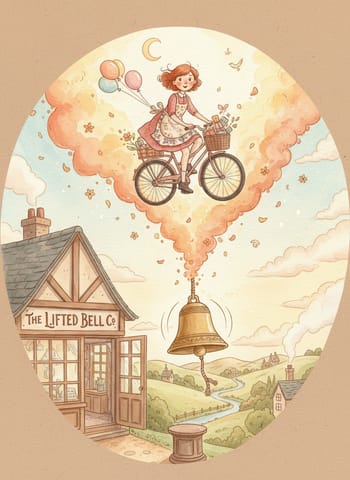
The bell does not go ting. It goes dong, deep and slow, like a clock. The sound rolls out across the sea.
车铃没有发出“叮”的一声。它发出了“咚”的一声,低沉而缓慢,像一座钟。声音在海面上滚动开去。
Then the wheels leave the ground.
然后,车轮离开了地面。
Zahra holds on tight. The bike rises one hand above the path. Then it rises two hands, then a whole arm. It does not wobble. It floats as smoothly as a boat on water. The wheels turn in the air, and her feet fly.
扎赫拉紧紧抓住车把。自行车升到离小路一只手那么高的地方。接着升到两只手高,又升到一整条手臂高。它一点也不晃。它像水上的小船一样平稳地漂浮着。车轮在空中转动,她的双脚飞了起来。
"Oh!" she says. "Oh, oh, oh!"
“哦!”她说,“哦,哦,哦!”
The gull looks at her. It flies off with an angry cry.
海鸥看着她。它愤怒地叫了一声,飞走了。
Inside the shop, Dalila comes back from the post office. She sees the open drawer first. Then she sees the empty cloth inside it. Then she looks out of the window. She sees the bicycle high above the path.
店里,达莉拉从邮局回来了。她先看到了敞开的抽屉。然后看到抽屉里空空的布垫。然后她朝窗外望去。她看到那辆自行车高高地飘在小路上方。
She runs outside. Zahra and her bicycle float over the wall. They are as high as a door. They drift toward the cliff edge. The bike turns slowly around in the air.
她跑到外面。扎赫拉和她的自行车飘过了矮墙。它们已经有一扇门那么高。它们朝悬崖边缘飘去。自行车在空中慢慢地转了个圈。
"Dalila!" calls Zahra. "I made a mistake!"
“达莉拉!”扎赫拉喊道,“我犯了个错!”
"I know!" shouts Dalila. "Do not press the bell again!"
“我知道!”达莉拉喊回去,“别再按铃了!”
"I will not!"
“我不按了!”
"Good! Never press it!"
“好!永远别按!”
Dalila knows exactly what to do. She runs to the lighthouse door. On the wall hangs a big iron bell with a heavy rope. It is the small bell's twin. Together they make a pair.
达莉拉清楚地知道该怎么做。她跑到灯塔门口。墙上挂着一只带粗绳子的大铁铃。它是那只小铃的孪生兄弟。它们合在一起是一对。
She takes the rope in both hands. She pulls it twice.
她双手抓住绳子,拉了两下。
The big bell goes dong, deep and low. The sound rolls over the sea. It meets the small bell's sound halfway. For a moment, the air hums. Then it goes quiet.
大铃发出“咚”的一声,深沉而低缓。声音在海面上滚过。它在半路与小铃的声音相遇。有一瞬间,空气嗡嗡作响。然后一切都安静了。
Zahra and her bicycle slide down through the air like a leaf. The wheels touch the path. The bike rolls three metres and stops against the wall. Zahra sits still with her eyes wide open.
扎赫拉和她的自行车像一片树叶那样从空中滑落下来。车轮碰到了小路。自行车向前滚了三米,撞在墙边停下。扎赫拉一动不动地坐着,眼睛睁得大大的。
Dalila runs to her. "Are you hurt?"
达莉拉跑向她。“你受伤了吗?”
"No." Zahra's voice is very small. "I am sorry. I did not touch the cupboard."
“没有。”扎赫拉的声音非常小,“对不起。我没有碰那个柜子。”
"No. You touched the drawer."
“是没碰。你碰的是抽屉。”
"Yes. I am sorry."
“对。对不起。”
Dalila looks at the brass bell on the handlebar. Then she looks at Zahra's pale face. Slowly, she begins to smile.
达莉拉看着车把上的那只黄铜铃。然后又看看扎赫拉苍白的脸。慢慢地,她笑了起来。
"At your age, I rang it too," she says. "My father's hat flew into the sea. He never found it."
“我在你这个年纪,也按过它,”她说,“我爸爸的帽子飞到了海里。他再也没找到。”
Zahra laughs so hard that she nearly falls off her bike. Then she gets off and unscrews the brass bell. She holds it out.
扎赫拉笑得差点从自行车上摔下来。然后她下了车,把黄铜铃拧了下来。她把它递过去。
"I will fix this," she says. "I will fix everything."
“我会补救的,”她说,“我会把一切都补救好。”
"You did enough for one day." Dalila takes the bell and wraps it in a soft cloth. She carries it back to the shop. She puts it in the bottom drawer. She turns the key twice. Then she puts the key in Zahra's hand.
“你一天做得够多了。”达莉拉接过铃,用一块软布把它包好。她把它拿回店里。放进最底下的抽屉里。她把钥匙转了两圈。然后把钥匙放进扎赫拉的手里。
"Your job," she says. "You know the danger now. So you keep the key."
“这是你的任务,”她说,“你现在知道危险了。所以钥匙由你保管。”
Zahra hangs the key around her neck. She goes back outside. She screws her old grey bell onto the handlebar. She presses it once.
扎赫拉把钥匙挂在脖子上。她回到外面。她把自己那只旧的灰车铃重新拧到车把上。她按了一下。
Ting.
叮。
Her wheels stay on the ground.
她的车轮仍然留在地面上。