The Peaches That Would Not Ripen
Uma história gratuita em inglês de nível B1 para estudantes, para ler online em 7 idiomas, com opção de ouvir no app gratuito Storyteller.
On a freezing night train, Brina tries to keep a promise about ripe fruit for a hospital party.
Essa foi a prévia! Ouça a história completa no app gratuito Storyteller. Baixar o app
O áudio não está disponível no momento.
The heater in carriage four died just after the night train left the last big station.
O aquecedor do vagão quatro pifou logo depois que o trem noturno saiu da última estação grande.
Brina felt it first in her toes. The warm air stopped blowing from under the seats, and the cold crept up from the floor. She pulled her coat tight and looked down at the basket on her lap.
Brina sentiu primeiro nos dedos dos pés. O ar quente parou de sair de baixo dos assentos, e o frio subiu do chão. Ela apertou o casaco contra o corpo e olhou para a cesta no colo.
It held twenty peaches. They were hard and green, like small apples in early spring. Her boss at the orchard had picked them too soon. A buyer in the city wanted them by noon.
Havia vinte pêssegos ali. Estavam duros e verdes, como pequenas maçãs no início da primavera. O chefe dela no pomar os havia colhido cedo demais. Um comprador na cidade os queria até o meio-dia.
"They need three more days of sun," she had told him that afternoon.
"Eles precisam de mais três dias de sol", ela havia dito a ele naquela tarde.
"Then you must make them hurry," he had said, and he had laughed.
"Então você tem que fazer com que eles se apressem", ele havia respondido, e riu.
It was not funny now. Brina had made a promise to the cook at the children's hospital. Tomorrow was the summer party on the ward. The cook had called twice that week, and Brina had said the same words both times.
Agora não tinha mais graça. Brina havia feito uma promessa à cozinheira do hospital infantil. Amanhã era a festa de verão na ala. A cozinheira havia ligado duas vezes naquela semana, e Brina dissera as mesmas palavras nas duas.
"I promise you will have ripe peaches. Soft, sweet and ready to eat."
"Prometo que você vai ter pêssegos maduros. Macios, doces e prontos para comer."
She had meant it. She had not known about the heater.
Ela falara sério. Só não sabia do aquecedor.
A tired conductor walked slowly down the aisle. He wore a thick scarf, and his breath made small clouds. His badge said Lazlo. He stopped beside her seat and looked at the basket.
Um condutor cansado caminhava devagar pelo corredor. Usava um cachecol grosso, e a respiração dele formava pequenas nuvens. O crachá dizia Lazlo. Ele parou ao lado do assento dela e olhou para a cesta.
"Those are very green peaches," he said.
"Esses pêssegos estão bem verdes", disse ele.
"I know," said Brina. "They are supposed to be soft by morning."
"Eu sei", disse Brina. "Eles deveriam estar macios de manhã."
Lazlo gave a short, kind laugh. "Not in this carriage. Even the ticket machine is freezing."
Lazlo deu uma risada curta e gentil. "Não neste vagão. Até a máquina de passagens está congelando."
"Can you fix the heater?"
"O senhor consegue consertar o aquecedor?"
"I have tried three times. The part is broken, and the next station with a workshop is four hours away." He rubbed his hands together. "I am sorry. I wish I had better news."
"Já tentei três vezes. A peça quebrou, e a próxima estação com oficina fica a quatro horas daqui." Ele esfregou as mãos. "Sinto muito. Queria ter notícias melhores."
Brina stared at the dark window. Her own face looked back at her, small and worried. She thought about the children on the ward. Some of them had been in bed for weeks. A basket of fruit would not cure anyone, but the cook had said it would mean a lot.
Brina ficou olhando a janela escura. O próprio rosto olhava de volta para ela, pequeno e preocupado. Ela pensou nas crianças da ala. Algumas estavam na cama havia semanas. Uma cesta de frutas não curaria ninguém, mas a cozinheira dissera que significaria muito.
Across the aisle, a young man in a blue jacket was studying a tin of soup. A woman near the door held a sleeping baby inside her coat. Four students sat at the back with their bags in a pile. They were pretending not to be cold.
Do outro lado do corredor, um rapaz de jaqueta azul examinava uma lata de sopa. Uma mulher perto da porta segurava um bebê adormecido dentro do casaco. Quatro estudantes estavam sentados no fundo, com as mochilas empilhadas. Fingiam não sentir frio.
Brina took out her phone and searched for advice. She found one idea quickly. Peaches ripen faster in a paper bag with a banana or an apple. Ripe fruit gives off a gas that helps the others.
Brina pegou o celular e procurou conselhos. Encontrou uma ideia rapidamente. Pêssegos amadurecem mais rápido num saco de papel com uma banana ou uma maçã. A fruta madura libera um gás que ajuda as outras.
She also read the second part. They still need warmth, and they still need time.
Ela também leu a segunda parte. Eles ainda precisam de calor, e ainda precisam de tempo.
"Do you have a ripe apple?" she asked the young man across the aisle.
"Você tem uma maçã madura?", perguntou ela ao rapaz do outro lado do corredor.
He looked up, surprised. "I have two. Why?"
Ele levantou os olhos, surpreso. "Tenho duas. Por quê?"
"It is a long story."
"É uma longa história."
"We have all night," he said, and he handed her both apples.
"Temos a noite toda", disse ele, e entregou as duas maçãs a ela.
That was how it began. Brina found a paper bag in her handbag and put six peaches inside with the apples. The students heard her explain, and one of them gave her a banana. The woman with the baby had a pear in her bag. Soon the whole carriage was looking for ripe fruit.
Foi assim que tudo começou. Brina achou um saco de papel na bolsa e colocou seis pêssegos dentro com as maçãs. Os estudantes a ouviram explicar, e um deles lhe deu uma banana. A mulher com o bebê tinha uma pera na bolsa. Logo o vagão inteiro estava procurando fruta madura.
Lazlo watched this with his arms crossed. At last he sat down on the seat in front of Brina.
Lazlo observava tudo de braços cruzados. Por fim, sentou-se no banco à frente de Brina.
"It will not work," he said gently. "I have worked on this line for nine years. Cold is cold."
"Não vai funcionar", disse ele com delicadeza. "Trabalho nesta linha há nove anos. Frio é frio."
"I know," Brina said. Her voice shook a little. "But I promised."
"Eu sei", disse Brina. A voz dela tremeu um pouco. "Mas eu prometi."
Lazlo said nothing for a moment. Then he stood up and looked at the end of the carriage, where the luggage rack was.
Lazlo ficou um momento sem dizer nada. Então se levantou e olhou para o fim do vagão, onde ficava o bagageiro.
"Wait here," he said.
"Espere aqui", disse ele.
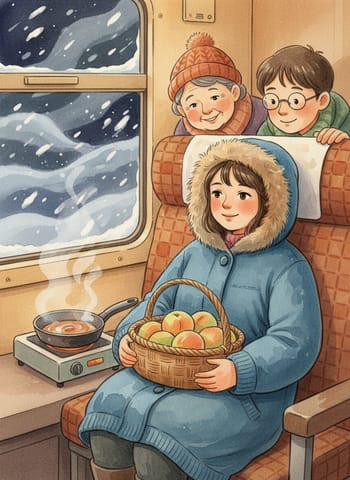
He came back ten minutes later with a small electric hotplate and a heavy metal pot. He put them on the empty seat across from her.
Voltou dez minutos depois com uma pequena chapa elétrica e uma panela pesada de metal. Colocou os dois no assento vazio à frente dela.
"This belongs to a night guard in the next carriage," he said. "He uses it on his breaks. He says I can borrow it if I tell nobody."
"Isto é de um guarda noturno do vagão ao lado", disse ele. "Ele usa nos intervalos. Diz que posso pegar emprestado se eu não contar a ninguém."
Brina looked at the hotplate and then at him. "Rules say no cooking on the train."
Brina olhou para a chapa e depois para ele. "As regras proíbem cozinhar no trem."
"Rules say a lot of things," said Lazlo. "They also say passengers must be warm. Nobody follows that one tonight."
"As regras dizem muita coisa", disse Lazlo. "Também dizem que os passageiros devem ficar aquecidos. Ninguém cumpre essa esta noite."
He plugged the hotplate into the socket by the door. A small red light came on, and the plate began to tick as it warmed. The students gasped. The baby woke and made a happy noise.
Ele ligou a chapa na tomada perto da porta. Uma pequena luz vermelha acendeu, e a chapa começou a estalar enquanto esquentava. Os estudantes soltaram um suspiro de espanto. O bebê acordou e fez um barulhinho feliz.
"Now," said Lazlo. "You said you promised soft, sweet peaches."
"Agora", disse Lazlo. "Você disse que prometeu pêssegos macios e doces."
"Yes."
"Sim."
"Then we cannot wait for the sun. We must cook them."
"Então não podemos esperar pelo sol. Temos que cozinhá-los."
Brina's mouth fell open, and then she began to laugh. It was the first time that night. She cut the green peaches in half with the young man's pocket knife. She dropped them into the pot. The woman with the baby gave her a small bag of sugar from her lunch. One of the students had a stick of cinnamon in her coat. She could not explain why.
A boca de Brina se abriu, e então ela começou a rir. Foi a primeira vez naquela noite. Ela cortou os pêssegos verdes ao meio com o canivete do rapaz. Jogou-os na panela. A mulher com o bebê lhe deu um saquinho de açúcar do lanche. Uma das estudantes tinha um pau de canela no casaco. Não soube explicar por quê.
Water came from a bottle. The pot began to bubble slowly, and a warm smell filled the carriage. It smelled like summer, even though the peaches had never seen enough of it.
A água veio de uma garrafa. A panela começou a ferver devagar, e um cheiro quente encheu o vagão. Cheirava a verão, embora os pêssegos nunca tivessem visto o suficiente dele.
People moved closer. First the students came, then the man with the soup, then the woman and her baby. They sat with their hands near the pot and their faces in the soft steam. Someone started to tell a joke about a goat on a bus. Someone else told a worse one.
As pessoas foram se aproximando. Primeiro vieram os estudantes, depois o homem da sopa, depois a mulher e o bebê. Sentaram-se com as mãos perto da panela e o rosto no vapor suave. Alguém começou a contar uma piada sobre um bode num ônibus. Outra pessoa contou uma pior.
Lazlo stirred the pot with a wooden spoon. He did it carefully, like a man who had cooked for crowds before.
Lazlo mexia a panela com uma colher de pau. Fazia isso com cuidado, como um homem que já havia cozinhado para multidões.
"Where did you learn this?" Brina asked.
"Onde o senhor aprendeu isso?", perguntou Brina.
"My cousin ran a roadside kitchen," he said. "I was twelve, and I washed pots. I learned to stir before I learned to read."
"Meu primo tinha uma cozinha de beira de estrada", disse ele. "Eu tinha doze anos e lavava panelas. Aprendi a mexer antes de aprender a ler."
Around two in the morning, the peaches turned soft and golden. They were not the fruit she had promised. They were a sweet, warm stew with cinnamon, and the smell alone made her eyes wet.
Por volta das duas da manhã, os pêssegos ficaram macios e dourados. Não eram a fruta que ela havia prometido. Eram um ensopado doce e quente com canela, e só o cheiro já lhe deixou os olhos úmidos.
She filled every empty jar and tin she could find. The woman with the baby gave her a clean cup. The students gave her two plastic boxes. Lazlo took a small bottle from his pocket. He poured the last honey into the pot.
Ela encheu todos os potes e latas vazios que conseguiu encontrar. A mulher com o bebê lhe deu um copo limpo. Os estudantes lhe deram duas caixas de plástico. Lazlo tirou uma garrafinha do bolso. Despejou o último mel na panela.
By the time the sky turned pale outside, everyone in the carriage had tasted a spoonful. Nobody was cold any more. The hotplate was unplugged and carried away before the station.
Quando o céu ficou pálido lá fora, todos no vagão já tinham provado uma colherada. Ninguém sentia mais frio. A chapa foi desligada e levada embora antes da estação.
The train stopped at the city platform at a quarter to six. Brina carried her basket, now heavy with jars, down the steps. Lazlo stood at the door with his scarf pulled up to his nose.
O trem parou na plataforma da cidade às seis menos quinze. Brina desceu os degraus carregando a cesta, agora pesada de potes. Lazlo estava na porta, com o cachecol puxado até o nariz.
"You kept your promise," he said. "Just not the way you planned."
"Você cumpriu sua promessa", disse ele. "Só que não do jeito que planejou."
"I am not sure the cook will agree," said Brina.
"Não tenho certeza de que a cozinheira vai concordar", disse Brina.
She was right to worry. At the hospital kitchen, the cook looked at the jars and then at her. Her eyebrows rose slowly.
Ela tinha razão de se preocupar. Na cozinha do hospital, a cozinheira olhou para os potes e depois para ela. As sobrancelhas subiram devagar.
"These are not what I asked for," the cook said.
"Isto não é o que eu pedi", disse a cozinheira.
"No," said Brina. Her stomach felt tight. "They are not. But please try one."
"Não", disse Brina. Sentiu o estômago apertado. "Não é. Mas, por favor, experimente um."
The cook picked up a spoon and tasted the warm peaches. She closed her eyes. Then she opened them again and smiled, and Brina let out her breath.
A cozinheira pegou uma colher e provou os pêssegos quentes. Fechou os olhos. Depois os abriu de novo e sorriu, e Brina soltou a respiração.
"Who made this?" the cook asked.
"Quem fez isto?", perguntou a cozinheira.
"A whole carriage of strangers," said Brina. "And one conductor who broke the rules."
"Um vagão inteiro de desconhecidos", disse Brina. "E um condutor que quebrou as regras."
The cook laughed and reached for another jar. "The children will love it. Can you tell me the recipe, or must I take the train to find out?"
A cozinheira riu e pegou outro pote. "As crianças vão adorar. Você pode me dizer a receita, ou vou ter que pegar o trem para descobrir?"