The heater in carriage four died just after the night train left the last big station.
夜班列车刚驶出最后一个大站,四号车厢的暖气就坏了。
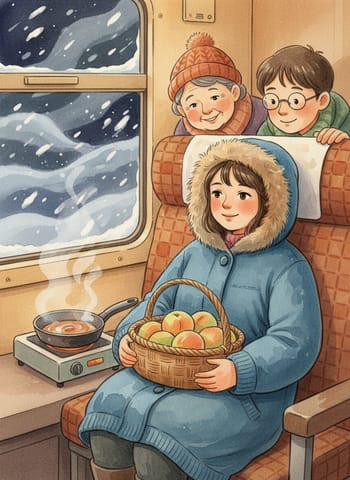
Brina felt it first in her toes. The warm air stopped blowing from under the seats, and the cold crept up from the floor. She pulled her coat tight and looked down at the basket on her lap.
布丽娜最先感觉到的是脚趾。座位底下不再送出暖风,寒气从地板爬了上来。她把外套裹紧,低头看着腿上的篮子。
It held twenty peaches. They were hard and green, like small apples in early spring. Her boss at the orchard had picked them too soon. A buyer in the city wanted them by noon.
篮子里装着二十个桃子。它们又硬又青,像早春时节的小苹果。果园的老板摘得太早了。城里有个买家要求中午前拿到货。
"They need three more days of sun," she had told him that afternoon.
“它们还需要三天的阳光。”那天下午她对老板说过。
"Then you must make them hurry," he had said, and he had laughed.
“那你就得让它们快点熟。”他说完,还笑了起来。
It was not funny now. Brina had made a promise to the cook at the children's hospital. Tomorrow was the summer party on the ward. The cook had called twice that week, and Brina had said the same words both times.
现在,这一点也不好笑了。布丽娜曾向儿童医院的厨师许下承诺。明天病房里要办夏日联欢会。那一周厨师打过两次电话,两次布丽娜说的都是同样的话。
"I promise you will have ripe peaches. Soft, sweet and ready to eat."
“我保证你会拿到熟透的桃子。又软又甜,可以直接吃。”
She had meant it. She had not known about the heater.
她是真心的。可她当时并不知道暖气会坏。
A tired conductor walked slowly down the aisle. He wore a thick scarf, and his breath made small clouds. His badge said Lazlo. He stopped beside her seat and looked at the basket.
一位疲惫的乘务员沿着过道慢慢走来。他围着厚厚的围巾,呼出的气成了一小团一小团白雾。他的胸牌上写着拉兹洛。他在她的座位旁停下,看了看那个篮子。
"Those are very green peaches," he said.
“这些桃子可真青。”他说。
"I know," said Brina. "They are supposed to be soft by morning."
“我知道,”布丽娜说,“它们本该在早上变软的。”
Lazlo gave a short, kind laugh. "Not in this carriage. Even the ticket machine is freezing."
拉兹洛短促而善意地笑了一声。“在这节车厢里可不行。连检票机都冻住了。”
"Can you fix the heater?"
“你能修好暖气吗?”
"I have tried three times. The part is broken, and the next station with a workshop is four hours away." He rubbed his hands together. "I am sorry. I wish I had better news."
“我试过三次了。零件坏了,而下一个有维修间的车站还要四个小时才到。”他搓了搓手。“对不起。我也希望能带来好消息。”
Brina stared at the dark window. Her own face looked back at her, small and worried. She thought about the children on the ward. Some of them had been in bed for weeks. A basket of fruit would not cure anyone, but the cook had said it would mean a lot.
布丽娜望着漆黑的车窗。窗里映出她自己的脸,小小的,满是担忧。她想起病房里的孩子们。有些孩子已经卧床好几个星期了。一篮水果治不好谁的病,但厨师说过,这对他们意义重大。
Across the aisle, a young man in a blue jacket was studying a tin of soup. A woman near the door held a sleeping baby inside her coat. Four students sat at the back with their bags in a pile. They were pretending not to be cold.
过道对面,一个穿蓝夹克的年轻人正端详着一罐汤。靠近车门的地方,一位女士把熟睡的婴儿裹在外套里。后排坐着四个学生,行李堆成一堆。他们假装自己并不冷。
Brina took out her phone and searched for advice. She found one idea quickly. Peaches ripen faster in a paper bag with a banana or an apple. Ripe fruit gives off a gas that helps the others.
布丽娜拿出手机搜索办法。很快,她找到一个主意:把桃子和香蕉或苹果一起放进纸袋里,熟得更快。熟透的水果会释放一种气体,帮助其他水果成熟。
She also read the second part. They still need warmth, and they still need time.
她也看到了第二部分:它们仍然需要温暖,也仍然需要时间。
"Do you have a ripe apple?" she asked the young man across the aisle.
“你有熟透的苹果吗?”她问过道对面的年轻人。
He looked up, surprised. "I have two. Why?"
他抬起头,有些惊讶。“我有两个。怎么了?”
"It is a long story."
“说来话长。”
"We have all night," he said, and he handed her both apples.
“我们有一整夜的时间。”他说着,把两个苹果都递给了她。
That was how it began. Brina found a paper bag in her handbag and put six peaches inside with the apples. The students heard her explain, and one of them gave her a banana. The woman with the baby had a pear in her bag. Soon the whole carriage was looking for ripe fruit.
一切就是这样开始的。布丽娜从手提包里翻出一个纸袋,把六个桃子和苹果一起放了进去。学生们听到她的解释,其中一个递给她一根香蕉。抱着婴儿的女士包里有一个梨。不一会儿,整节车厢的人都在找熟透的水果。
Lazlo watched this with his arms crossed. At last he sat down on the seat in front of Brina.
拉兹洛抱着胳膊看着这一切。最后,他在布丽娜前面的座位上坐了下来。
"It will not work," he said gently. "I have worked on this line for nine years. Cold is cold."
“这行不通的,”他温和地说,“我在这条线上干了九年了。冷就是冷。”
"I know," Brina said. Her voice shook a little. "But I promised."
“我知道,”布丽娜说,声音微微发颤,“可我答应过人家。”
Lazlo said nothing for a moment. Then he stood up and looked at the end of the carriage, where the luggage rack was.
拉兹洛沉默了片刻。然后他站起身,望向车厢尽头放行李架的地方。
"Wait here," he said.
“在这儿等着。”他说。
He came back ten minutes later with a small electric hotplate and a heavy metal pot. He put them on the empty seat across from her.
十分钟后他回来了,带着一个小电热板和一口厚重的金属锅。他把它们放在她对面的空座位上。
"This belongs to a night guard in the next carriage," he said. "He uses it on his breaks. He says I can borrow it if I tell nobody."
“这是隔壁车厢一位夜班警卫的,”他说,“他休息时用。他说只要我谁都不告诉,就可以借给我。”
Brina looked at the hotplate and then at him. "Rules say no cooking on the train."
布丽娜看看电热板,又看看他。“规定不许在火车上做饭。”
"Rules say a lot of things," said Lazlo. "They also say passengers must be warm. Nobody follows that one tonight."
“规定上写的东西多着呢,”拉兹洛说,“上面还写着乘客必须保暖。今晚可没人照这条办。”
He plugged the hotplate into the socket by the door. A small red light came on, and the plate began to tick as it warmed. The students gasped. The baby woke and made a happy noise.
他把电热板插进车门旁的插座。一盏小红灯亮了起来,板子随着升温发出滴答声。学生们惊呼起来。婴儿醒了,发出开心的咿呀声。
"Now," said Lazlo. "You said you promised soft, sweet peaches."
“好了,”拉兹洛说,“你说过你保证给人家又软又甜的桃子。”
"Yes."
“是的。”
"Then we cannot wait for the sun. We must cook them."
“那我们就不能等太阳了。我们得把它们煮熟。”
Brina's mouth fell open, and then she began to laugh. It was the first time that night. She cut the green peaches in half with the young man's pocket knife. She dropped them into the pot. The woman with the baby gave her a small bag of sugar from her lunch. One of the students had a stick of cinnamon in her coat. She could not explain why.
布丽娜张大了嘴,随后笑了起来。这是她那晚第一次笑。她用年轻人的小折刀把青桃子切成两半,扔进锅里。抱婴儿的女士从她的午饭里拿出一小袋糖给她。有个学生的外套里有一根肉桂棒,她自己也说不清为什么会带着。
Water came from a bottle. The pot began to bubble slowly, and a warm smell filled the carriage. It smelled like summer, even though the peaches had never seen enough of it.
水是用瓶子倒进去的。锅慢慢地咕嘟起来,一股暖香弥漫了整节车厢。那闻起来像夏天,尽管这些桃子从未真正享受过足够的夏天。
People moved closer. First the students came, then the man with the soup, then the woman and her baby. They sat with their hands near the pot and their faces in the soft steam. Someone started to tell a joke about a goat on a bus. Someone else told a worse one.
人们围拢过来。先是学生们,然后是喝汤的男人,接着是那位女士和她的婴儿。他们把手伸到锅边,脸笼在柔软的蒸汽里。有人开始讲一个关于公共汽车上一只山羊的笑话。另一个人讲了个更糟糕的。
Lazlo stirred the pot with a wooden spoon. He did it carefully, like a man who had cooked for crowds before.
拉兹洛用木勺搅着锅。他搅得很仔细,像个以前给很多人做过饭的人。
"Where did you learn this?" Brina asked.
“你是在哪儿学的?”布丽娜问。
"My cousin ran a roadside kitchen," he said. "I was twelve, and I washed pots. I learned to stir before I learned to read."
“我表哥开过一家路边饭馆,”他说,“那年我十二岁,负责洗锅。我还没学会认字,就先学会了搅锅。”
Around two in the morning, the peaches turned soft and golden. They were not the fruit she had promised. They were a sweet, warm stew with cinnamon, and the smell alone made her eyes wet.
凌晨两点左右,桃子变得又软又金黄。它们已经不是她当初承诺的那种水果了。那是一锅加了肉桂的香甜热腾腾的炖桃,光是那股香味就让她眼眶湿润。
She filled every empty jar and tin she could find. The woman with the baby gave her a clean cup. The students gave her two plastic boxes. Lazlo took a small bottle from his pocket. He poured the last honey into the pot.
她把能找到的每一个空罐子和空盒子都装满了。抱婴儿的女士递给她一只干净的杯子。学生们给了她两个塑料盒。拉兹洛从口袋里掏出一小瓶,把最后一点蜂蜜倒进了锅里。
By the time the sky turned pale outside, everyone in the carriage had tasted a spoonful. Nobody was cold any more. The hotplate was unplugged and carried away before the station.
等窗外的天色泛白时,车厢里的每个人都尝了一勺。再没有人觉得冷了。电热板在到站前就被拔掉,拿走了。
The train stopped at the city platform at a quarter to six. Brina carried her basket, now heavy with jars, down the steps. Lazlo stood at the door with his scarf pulled up to his nose.
列车在六点差一刻时停靠在城里的站台。布丽娜提着现在装满罐子、沉甸甸的篮子走下台阶。拉兹洛站在车门口,围巾拉到了鼻子上。
"You kept your promise," he said. "Just not the way you planned."
“你信守了承诺,”他说,“只是不是按你原来计划的方式。”
"I am not sure the cook will agree," said Brina.
“我不确定厨师会不会同意。”布丽娜说。
She was right to worry. At the hospital kitchen, the cook looked at the jars and then at her. Her eyebrows rose slowly.
她的担心是有道理的。在医院的厨房里,厨师看看那些罐子,又看看她。眉毛慢慢扬了起来。
"These are not what I asked for," the cook said.
“这可不是我要的东西。”厨师说。
"No," said Brina. Her stomach felt tight. "They are not. But please try one."
“是的,”布丽娜说,她的胃揪紧了,“确实不是。但请您尝一口。”
The cook picked up a spoon and tasted the warm peaches. She closed her eyes. Then she opened them again and smiled, and Brina let out her breath.
厨师拿起勺子,尝了尝那热乎乎的桃子。她闭上眼睛。接着她又睁开眼,露出了微笑,布丽娜这才松了一口气。
"Who made this?" the cook asked.
“这是谁做的?”厨师问。
"A whole carriage of strangers," said Brina. "And one conductor who broke the rules."
“是一整节车厢的陌生人,”布丽娜说,“还有一位违反了规定的乘务员。”
The cook laughed and reached for another jar. "The children will love it. Can you tell me the recipe, or must I take the train to find out?"
厨师笑了,又伸手去拿另一罐。“孩子们一定会喜欢的。你能把做法告诉我吗,还是我得自己坐火车去打听?”