The Night of Odd Shoes
Uma história gratuita em inglês de nível B1 para estudantes, para ler online em 7 idiomas, com opção de ouvir no app gratuito Storyteller.
A dumpling cook at a night market answers a customer's wish about her mismatched shoes in a surprising way.
Essa foi a prévia! Ouça a história completa no app gratuito Storyteller. Baixar o app
O áudio não está disponível no momento.
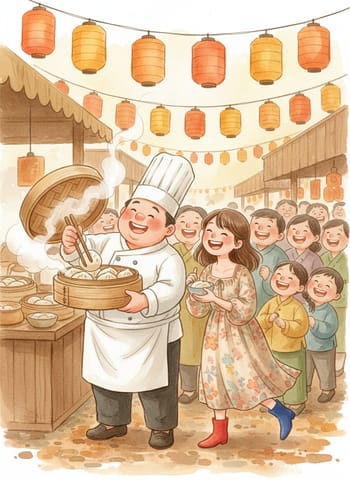
The food row at the night market starts to wake up at six. Malika lights the gas under her big pot of dumplings. Then she checks the paper lanterns above her stall. Each one is yellow and slightly crooked. She hung them herself three years ago, and she likes them crooked.
A fileira de comida do mercado noturno começa a acordar às seis. Malika acende o gás embaixo da panela grande de bolinhos. Depois confere as lanternas de papel acima da barraca. Cada uma é amarela e um pouco torta. Ela mesma as pendurou há três anos, e gosta delas tortas.
Around her, the other cooks do the same small jobs. The noodle man stacks his bowls. The woman who sells grilled corn blows on her coals. By seven, smoke and steam fill the whole row, and the first crowds arrive.
Ao redor dela, os outros cozinheiros fazem as mesmas pequenas tarefas. O homem do macarrão empilha as tigelas. A mulher que vende milho assado sopra as brasas. Às sete, fumaça e vapor enchem a fileira inteira, e chegam os primeiros fregueses.
Malika knows most of her customers by their orders. The boy with the headphones always wants six pork dumplings. The two nurses share one plate and argue about the sauce. Tonight, however, a new face walks up to her counter, and the face looks upset.
Malika conhece a maioria dos clientes pelos pedidos. O garoto de fones de ouvido sempre quer seis bolinhos de porco. As duas enfermeiras dividem um prato e brigam por causa do molho. Esta noite, porém, um rosto novo se aproxima do balcão, e é um rosto aflito.
The woman is about thirty, with a neat jacket and a tired smile. Malika looks at her face, and then she looks down. She cannot stop herself.
A mulher tem uns trinta anos, uma jaqueta bem arrumada e um sorriso cansado. Malika olha para o rosto dela e, em seguida, olha para baixo. Não consegue se conter.
The woman wears one blue trainer on her left foot. On her right foot, she wears a gold sandal with a thin strap.
A mulher usa um tênis azul no pé esquerdo. No pé direito, usa uma sandália dourada de tira fina.
"Please don't say anything," the woman says. "I know. I know."
"Por favor, não diga nada", diz a mulher. "Eu sei. Eu sei."
"I say nothing," Malika says. "Six dumplings?"
"Não digo nada", diz Malika. "Seis bolinhos?"
"Six dumplings, yes, and a big glass of water." The woman sits on the stool beside the counter and lets out a long breath. "My name is Brina. I work in an office near here. The power was off this morning. I dressed in the dark and put on two shoes without looking. I only noticed at lunchtime. By then it was too late to go home."
"Seis bolinhos, sim, e um copo grande de água." A mulher senta no banquinho ao lado do balcão e solta um longo suspiro. "Meu nome é Brina. Trabalho num escritório aqui perto. A luz acabou hoje de manhã. Eu me vesti no escuro e calcei dois sapatos sem olhar. Só percebi na hora do almoço. Aí já era tarde para voltar para casa."
"Did anybody look?" Malika asks.
"Alguém reparou?", pergunta Malika.
"Everybody looked," Brina says. "A child on the bus said, loudly, 'That lady has different feet.'"
"Todo mundo reparou", diz Brina. "Uma criança no ônibus disse bem alto: 'Aquela moça tem pés diferentes'."
Malika laughs, and then she covers her mouth. "I am sorry. It is not funny."
Malika ri e depois cobre a boca. "Desculpe. Não tem graça."
"It is a little funny," Brina says. "But tonight I have a dinner with my team, right here on the food row. They are all coming in an hour. Ten people, and every one of them will stare at my shoes. I just want to eat in peace."
"Tem um pouco de graça", diz Brina. "Mas hoje à noite tenho um jantar com a minha equipe, bem aqui na fileira de comida. Eles chegam daqui a uma hora. Dez pessoas, e todas vão ficar olhando para os meus sapatos. Eu só quero comer em paz."
Malika puts six dumplings on a plate and slides it across the counter. Brina takes a bite and closes her eyes. For a moment, the problem seems smaller.
Malika põe seis bolinhos num prato e o desliza pelo balcão. Brina dá uma mordida e fecha os olhos. Por um momento, o problema parece menor.
"I wish I could do something about it," Brina says, with her mouth half full. "I wish nobody would look at my feet tonight. That's all. Just one evening."
"Queria poder fazer alguma coisa a respeito", diz Brina, de boca meio cheia. "Queria que ninguém olhasse para os meus pés esta noite. Só isso. Apenas uma noite."
Malika wipes her hands on her apron. She has a habit of taking small wishes seriously. Over the years, people have asked her for stranger things than this. A man once asked for a dumpling that tasted like his mother's. She tried nine times.
Malika limpa as mãos no avental. Ela tem o hábito de levar a sério os pequenos desejos. Ao longo dos anos, já lhe pediram coisas mais estranhas do que isso. Um homem uma vez pediu um bolinho com o sabor do que a mãe dele fazia. Ela tentou nove vezes.
"I cannot sell you new shoes," she says. "There is a shoe stall at the end of the row, but the owner closes early. And I cannot make people blind." She looks along the row of lanterns, and a slow smile appears on her face. "But maybe I can make everyone busy with their own feet."
"Não posso lhe vender sapatos novos", diz ela. "Tem uma barraca de sapatos no fim da fileira, mas o dono fecha cedo. E não posso deixar as pessoas cegas." Ela olha ao longo da fileira de lanternas, e um sorriso lento surge em seu rosto. "Mas talvez eu consiga deixar todo mundo ocupado com os próprios pés."
"What does that mean?" Brina asks.
"O que isso quer dizer?", pergunta Brina.
"Eat your dumplings," Malika says. "I need to make a few phone calls."
"Coma seus bolinhos", diz Malika. "Preciso dar alguns telefonemas."
She walks next door to the noodle man and speaks to him quietly. He frowns, then shrugs, then bends down and takes off his left shoe. Malika goes to the woman with the corn and does the same. Then she visits the juice seller, the man with the skewers, and the girl with the rice cakes. Each of them listens. Each of them looks at Brina's shoes. Then they look at each other, and one by one they start to grin.
Ela vai até o homem do macarrão, na barraca ao lado, e fala baixinho com ele. Ele franze a testa, dá de ombros, depois se abaixa e tira o sapato esquerdo. Malika vai até a mulher do milho e faz o mesmo. Depois visita o vendedor de suco, o homem dos espetinhos e a moça dos bolinhos de arroz. Cada um escuta. Cada um olha para os sapatos de Brina. Depois olham uns para os outros e, um a um, começam a sorrir.
Brina watches from her stool and understands nothing. Then she sees the noodle man bring out a pair of old garden boots from under his counter. He puts one boot on his left foot. His right foot keeps its own black shoe.
Brina observa do banquinho e não entende nada. Então vê o homem do macarrão tirar de baixo do balcão um par de botas velhas de jardim. Ele calça uma bota no pé esquerdo. O pé direito continua com o próprio sapato preto.
"What is he doing?" she whispers.
"O que ele está fazendo?", sussurra ela.
"Wait," Malika says, and she holds up a finger.
"Espere", diz Malika, e levanta um dedo.
By eight o'clock, a strange thing is happening on the food row. The corn woman wears a pink slipper and a green clog. The juice seller has one tall boot and one tiny sandal he borrowed from his niece. The man with the skewers wears a work boot and a shower shoe. Even the man who sells phone cases joins in. He puts on a fluffy rabbit slipper and walks very seriously down the row.
Às oito horas, uma coisa estranha está acontecendo na fileira de comida. A mulher do milho usa um chinelo rosa e um tamanco verde. O vendedor de suco tem uma bota alta e uma sandália minúscula que pegou emprestada da sobrinha. O homem dos espetinhos calça uma bota de trabalho e um chinelo de banho. Até o homem que vende capinhas de celular entra na brincadeira. Ele calça uma pantufa felpuda de coelho e desfila muito sério pela fileira.
Malika herself steps out from behind her counter. She wears one rubber shoe from the kitchen and one sandal from her bag. She bows to Brina like a queen.
A própria Malika sai de trás do balcão. Calça um sapato de borracha da cozinha e uma sandália que tirou da bolsa. Ela faz uma reverência para Brina como se fosse uma rainha.
"Mismatched Night," she announces, in her loudest voice. "Tonight, every cook has two different shoes. If a customer finds a matching pair on the whole row, he gets a free dumpling."
"Noite dos Sapatos Trocados", anuncia ela, na voz mais alta que tem. "Hoje à noite, cada cozinheiro está com dois sapatos diferentes. Se algum cliente encontrar um par igual em toda a fileira, ganha um bolinho grátis."
People stop walking. They stare at the cooks, and then they look down at their own feet, just to be sure. A teenager laughs and points at the corn woman. A couple takes photos of the juice seller's tiny sandal. Soon a small crowd forms in the middle of the row, and everyone is bending down, searching.
As pessoas param de andar. Olham para os cozinheiros e depois para os próprios pés, só para ter certeza. Um adolescente ri e aponta para a mulher do milho. Um casal tira fotos da sandália minúscula do vendedor de suco. Logo uma pequena multidão se forma no meio da fileira, e todo mundo está abaixado, procurando.
"Look at that one!" a boy shouts. "He has a boot and a slipper!"
"Olha aquele!", grita um menino. "Ele tem uma bota e um chinelo!"
"And that one has a sandal and a trainer!" says another voice.
"E aquele tem uma sandália e um tênis!", diz outra voz.
"No, no, that is Brina," Malika says gently, and she points at the stool. "She is a judge tonight. She decides who has the most beautiful mistake."
"Não, não, essa é a Brina", diz Malika com delicadeza, e aponta para o banquinho. "Hoje ela é jurada. Ela decide quem tem o erro mais bonito."
Brina's mouth falls open. "I am a what?"
A boca de Brina se abre. "Eu sou o quê?"
"A judge," Malika whispers. "Sit up straight and look serious. It helps."
"Jurada", sussurra Malika. "Sente direito e fique séria. Ajuda."
So Brina sits up straight. She looks at the cooks one by one. She gives each of them a score from one to ten. The crowd cheers whenever she speaks. The rabbit slippers get a nine. The garden boot gets an eight and a half, because it is very big.
Então Brina senta direito. Olha para os cozinheiros um por um. Dá a cada um uma nota de um a dez. A multidão comemora toda vez que ela fala. As pantufas de coelho recebem nove. A bota de jardim recebe oito e meio, porque é muito grande.
At half past eight, Brina's team arrives. Ten people walk down the row in their work clothes. They stop at the same moment, like fish. Nobody looks at Brina's feet. They look at the juice seller, then at the rabbit slippers, then at the customers checking their shoes.
Às oito e meia, a equipe de Brina chega. Dez pessoas descem a fileira com roupa de trabalho. Param no mesmo instante, como peixes. Ninguém olha para os pés de Brina. Olham para o vendedor de suco, depois para as pantufas de coelho, depois para os clientes conferindo os próprios sapatos.
"What is going on here?" her manager asks.
"O que está acontecendo aqui?", pergunta o gerente dela.
"It's a festival," Brina says calmly. "I am the judge."
"É um festival", diz Brina com calma. "Eu sou a jurada."
Her manager looks at her for a long moment. Then he looks down at his own polished black shoes. "Do I need to enter?" he asks.
O gerente a encara por um longo momento. Depois olha para os próprios sapatos pretos engraxados. "Preciso participar?", pergunta.
"I think you do," Brina says.
"Acho que precisa", diz Brina.
The team eats together at a long table beside Malika's stall. They talk about the day and laugh about the rabbit slippers. Nobody says a word about gold sandals. Two of them take off one shoe each and swap them, just for fun. By nine, half the row has joined the game, and the free dumplings run out twice.
A equipe janta junto numa mesa comprida ao lado da barraca de Malika. Eles falam do dia e riem das pantufas de coelho. Ninguém diz uma palavra sobre sandálias douradas. Dois deles tiram um sapato cada um e trocam, só por diversão. Às nove, metade da fileira já entrou no jogo, e os bolinhos grátis acabam duas vezes.
When the crowd finally thins, Brina walks back to the counter. Her feet hurt, and her face hurts from smiling. She puts a folded note under the plate.
Quando a multidão finalmente diminui, Brina volta ao balcão. Os pés doem, e o rosto dói de tanto sorrir. Ela coloca uma nota dobrada embaixo do prato.
"You didn't make anyone blind," she says. "You made everyone look at everything else."
"Você não deixou ninguém cego", diz ela. "Você fez todo mundo olhar para todo o resto."
"That is how most wishes work," Malika says. She shrugs. "People get the thing they ask for, but not in the shape they expect."
"É assim que funciona a maioria dos desejos", diz Malika. Ela dá de ombros. "As pessoas recebem o que pedem, mas não no formato que esperam."
"What shape was mine?"
"Qual foi o formato do meu?"
"A very odd one," Malika says. "With a rabbit on it."
"Um bem esquisito", diz Malika. "Com um coelho em cima."
Later, when the last customer has gone, the lanterns still glow above the empty row. The cooks pack their pots and carry them away, one soft step at a time. Under the stalls, a line of odd shoes waits in the dust. Above them, one crooked lantern swings gently.
Mais tarde, quando o último cliente já foi embora, as lanternas ainda brilham sobre a fileira vazia. Os cozinheiros guardam as panelas e as levam embora, um passo suave de cada vez. Debaixo das barracas, uma fila de sapatos desemparelhados espera na poeira. Acima deles, uma lanterna torta balança devagar.