The Bicycle Bell in the Break Room
Uma história gratuita em inglês de nível B1 para estudantes, para ler online em 7 idiomas, com opção de ouvir no app gratuito Storyteller.
A trainee bus driver passes a found bicycle bell from person to person until she learns to ask better questions.
Essa foi a prévia! Ouça a história completa no app gratuito Storyteller. Baixar o app
O áudio não está disponível no momento.
The bicycle bell sits on the break room table, next to a pile of old timetables. Hedy notices it at six in the morning, when she sits down with her study book.
A campainha de bicicleta está sobre a mesa da sala de descanso, ao lado de uma pilha de horários antigos. Hedy a nota às seis da manhã, quando se senta com o livro de estudo.
She is nineteen, and she is a trainee at the bus depot. Tomorrow she takes her theory test, and she has not slept well for three nights. The break room is the only quiet place she knows. It has a coffee machine and a sofa with a broken spring. Its window looks onto the washing bay.
Ela tem dezenove anos e é estagiária na garagem de ônibus. Amanhã faz a prova teórica, e não dorme bem há três noites. A sala de descanso é o único lugar tranquilo que conhece. Tem uma máquina de café e um sofá com uma mola quebrada. A janela dá para a área de lavagem.
The bell is small and silver. A thin scratch runs around it like a spiral. Hedy picks it up and presses the lever with her thumb.
A campainha é pequena e prateada. Um risco fino a contorna como uma espiral. Hedy a pega e aperta a alavanca com o polegar.
Ring.
Trim.
Every head in the room turns. A driver with a newspaper frowns at her.
Todas as cabeças da sala se viram. Um motorista com um jornal franze a testa para ela.
"Sorry," Hedy says. "I found it here. Does anyone know whose it is?"
"Desculpem", diz Hedy. "Encontrei isto aqui. Alguém sabe de quem é?"
"Not mine," the driver says. "I don't even own a bicycle."
"Não é minha", diz o motorista. "Eu nem tenho bicicleta."
She waits, but nobody else speaks. A rule on the notice board says that found things go to the cleaner on the morning shift. Hedy decides to follow it. She puts the bell in her pocket and goes to look for her.
Ela espera, mas ninguém mais fala. Uma regra no quadro de avisos diz que objetos achados vão para a faxineira do turno da manhã. Hedy decide seguir a regra. Põe a campainha no bolso e vai procurá-la.
The cleaner is in the corridor, pushing a cart full of bottles and cloths. She stops and takes the bell between two fingers.
A faxineira está no corredor, empurrando um carrinho cheio de garrafas e panos. Para e pega a campainha entre dois dedos.
"Pretty," she says. "But it belongs to a driver, I think. Those people always lose small things. Ask the early shift."
"Bonita", diz. "Mas acho que é de algum motorista. Essa gente sempre perde coisas pequenas. Pergunte ao pessoal do primeiro turno."
"The early shift left an hour ago," says Hedy.
"O primeiro turno saiu há uma hora", diz Hedy.
"Then ask the night shift. They are just coming in." The cleaner puts the bell back into Hedy's hand and returns to her cart. "I cannot keep it. My cart already has too many bits and pieces."
"Então pergunte ao turno da noite. Estão chegando agora." A faxineira devolve a campainha à mão de Hedy e volta ao carrinho. "Não posso ficar com ela. Meu carrinho já tem coisas demais."
Hedy looks at the bell. It is not her problem. She has a test tomorrow, and she has read only half of the chapter on road signs. Still, she cannot put the bell back on the table. It feels wrong, like leaving a lost glove on a wall.
Hedy olha para a campainha. Não é problema dela. Tem prova amanhã e leu só metade do capítulo sobre placas de trânsito. Mesmo assim, não consegue pôr a campainha de volta na mesa. Parece errado, como deixar uma luva perdida em cima de um muro.
At seven o'clock the night drivers come through the door, tired and slow. Hedy steps in front of the first one, a tall man with a large bag.
Às sete horas, os motoristas da noite entram pela porta, cansados e lentos. Hedy para na frente do primeiro, um homem alto com uma bolsa grande.
"Excuse me. Is this yours?"
"Com licença. Isto é seu?"
He holds it up to the light. "I wish it were. I like a good bell." He thinks for a moment. "Try the dispatch office. Someone there knows everything."
Ele a levanta contra a luz. "Eu queria que fosse. Gosto de uma boa campainha." Pensa por um momento. "Tente a sala da central. Lá alguém sabe tudo."
The dispatch office is small and warm, and it smells of paper. The dispatcher has a headset on one ear and a pen behind the other. He listens to Hedy with one eye on his screen.
A sala da central é pequena e quente, e cheira a papel. O despachante tem um fone numa orelha e uma caneta atrás da outra orelha. Escuta Hedy com um olho na tela.
"Bicycle bell," he says. "I have never seen it before. Why do you ask me? I do not own a bicycle either."
"Campainha de bicicleta", diz. "Nunca vi. Por que pergunta a mim? Também não tenho bicicleta."
"Everyone says to ask someone else," Hedy says.
"Todo mundo diz para perguntar a outra pessoa", diz Hedy.
"That is how a depot works." He smiles, then looks at the clock. "Go and talk to Elif. If anybody knows, she does. She has been here since before the roof was fixed."
"É assim que uma garagem funciona." Ele sorri, depois olha para o relógio. "Fale com a Elif. Se alguém sabe, é ela. Está aqui desde antes de consertarem o telhado."
Hedy hesitates. Elif is the driver who is training her. She is a quiet woman of fifty with short grey hair. She says very little, and when she speaks, it is usually to correct something. Hedy would prefer not to show her a problem that is not about buses.
Hedy hesita. Elif é a motorista que a está treinando. É uma mulher quieta de cinquenta anos, de cabelo grisalho curto. Fala muito pouco, e quando fala, geralmente é para corrigir alguma coisa. Hedy preferia não mostrar a ela um problema que não tem a ver com ônibus.
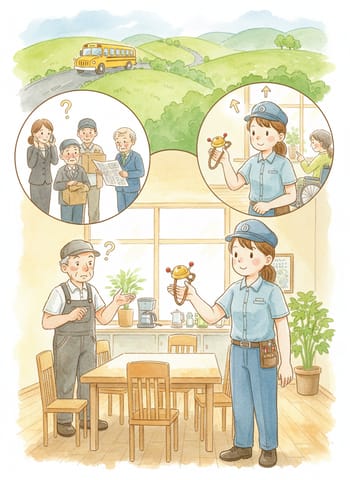
But Elif is in the break room now, pouring coffee into a thick white mug. Hedy walks over and holds out the bell.
Mas Elif está na sala de descanso agora, servindo café numa caneca branca grossa. Hedy se aproxima e estende a campainha.
"I am sorry to bother you. I found this, and I cannot find the owner."
"Desculpe incomodar. Achei isto e não consigo encontrar o dono."
Elif looks at the bell for a long moment. She does not take it. Instead she says, "Where did you find it?"
Elif olha para a campainha por um longo momento. Não a pega. Em vez disso, pergunta: "Onde você achou?"
"On the table. By the timetables."
"Na mesa. Perto dos horários."
"What time?"
"A que horas?"
"About six. It was there when I came in."
"Umas seis. Já estava lá quando cheguei."
"Who sat there before you?"
"Quem sentou ali antes de você?"
Hedy opens her mouth, and then she closes it again. She has not asked anyone this question. She has asked only "Is it yours?" and every answer has been no.
Hedy abre a boca e depois a fecha. Não fez essa pergunta a ninguém. Perguntou só "É sua?", e todas as respostas foram não.
"I do not know," she admits.
"Não sei", admite.
"Then you have been asking the wrong people," Elif says gently. "Driving is mostly noticing. You look at the mirror, the road, the face of the person at the stop. A bell is the same. Look at it again."
"Então você tem perguntado às pessoas erradas", diz Elif com gentileza. "Dirigir é, na maior parte, reparar. Você olha o retrovisor, a estrada, o rosto da pessoa no ponto. Uma campainha é igual. Olhe de novo."
Hedy turns the bell in her hand. It has a small green sticker on the back, so faded that she nearly misses it. The sticker shows a frog with one eye closed.
Hedy vira a campainha na mão. Ela tem um pequeno adesivo verde atrás, tão desbotado que quase não o vê. O adesivo mostra um sapo com um olho fechado.
"I have seen this frog," she says slowly.
"Eu já vi esse sapo", diz devagar.
"Where?"
"Onde?"
She thinks about the washing bay window, and the road beyond it. Every morning, around half past six, a girl on a bicycle crosses the depot yard. She delivers parcels to the office. She rides a white bike with a basket, and on the basket there is a green frog.
Pensa na janela da área de lavagem e na rua além dela. Toda manhã, por volta das seis e meia, uma garota de bicicleta atravessa o pátio da garagem. Entrega encomendas no escritório. Anda numa bicicleta branca com cesta, e na cesta há um sapo verde.
"The courier," Hedy says. "She comes every day with the post. She sits in here sometimes, to warm her hands."
"A entregadora", diz Hedy. "Ela vem todo dia com a correspondência. Às vezes se senta aqui para esquentar as mãos."
"Does she have a bell?"
"Ela tem campainha?"
Hedy tries to remember. She sees the girl's bike in her mind, bright against the grey yard. The handlebars are bare, with a tiny hole where something used to be.
Hedy tenta lembrar. Vê a bicicleta da garota em sua mente, clara contra o pátio cinza. O guidão está nu, com um furinho onde algo costumava ficar.
"No," she says. "She does not have one now."
"Não", diz. "Agora ela não tem."
Elif lifts her mug and drinks, as if the matter is closed. Hedy looks at the clock. It is nearly eight, and the courier has already come and gone. She will not return until tomorrow morning. By then Hedy will be sitting in a test room with her hands wet from worry.
Elif ergue a caneca e bebe, como se o assunto estivesse encerrado. Hedy olha para o relógio. São quase oito horas, e a entregadora já veio e foi embora. Só voltará amanhã de manhã. Até lá, Hedy estará numa sala de prova com as mãos molhadas de nervoso.
She could leave the bell with the dispatcher. That would be a perfectly reasonable thing to do.
Poderia deixar a campainha com o despachante. Seria uma coisa perfeitamente razoável de fazer.
"I think I will wait by the gate," she says. "Maybe the courier comes back for something."
"Acho que vou esperar no portão", diz. "Talvez a entregadora volte para buscar alguma coisa."
"Maybe," Elif says. Her face stays calm, but one corner of her mouth moves.
"Talvez", diz Elif. O rosto continua calmo, mas um canto da boca se move.
Hedy takes her study book and sits on the low wall by the depot gate. She reads about road signs and keeps one eye on the road. The page about priority at crossings is difficult. Outside, with the sound of engines and the smell of oil, she holds it in her head better. She reads the page twice. Then she reads it a third time with her eyes closed.
Hedy pega o livro de estudo e senta no muro baixo junto ao portão da garagem. Lê sobre placas de trânsito e mantém um olho na rua. A página sobre preferência nos cruzamentos é difícil. Do lado de fora, com o barulho dos motores e o cheiro de óleo, ela a guarda melhor na cabeça. Lê a página duas vezes. Depois lê uma terceira vez de olhos fechados.
At a quarter past nine she hears a bicycle. It comes fast around the corner, and the rider is standing on the pedals. It is the girl, and she looks upset. She stops by the gate and checks the ground, the wall and the gutter with a worried frown.
Às nove e quinze, ouve uma bicicleta. Ela dobra a esquina depressa, e a ciclista pedala em pé. É a garota, e parece aflita. Para junto do portão e examina o chão, o muro e a sarjeta com cara preocupada.
"Are you looking for this?" Hedy asks.
"Está procurando isto?", pergunta Hedy.
She holds up the bell. The girl's face changes in a single second. She jumps off her bike and takes the bell with both hands.
Ela ergue a campainha. O rosto da garota muda num segundo. Ela pula da bicicleta e pega a campainha com as duas mãos.
"Where was it?" she says. "I have looked everywhere. I came back twice."
"Onde estava?", diz. "Procurei por todo lado. Voltei duas vezes."
"In the break room. You must have left it on the table this morning."
"Na sala de descanso. Você deve ter deixado na mesa hoje de manhã."
The girl presses the lever. Ring. The bell sounds clear and bright across the yard, and a pigeon flies off the roof. She laughs and covers her mouth.
A garota aperta a alavanca. Trim. A campainha soa clara e brilhante pelo pátio, e um pombo voa do telhado. Ela ri e cobre a boca.
"Thank you," she says. "You do not understand. It is the only thing I have from my brother."
"Obrigada", diz. "Você não entende. É a única coisa que tenho do meu irmão."
She turns the bell over. Something small rattles inside it, a tiny sound like a seed in a shell. She looks up at Hedy as if she wants to say more.
Ela vira a campainha. Algo pequeno chacoalha dentro dela, um som minúsculo como uma semente numa casca. Olha para Hedy como se quisesse dizer mais.
Then she closes her fingers around it and says nothing. Behind Hedy, the depot gate hums as it opens. A bus is coming in, and Elif is at the wheel.
Então fecha os dedos em volta dela e não diz nada. Atrás de Hedy, o portão da garagem zumbe ao se abrir. Um ônibus está entrando, e Elif está ao volante.