The Radio That Knew Tomorrow
Una historia gratuita en inglés de nivel A1 para estudiantes, para leer en línea en 7 idiomas, con opción de escucharla en la app gratuita Storyteller.
An old computer at a night radio station prints song requests for the next day, and every one of them comes true.
¡Ese fue el avance! Escucha la historia completa en la app gratuita Storyteller. Descargar la app
El audio no está disponible en este momento.
Stellan worked the night shift at a small radio station. He played music from ten at night to six. Only a few people listened. He liked it that way.
Stellan trabajaba el turno de noche en una pequeña estación de radio. Ponía música desde las diez de la noche hasta las seis. Solo unas pocas personas escuchaban. Le gustaba así.
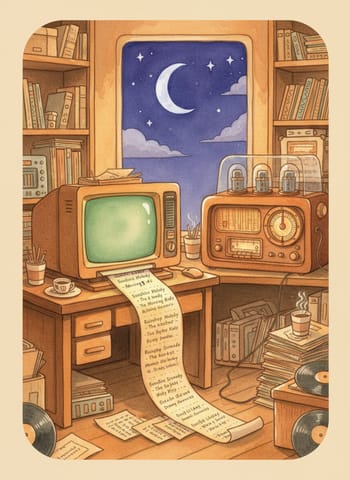
The station had an old computer in the corner. It made a list of song requests. Listeners sent the requests by phone and by mail. Every night Stellan printed the list.
La estación tenía una computadora vieja en un rincón. Hacía una lista de peticiones de canciones. Los oyentes mandaban las peticiones por teléfono y por correo. Cada noche Stellan imprimía la lista.
One Tuesday the printer made a strange sound. A long paper came out. Stellan read it and frowned. The date at the top was Wednesday.
Un martes la impresora hizo un ruido extraño. Salió un papel largo. Stellan lo leyó y frunció el ceño. La fecha de arriba era miércoles.
"That is wrong," he said. "Today is Tuesday."
«Eso está mal», dijo. «Hoy es martes.»
Under the date were five song requests. Some names were new to him. One said, "For Mrs. Lind, who cannot sleep." Another said, "For the bus driver on Route Nine."
Debajo de la fecha había cinco peticiones de canciones. Algunos nombres eran nuevos para él. Uno decía: «Para la señora Lind, que no puede dormir». Otro decía: «Para el conductor del autobús de la ruta nueve».
Stellan put the paper on his desk. He played his usual songs. He drank his coffee. He looked at the paper again and again.
Stellan dejó el papel en su escritorio. Puso sus canciones de siempre. Tomó su café. Miró el papel una y otra vez.
At two in the morning the phone rang.
A las dos de la mañana sonó el teléfono.
"Hello, station," said Stellan.
«Hola, estación», dijo Stellan.
"Hello," said an old voice. "I am Mrs. Lind. I cannot sleep. Can you play a quiet song for me?"
«Hola», dijo una voz anciana. «Soy la señora Lind. No puedo dormir. ¿Puede poner una canción tranquila para mí?»
Stellan held the paper in his hand. The first line said, "For Mrs. Lind, who cannot sleep." His mouth opened.
Stellan tenía el papel en la mano. La primera línea decía: «Para la señora Lind, que no puede dormir». Se le abrió la boca.
"Yes," he said slowly. "I have a song for you."
«Sí», dijo despacio. «Tengo una canción para usted.»
He played the first request on the list. It was a soft song with a piano. Mrs. Lind said thank you and hung up.
Puso la primera petición de la lista. Era una canción suave con piano. La señora Lind dio las gracias y colgó.
Stellan sat very still. Then he looked at the second request. "For the bus driver on Route Nine."
Stellan se quedó muy quieto. Luego miró la segunda petición. «Para el conductor del autobús de la ruta nueve.»
At four the phone rang again. A man said, "Hi. I drive the early bus. Do you have a happy song for me?"
A las cuatro volvió a sonar el teléfono. Un hombre dijo: «Hola. Manejo el autobús de la mañana. ¿Tiene una canción alegre para mí?»
"I do," said Stellan. He played a fast, bright song with drums. The man laughed on the phone.
«La tengo», dijo Stellan. Puso una canción rápida y brillante con tambores. El hombre se rio por teléfono.
Now Stellan was sure. The old computer knew the requests before the people called. It was a gift, or maybe a joke.
Ahora Stellan estaba seguro. La vieja computadora conocía las peticiones antes de que la gente llamara. Era un regalo, o tal vez una broma.
He read the last request. It said, "For the night man, from the radio."
Leyó la última petición. Decía: «Para el hombre de la noche, de parte de la radio».
Stellan did not understand. He played the song anyway. It was a slow song about a light at night. He listened to the whole song. Nobody called. The room was quiet. Outside, the first bird began to sing.
Stellan no entendió. Puso la canción de todos modos. Era una canción lenta sobre una luz en la noche. La escuchó entera. Nadie llamó. El cuarto estaba en silencio. Afuera, el primer pájaro empezó a cantar.
At six o'clock the morning man came in. His name was Gabe. He put a bag of bread on the desk.
A las seis llegó el hombre de la mañana. Se llamaba Gabe. Dejó una bolsa de pan en el escritorio.
"You look tired," Gabe said. "Any news?"
«Te ves cansado», dijo Gabe. «¿Alguna novedad?»
Stellan pointed to the long paper. "The computer made a list for tomorrow. Every song was right."
Stellan señaló el papel largo. «La computadora hizo una lista para mañana. Todas las canciones fueron correctas.»
Gabe read the paper. He laughed. "Old machines do strange things. Maybe it just guessed."
Gabe leyó el papel. Se rio. «Las máquinas viejas hacen cosas raras. Quizás solo adivinó.»
"Maybe," Stellan said. But he did not think so.
«Quizás», dijo Stellan. Pero no lo creía.
The next night he came to work early. The printer sat quiet. At midnight the machine made a small sound. A new paper came out.
La noche siguiente llegó temprano al trabajo. La impresora estaba en silencio. A medianoche la máquina hizo un ruidito. Salió un papel nuevo.
Stellan picked it up. The date said Thursday. There were three requests. The first one said, "For the night man, with thanks."
Stellan lo tomó. La fecha decía jueves. Había tres peticiones. La primera decía: «Para el hombre de la noche, con gratitud».
He smiled. He pressed the button on the microphone.
Sonrió. Presionó el botón del micrófono.
"Good evening," he said. "This is your night man. Here is a song for you."
«Buenas noches», dijo. «Soy su hombre de la noche. Aquí tienen una canción para ustedes.»