The Coin with the Bird
Una historia gratuita en inglés de nivel B1 para estudiantes, para leer en línea en 7 idiomas, con opción de escucharla en la app gratuita Storyteller.
Two skewer sellers follow three clues to find out why a foreign coin appears in their tip dish every night.
¡Ese fue el avance! Escucha la historia completa en la app gratuita Storyteller. Descargar la app
El audio no está disponible en este momento.
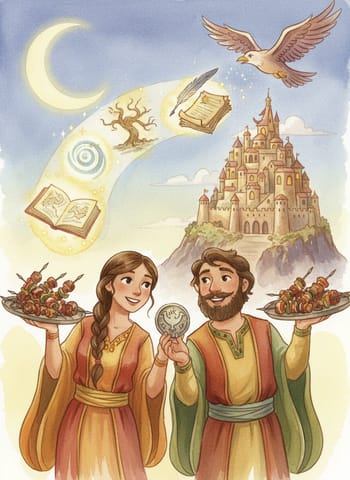
Laila ran the skewer cart at the north end of the bus terminal. She sold chicken, onions and green peppers on sticks, and she sold them hot. Her cart had a squeaky wheel, a small gas grill, and a glass tip dish by the till. Every night at closing time, she emptied that dish onto a folded cloth and counted what she found.
Laila atendía el puesto de brochetas en el extremo norte de la terminal de autobuses. Vendía pollo, cebolla y pimientos verdes en palitos, y los vendía calientes. Su carrito tenía una rueda chirriante, una pequeña parrilla de gas y un plato de vidrio para las propinas junto a la caja. Cada noche, a la hora de cerrar, vaciaba ese plato sobre un paño doblado y contaba lo que encontraba.
For two weeks, the same strange thing happened. Each night, at the bottom of the dish, lay one coin that did not belong to this country. It was small and heavy. It had a bird on one side and tiny letters on the other. The letters were not ours. Laila could not read them, and neither could anybody else.
Durante dos semanas ocurrió la misma cosa extraña. Cada noche, en el fondo del plato, había una moneda que no pertenecía a este país. Era pequeña y pesada. Tenía un pájaro en una cara y letras diminutas en la otra. Las letras no eran las nuestras. Laila no podía leerlas, y nadie más tampoco.
"It's a different coin every night," said Lazlo, her helper. He was twenty-two, tall, and always hungry. "Look. This one is thicker. Yesterday's was thinner."
«Es una moneda distinta cada noche», dijo Lazlo, su ayudante. Tenía veintidós años, era alto y siempre tenía hambre. «Mira. Esta es más gruesa. La de ayer era más delgada».
"It is the same bird," Laila said. She turned the coin under the lamp. "The same bird, the same letters. Only the edge is different. Somebody is playing a game with us."
«Es el mismo pájaro», dijo Laila. Giró la moneda bajo la lámpara. «El mismo pájaro, las mismas letras. Solo el borde es diferente. Alguien está jugando con nosotros».
"Maybe it's a gift from a rich traveller," said Lazlo.
«Quizás es un regalo de algún viajero rico», dijo Lazlo.
"A rich traveller would leave a note," said Laila. "And this is worth nothing in any shop. I tried to spend one at the kiosk. The man laughed at me."
«Un viajero rico dejaría una nota», dijo Laila. «Y esto no vale nada en ninguna tienda. Intenté gastar una en el quiosco. El hombre se rio de mí».
She put the coin on the counter next to the others. There were fourteen of them now, in a neat line, like tiny soldiers. Lazlo looked at them for a long time.
Puso la moneda en el mostrador junto a las otras. Ya eran catorce, en una fila ordenada, como pequeños soldados. Lazlo las miró durante mucho tiempo.
"We have a puzzle," he said at last. "A mystery. We could solve it."
«Tenemos un acertijo», dijo por fin. «Un misterio. Podríamos resolverlo».
"We have a cart and a hundred hungry people and a bus at ten past nine," said Laila. "But yes. I want to know. A coin is a small thing, but a bird that follows me every night is not."
«Tenemos un carrito, cien personas hambrientas y un autobús a las nueve y diez», dijo Laila. «Pero sí. Quiero saberlo. Una moneda es algo pequeño, pero un pájaro que me sigue todas las noches no lo es».
That evening, they made a plan. Lazlo would watch the tip dish from behind the grill. Laila would serve the customers and keep her ears open. They would write down everything they noticed on the back of a paper menu. Whoever solved the puzzle first would not wash the grill for a week.
Esa tarde hicieron un plan. Lazlo vigilaría el plato de propinas desde detrás de la parrilla. Laila atendería a los clientes y mantendría los oídos abiertos. Anotarían todo lo que notaran en el reverso de un menú de papel. Quien resolviera primero el acertijo no lavaría la parrilla durante una semana.
The first clue came early. At nine o'clock, the coin was not yet in the dish. At half past nine, the big bus from the coast arrived. Then there were three coins in the dish. Two were from this country, and one had the bird.
La primera pista llegó temprano. A las nueve en punto, la moneda todavía no estaba en el plato. A las nueve y media llegó el autobús grande de la costa. Entonces había tres monedas en el plato. Dos eran de este país, y una tenía el pájaro.
"It came after the coast bus," Lazlo said, writing quickly. "Clue number one. Not before. Only after."
«Llegó después del autobús de la costa», dijo Lazlo, escribiendo rápido. «Pista número uno. No antes. Solo después».
"Maybe a passenger from the coast puts it there," said Laila.
«Quizás un pasajero de la costa la pone ahí», dijo Laila.
"But every night? Always from the coast?" Lazlo shook his head. "That's too tidy. Tourists would pay with all kinds of coins, not one kind."
«¿Pero todas las noches? ¿Siempre de la costa?». Lazlo negó con la cabeza. «Es demasiado ordenado. Los turistas pagarían con todo tipo de monedas, no con un solo tipo».
The second clue came the next night. Laila started to look closely at the people who paid in cash. Most paid with paper money, and they took their change without looking. Some left a coin in the dish, and some did not. She noticed that one type of customer always left coins: the people whose hands were wet.
La segunda pista llegó la noche siguiente. Laila empezó a fijarse bien en la gente que pagaba en efectivo. La mayoría pagaba con billetes y recibía el cambio sin mirar. Algunos dejaban una moneda en el plato y otros no. Notó que un tipo de cliente siempre dejaba monedas: la gente que tenía las manos mojadas.
"Wet hands," she said, and she tapped the menu with her pen. "Clue number two. Look at that man. He has just washed his hands. He drops the coin in the dish with the water still on his fingers."
«Manos mojadas», dijo, y golpeó el menú con el bolígrafo. «Pista número dos. Mira a ese hombre. Acaba de lavarse las manos. Deja caer la moneda en el plato con el agua todavía en los dedos».
"The washroom is behind the ticket hall," said Lazlo. He frowned. "Maybe someone in the washroom is giving out coins. A cleaner? A guard?"
«El baño está detrás del vestíbulo de boletos», dijo Lazlo. Frunció el ceño. «Quizás alguien en el baño reparte monedas. ¿Un empleado de limpieza? ¿Un guardia?».
"Why would a guard give out foreign coins?"
«¿Por qué un guardia repartiría monedas extranjeras?».
"For luck?" he suggested. "For a joke? Or maybe the guard is a spy."
«¿Por suerte?», sugirió él. «¿Por una broma? O quizás el guardia es un espía».
Laila looked at him for a moment. "Lazlo. A spy would choose a better place than a skewer cart."
Laila lo miró un momento. «Lazlo. Un espía elegiría un lugar mejor que un puesto de brochetas».
On the third night, the clue came from a very small customer. A girl of about six stood at the edge of the cart, holding her father's hand. The father paid for two skewers with a large note. Laila gave him his change, and the girl looked at the coins in her father's palm.
La tercera noche, la pista vino de un cliente muy pequeño. Una niña de unos seis años estaba al borde del carrito, tomada de la mano de su padre. El padre pagó dos brochetas con un billete grande. Laila le dio el cambio, y la niña miró las monedas en la palma de su padre.
"Daddy," the girl said loudly, "you got a bird again."
«Papi», dijo la niña en voz alta, «te salió un pájaro otra vez».
"I know, sweetheart," said the father. He looked slightly embarrassed. "It came out of the machine. It always does."
«Lo sé, cariño», dijo el padre. Parecía algo avergonzado. «Salió de la máquina. Siempre pasa».
"Which machine?" Laila asked, as casually as she could.
«¿Qué máquina?», preguntó Laila, con la mayor naturalidad que pudo.
"The turnstile," the father said. "At the washroom. It costs a coin to go in. I never have the exact amount, so I put in a note. The machine gives me change."
«El torniquete», dijo el padre. «El del baño. Cuesta una moneda entrar. Nunca tengo el monto exacto, así que meto un billete. La máquina me da el cambio».
He held up the bird coin, a little sadly.
Levantó la moneda del pájaro, un poco triste.
"It's always this one. Nobody here can spend it. So I drop it in your tip dish. I hope that's all right. It's the nearest place."
«Siempre es esta. Aquí nadie puede gastarla. Así que la dejo en su plato de propinas. Espero que no le moleste. Es el lugar más cercano».
Laila stared at him. Behind her, Lazlo made a small noise, like a kettle.
Laila lo miró fijamente. Detrás de ella, Lazlo soltó un pequeño ruido, como una tetera.
"The machine gives you change," Laila said slowly.
«La máquina le da el cambio», dijo Laila lentamente.
"Yes. It's been broken for months. It only gives back this coin."
«Sí. Lleva meses descompuesta. Solo devuelve esta moneda».
"Thank you," said Laila. "You have been very helpful."
«Gracias», dijo Laila. «Ha sido muy amable».
When the father and the girl walked away, Lazlo put down his pen. "Clue number three," he said. "The turnstile. It gives out the foreign coins. And everybody with a note gets one. Everybody with wet hands, because they are all coming from the washroom."
Cuando el padre y la niña se alejaron, Lazlo dejó el bolígrafo. «Pista número tres», dijo. «El torniquete. Entrega las monedas extranjeras. Y todos los que pagan con billete reciben una. Todos los de manos mojadas, porque todos vienen del baño».
"And then everybody drops it in my dish," said Laila, "because it is the nearest place."
«Y luego todos la dejan en mi plato», dijo Laila, «porque es el lugar más cercano».
She started to laugh. She laughed until she had to hold the edge of the cart.
Empezó a reír. Rio hasta tener que sostenerse del borde del carrito.
"For two weeks, we looked for a spy and a rich traveller. And it was the toilet."
«Durante dos semanas buscamos a un espía y a un viajero rico. Y era el baño».
"It's the most ordinary answer in the world," Lazlo said, wiping his eyes. "It is almost too ordinary to be true."
«Es la respuesta más común del mundo», dijo Lazlo, secándose los ojos. «Es casi demasiado común para ser verdad».
"Who loads the machine with change?" Laila asked, once she could speak again.
«¿Quién carga la máquina con el cambio?», preguntó Laila, cuando pudo volver a hablar.
"Somebody who made a mistake a long time ago," said Lazlo. "And nobody has ever checked."
«Alguien que cometió un error hace mucho tiempo», dijo Lazlo. «Y nadie lo ha revisado nunca».
They went and looked at the machine after the last bus. It stood at the back of the ticket hall, grey and square. It had a slot for coins and a slot for notes. A sign above it said "Exact coins preferred." A small drawer at the bottom held the change. Lazlo pressed a button, and a bird coin rolled out into his hand.
Fueron a mirar la máquina después del último autobús. Estaba al fondo del vestíbulo de boletos, gris y cuadrada. Tenía una ranura para monedas y otra para billetes. Un letrero encima decía «Se prefieren monedas exactas». Un pequeño cajón en la parte inferior contenía el cambio. Lazlo apretó un botón, y una moneda con el pájaro rodó hasta su mano.
"It's fifteen now," he said. "We have fifteen."
«Ahora son quince», dijo. «Tenemos quince».
"I know the manager of the terminal," said Laila. "He buys a skewer every evening. I will tell him tomorrow."
«Conozco al gerente de la terminal», dijo Laila. «Compra una brocheta todas las tardes. Se lo diré mañana».
"Tell him tonight," said Lazlo. "Look at the queue."
«Díselo esta noche», dijo Lazlo. «Mira la fila».
A line of five tired people had formed behind them. A woman at the front held a coin in her hand and glared at the slot. Her face said that she had waited long enough.
Se había formado una fila de cinco personas cansadas detrás de ellos. Una mujer al frente sostenía una moneda en la mano y miraba con enojo la ranura. Su rostro decía que ya había esperado bastante.
Laila looked at the bird in her palm. It had been in her tip dish for two weeks, and it had never done anything useful. She smiled at the woman. Then she stepped forward, pushed the coin into the slot, and heard a small, satisfying click. The turnstile swung open.
Laila miró el pájaro en su palma. Había estado en su plato de propinas durante dos semanas, y nunca había servido para nada. Le sonrió a la mujer. Luego dio un paso adelante, metió la moneda en la ranura y escuchó un pequeño y satisfactorio clic. El torniquete giró.
"Please go ahead," Laila said, and she held the gate for the woman until she was through.
«Pase, por favor», dijo Laila, y sostuvo la puerta para la mujer hasta que pasó.