The Carriage on Siding Nine
Una historia gratuita en inglés de nivel B2 para estudiantes, para leer en línea en 7 idiomas, con opción de escucharla en la app gratuita Storyteller.
Two quarrelling restorers must save an old railway carriage before an inspection when its heater breaks down overnight.
¡Ese fue el avance! Escucha la historia completa en la app gratuita Storyteller. Descargar la app
El audio no está disponible en este momento.
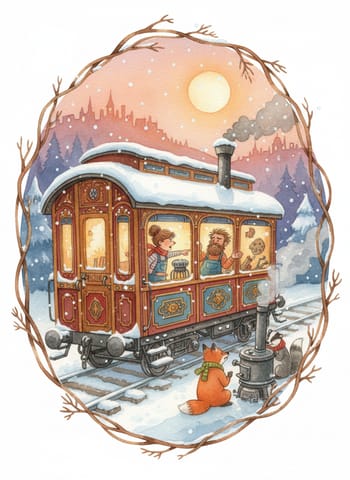
The old carriage had stood on Siding Nine for thirty years. The railway society wanted it ready for a visitor inspection by nine o'clock the next morning. Anneke had been restoring its woodwork since spring. Luca had been hired three weeks earlier to replace the wiring. In all that time, they had agreed on nothing.
El viejo vagón llevaba treinta años en el Apartadero Nueve. La sociedad ferroviaria lo quería listo para una inspección de visitantes a las nueve de la mañana siguiente. Anneke llevaba restaurando su carpintería desde la primavera. Luca había sido contratado tres semanas antes para reemplazar el cableado. En todo ese tiempo, no habían estado de acuerdo en nada.
"You've drilled a hole in the original panel," Anneke said that evening, standing in the aisle with her arms crossed.
«Hiciste un agujero en el panel original», dijo Anneke esa tarde, de pie en el pasillo con los brazos cruzados.
"I've drilled a small hole in a panel that was already cracked," Luca answered. "If I had waited for your permission, we would still be sitting in the dark."
«Hice un agujerito en un panel que ya estaba agrietado», respondió Luca. «Si hubiera esperado tu permiso, todavía estaríamos a oscuras».
"Some of us think the dark has character."
«Algunos pensamos que la oscuridad tiene carácter».
"Some of us have to pass an inspection."
«Algunos tenemos que pasar una inspección».
It was a familiar argument. Anneke believed the carriage should look exactly as it had in its best years, with brass lamps, leather straps and varnished walnut. Luca believed that nobody would pay to visit a museum that might catch fire. They had been polite for the first week and rude for the second. By the third they had simply stopped looking at each other when they talked.
Era una discusión conocida. Anneke creía que el vagón debía verse exactamente como en sus mejores años, con lámparas de bronce, correas de cuero y nogal barnizado. Luca creía que nadie pagaría por visitar un museo que podía incendiarse. Habían sido corteses la primera semana y groseros la segunda. Para la tercera, simplemente habían dejado de mirarse al hablar.
At seven o'clock, the heater died. It was an ancient iron box under the floor, and it gave a long sigh, a short rattle, and then nothing. Within an hour the carriage felt like the inside of a refrigerator.
A las siete, el calefactor murió. Era una caja de hierro antigua bajo el piso, y dio un largo suspiro, un breve traqueteo y luego nada. En una hora, el vagón parecía el interior de un refrigerador.
"We can't leave," Anneke said, rubbing her hands together. "The varnish on the ceiling is still wet. If it gets too cold overnight, it will cloud over, and the inspector will see every mark."
«No podemos irnos», dijo Anneke, frotándose las manos. «El barniz del techo todavía está húmedo. Si hace demasiado frío esta noche, se pondrá opaco, y la inspectora verá cada marca».
"And I can't leave either," said Luca. "Half of the lamps aren't connected yet. If the board arrives tomorrow and finds the lights out, they'll replace me with someone cheaper."
«Y yo tampoco puedo irme», dijo Luca. «La mitad de las lámparas aún no están conectadas. Si la junta llega mañana y encuentra las luces apagadas, me reemplazarán por alguien más barato».
They looked at each other for the first time in days. Neither of them enjoyed what they saw, because each recognised the same tired, stubborn face.
Se miraron por primera vez en días. A ninguno de los dos le gustó lo que vio, porque cada uno reconoció el mismo rostro cansado y terco.
"I suppose," Anneke said slowly, "that we should have started working together a week ago."
«Supongo», dijo Anneke despacio, «que debimos haber empezado a trabajar juntos hace una semana».
"That is the closest thing to an apology I have ever heard from you."
«Eso es lo más parecido a una disculpa que te he oído jamás».
"Don't get used to it."
«No te acostumbres».
They made a plan, though neither of them would have called it that. Luca brought two work lamps and a long extension cable from his van. Anneke found a metal tray and a stack of old bricks in the storeroom. If the bricks were warmed under the lamps, they could stand around the wet varnish like small radiators. It was a crude idea, and it might easily have failed, but there was no one else to ask.
Hicieron un plan, aunque ninguno de los dos lo habría llamado así. Luca trajo de su camioneta dos lámparas de trabajo y un largo cable de extensión. Anneke encontró una bandeja de metal y una pila de ladrillos viejos en el almacén. Si los ladrillos se calentaban bajo las lámparas, podían ponerse alrededor del barniz húmedo como pequeños radiadores. Era una idea tosca, y bien podía fallar, pero no había nadie más a quien preguntar.
By ten o'clock the carriage glowed with a yellow light, and the air near the ceiling had become tolerable. Luca crouched on the floor and wired the first brass lamp, while Anneke held it steady on the step ladder. For the first time, she watched his hands instead of his mistakes. They were quick and careful, and he talked quietly to the cables as he worked.
A las diez, el vagón brillaba con una luz amarilla, y el aire cerca del techo se había vuelto tolerable. Luca se agachó en el suelo y conectó la primera lámpara de bronce, mientras Anneke la sostenía firme desde la escalera. Por primera vez, ella miró sus manos en lugar de sus errores. Eran rápidas y cuidadosas, y él hablaba en voz baja con los cables mientras trabajaba.
"You do that a lot," she said.
«Haces eso mucho», dijo ella.
"Do what?"
«¿Hacer qué?».
"Talk to the wires. You were doing it yesterday as well."
«Hablarles a los cables. Ayer también lo hacías».
"Habit," he said, and shrugged. "Wires respond better to kindness than to shouting. People are the same, from what I've heard."
«Costumbre», dijo él, y se encogió de hombros. «Los cables responden mejor a la amabilidad que a los gritos. Con las personas es igual, por lo que he oído».
Anneke laughed before she could stop herself, and the sound seemed to surprise them both.
Anneke se rio antes de poder evitarlo, y el sonido pareció sorprender a ambos.
At midnight, a fuse blew. The work lamps went out, and the whole carriage dropped into darkness so thick that Anneke could not see her own hand. She heard Luca swear softly somewhere near the floor.
A medianoche, saltó un fusible. Las lámparas de trabajo se apagaron, y todo el vagón cayó en una oscuridad tan espesa que Anneke no veía su propia mano. Oyó a Luca maldecir en voz baja en algún lugar cerca del suelo.
"Don't move," he said. "The fuse box is behind the third seat, and I'm not sure my phone has any charge left."
«No te muevas», dijo él. «La caja de fusibles está detrás del tercer asiento, y no estoy seguro de que mi teléfono tenga batería».
"Wait," said Anneke. "Look up."
«Espera», dijo Anneke. «Mira hacia arriba».
Above the luggage rack on the left side, a small pale-green shape had begun to shine. It was a star, no bigger than a coin, glowing faintly against the dark wood. They both stared at it, as though it were a visitor.
Sobre el portaequipajes del lado izquierdo, una pequeña forma verde pálido había empezado a brillar. Era una estrella, no más grande que una moneda, que resplandecía débilmente contra la madera oscura. Los dos se quedaron mirándola, como si fuera una visita.
"That wasn't there this morning," Luca said.
«Eso no estaba aquí esta mañana», dijo Luca.
"It was. It's one of those stickers children press onto windows. It must have been charging up under the work lamps all evening." Anneke squinted at it. "I've varnished around that rack six times and never noticed it. Somebody stuck it underneath, where only a person lying on the floor would see it."
«Sí estaba. Es una de esas calcomanías que los niños pegan en las ventanas. Debe haberse estado cargando bajo las lámparas de trabajo toda la tarde». Anneke la miró entrecerrando los ojos. «He barnizado alrededor de ese portaequipajes seis veces y nunca la noté. Alguien la pegó por debajo, donde solo la vería una persona tendida en el suelo».
"That could have been decades ago."
«Eso pudo ser hace décadas».
"Maybe the last time the carriage ran. Maybe a child on the last summer train, lying on the seat with nothing to do."
«Quizás la última vez que el vagón funcionó. Quizás un niño en el último tren del verano, acostado en el asiento sin nada que hacer».
For a while neither of them spoke. The little star gave off just enough light to show the outline of the roof and the pale shape of Luca's face. Anneke found that it was easier to say things in the dark.
Durante un rato ninguno habló. La pequeña estrella daba justo la luz suficiente para mostrar el contorno del techo y la forma pálida del rostro de Luca. Anneke descubrió que era más fácil decir las cosas en la oscuridad.
"I should have listened to you about the wiring," she said at last. "I wanted the carriage to look the way it did when I was small. My father used to bring me here, and I think I've been trying to rebuild the afternoon more than the carriage."
«Debí haberte escuchado sobre el cableado», dijo por fin. «Quería que el vagón se viera como cuando yo era pequeña. Mi padre me traía aquí, y creo que he estado intentando reconstruir esa tarde más que el vagón».
"I wanted to fix it because I didn't want it to burn," Luca answered. "But I could have asked what mattered to you before I started drilling."
«Yo quería arreglarlo porque no quería que se incendiara», respondió Luca. «Pero podría haberte preguntado qué era importante para ti antes de empezar a taladrar».
"You could have."
«Podrías haberlo hecho».
"So could you."
«Tú también».
He found the fuse box by following the star as a landmark, and he replaced the fuse without another word. When the lamps came back on, the carriage seemed warmer than before, although it must have been the same temperature as ever. Anneke was surprised to find that she was disappointed the star had disappeared into the ordinary light.
Encontró la caja de fusibles usando la estrella como punto de referencia, y cambió el fusible sin decir una palabra más. Cuando las lámparas volvieron a encenderse, el vagón pareció más cálido que antes, aunque debía de estar a la misma temperatura de siempre. Anneke se sorprendió al descubrir que le decepcionó que la estrella desapareciera en la luz común.
They worked until five. Luca's solution was a compromise that neither of them had expected to accept. Anneke's brass lamps would stay, but each would hold a low-heat bulb and a hidden cable. The panel he had cracked was repaired with a thin strip of the same walnut, matched by Anneke's careful sanding. They carried the warm bricks along the ceiling one by one, and the varnish dried clear and smooth as glass.
Trabajaron hasta las cinco. La solución de Luca era un compromiso que ninguno de los dos esperaba aceptar. Las lámparas de bronce de Anneke se quedarían, pero cada una llevaría una bombilla de bajo calor y un cable oculto. El panel que él había agrietado se reparó con una fina tira del mismo nogal, igualada con el cuidadoso lijado de Anneke. Llevaron los ladrillos tibios a lo largo del techo uno por uno, y el barniz se secó claro y liso como el vidrio.
At nine o'clock the inspector walked through the carriage with a clipboard. She nodded slowly at the lamps and touched the walls with her fingertips. She asked two questions about the wiring and none about the heater. At the end she paused beneath the luggage rack on the left side and pointed upward.
A las nueve, la inspectora recorrió el vagón con una tablilla. Asintió lentamente ante las lámparas y tocó las paredes con las yemas de los dedos. Hizo dos preguntas sobre el cableado y ninguna sobre el calefactor. Al final se detuvo bajo el portaequipajes del lado izquierdo y señaló hacia arriba.
"Is this star part of the restoration?"
«¿Esta estrella es parte de la restauración?».
Anneke opened her mouth, but Luca spoke first. "We haven't decided yet."
Anneke abrió la boca, pero Luca habló primero. «Aún no lo hemos decidido».
The inspector made a note and moved on. When she had gone, Anneke leaned against the wall and laughed until her eyes were wet.
La inspectora tomó nota y siguió adelante. Cuando se fue, Anneke se apoyó contra la pared y se rio hasta que se le humedecieron los ojos.
"We haven't decided yet," she repeated. "You could have just said it was an accident."
«Aún no lo hemos decidido», repitió. «Podrías haber dicho que fue un accidente».
"It wasn't an accident, though, was it?" Luca said. He picked up his toolbox from the seat. As he turned, Anneke caught sight of a small, faded green shape on the back of it. It was the same pale colour and the same five-pointed outline, a little scratched, as though it had been there for years.
«Pero no fue un accidente, ¿verdad?», dijo Luca. Tomó su caja de herramientas del asiento. Al girar, Anneke vio una pequeña forma verde desteñida en la parte de atrás. Tenía el mismo color pálido y el mismo contorno de cinco puntas, un poco rayado, como si hubiera estado ahí durante años.
She looked at it, and then at him.
Ella lo miró, y luego lo miró a él.
Luca closed the lid, picked up the box, and walked out into the morning without saying a word. Anneke stayed where she was, counting the stars on the ceiling that were not there.
Luca cerró la tapa, tomó la caja y salió a la mañana sin decir una palabra. Anneke se quedó donde estaba, contando las estrellas del techo que no estaban ahí.