The Baby Name List
Una historia gratuita en inglés de nivel B1 para estudiantes, para leer en línea en 4 idiomas, con opción de escucharla en la app gratuita Storyteller.
Two parents-to-be share a list of baby names with nothing in common, and a waiting-room poster finally solves it.
¡Ese fue el avance! Escucha la historia completa en la app gratuita Storyteller. Descargar la app
El audio no está disponible en este momento.
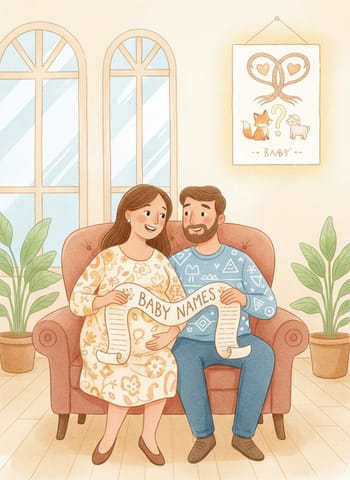
When Margit was eight months pregnant, she and Kasimir sat on the sofa with two sheets of paper. Each of them had written a list of names, and they had agreed to compare them that evening.
Cuando Margit estaba en su octavo mes de embarazo, ella y Kasimir se sentaron en el sofá con dos hojas de papel. Cada uno había escrito una lista de nombres, y habían acordado compararlas esa noche.
It took about thirty seconds. They had no names in common. Not one.
Tomó unos treinta segundos. No tenían ningún nombre en común. Ni uno solo.
Margit's list was full of long, old-fashioned names. Kasimir's list was full of short, modern ones. "Yours all sound like grandmothers," he said. "Yours all sound like robots," she answered. They argued for an hour, not angrily, but very stubbornly.
La lista de Margit estaba llena de nombres largos y anticuados. La lista de Kasimir estaba llena de nombres cortos y modernos. «Los tuyos suenan todos a abuelas», dijo él. «Los tuyos suenan todos a robots», respondió ella. Discutieron durante una hora, no con enojo, pero sí con mucha terquedad.
Then Kasimir had an idea. "What if we stop trying to choose? We only cross out. Each of us crosses out one name we hate, and we take turns. Whatever is left at the end wins."
Entonces a Kasimir se le ocurrió una idea. «¿Y si dejamos de intentar elegir? Solo tachamos. Cada uno tacha un nombre que odie, por turnos. Lo que quede al final gana.»
"And if nothing is left?"
«¿Y si no queda nada?»
"Then we get a dog instead."
«Entonces nos compramos un perro.»
Margit laughed, and the argument was over. They crossed out names for two evenings. Some were easy to lose. Some hurt a little. Margit crossed out one that she had loved since she was twelve, and she pretended it didn't matter. By Sunday, both lists were almost empty, and the baby kicked as if she had an opinion.
Margit se rio y la discusión terminó. Tacharon nombres durante dos noches. Algunos fue fácil perderlos. Otros dolieron un poco. Margit tachó uno que amaba desde los doce años y fingió que no importaba. Para el domingo, ambas listas estaban casi vacías, y el bebé pateó como si tuviera una opinión.
"We should stop," Margit said. "If we keep going, our daughter will have no name at all."
«Deberíamos parar», dijo Margit. «Si seguimos, nuestra hija se quedará sin nombre.»
"We could call her Baby," Kasimir said. "It's short, it's modern, and everyone already knows it."
«Podríamos llamarla Bebé», dijo Kasimir. «Es corto, es moderno y todo el mundo ya lo conoce.»
Three weeks later, they were sitting on plastic chairs in the hospital, waiting for a check. There was a big poster on the wall, with pictures of wildflowers and each name printed underneath. To pass the time, Kasimir read them one by one. In the corner, there was a small purple flower.
Tres semanas después, estaban sentados en sillas de plástico en el hospital, esperando un control. En la pared había un gran póster con fotos de flores silvestres y cada nombre impreso debajo. Para pasar el tiempo, Kasimir los leyó uno por uno. En la esquina había una pequeña flor morada.
"Iris," he said.
«Iris», dijo.
"Say it again," Margit said.
«Dilo otra vez», dijo Margit.
He did. It wasn't on his list. It wasn't on hers. It wasn't long and old, and it wasn't short and trendy. It was simply a name that felt right.
Lo hizo. No estaba en su lista. No estaba en la de ella. No era largo y anticuado, ni corto y de moda. Era simplemente un nombre que se sentía correcto.
"Don't cross anything out," Margit said. "That's the one."
«No tachemos nada», dijo Margit. «Ese es.»
Their daughter was born ten days later. When the nurse asked for the name for the form, Margit began to answer. Kasimir was already saying it too, and they finished the word together.
Su hija nació diez días después. Cuando la enfermera pidió el nombre para el formulario, Margit empezó a responder. Kasimir ya lo estaba diciendo también, y terminaron la palabra juntos.