The Marginalia
قصة إنجليزية مجانية بالمستوى C1 لمتعلمي اللغات، يمكن قراءتها على الإنترنت بلغات عددها 8، مع إمكانية الاستماع إليها عبر تطبيق Storyteller المجاني.
A secondhand bookshop owner traces a decade-long argument written in the margins of used books between two readers she can never identify.
انتهى المقطع التجريبي! استمع إلى القصة كاملة في تطبيق Storyteller المجاني. حمّل التطبيق
الصوت غير متاح الآن.
Priya had owned the secondhand bookshop for six years before she noticed the handwriting.
مضت ست سنوات على امتلاك بريا لمكتبة الكتب المستعملة قبل أن تلاحظ الخط اليدوي.
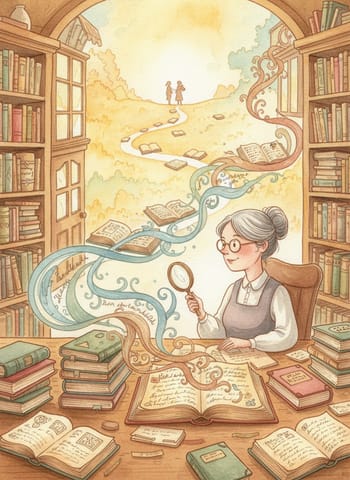
It appeared first in a battered copy of an old travel memoir: a single line in blue ink, cramped and slanted, disagreeing with something the author had written about the loneliness of long journeys. A few shelves over, in an entirely different book by an entirely different author, the same hand had written something else, this time about grief. It read as if continuing a conversation no one else had been invited to. Having sorted secondhand stock for years without once paying attention to marginalia, Priya found herself, almost against her will, reading the edges of every book that came through the door.
ظهر الخط أول مرة في نسخة مهترئة من مذكرات رحلات قديمة: سطر واحد بحبر أزرق، ضيق ومائل، يخالف شيئًا كتبه المؤلف عن وحشة الرحلات الطويلة. وعلى بعد بضعة رفوف، في كتاب مختلف تمامًا لمؤلف مختلف تمامًا، كانت اليد نفسها قد كتبت شيئًا آخر، هذه المرة عن الفقد. بدا ذلك كأنه استكمال لحديث لم يُدعَ إليه أحد غيرهما. وبعد سنوات من فرز البضاعة المستعملة من دون أن تلتفت مرة واحدة إلى الحواشي، وجدت بريا نفسها، تقريبًا رغمًا عنها، تقرأ هوامش كل كتاب يدخل من الباب.
Not until the sixth book did she realize the two hands were arguing with one another, rather than simply annotating alone. What unsettled her was not the handwriting itself but the fact that it argued with a second hand. In a paperback of poems, the blue ink had underlined a stanza and written, "This is sentimental and Marta knows it." Three books later, a looser hand, in pencil, replied in the margin of an entirely separate novel: "Sentimental is not the same as false. You always did confuse the two." Neither writer signed a name. Neither, as far as Priya could tell, had ever left so much as an initial.
لم تدرك حتى الكتاب السادس أن اليدين تتجادلان فيما بينهما، بدل أن يكتب كل منهما ملاحظاته منفردًا. وما أقلقها لم يكن الخط نفسه، بل أنه يجادل يدًا ثانية. في ديوان شعر بغلاف ورقي، كان الحبر الأزرق قد وضع خطًا تحت مقطع وكتب: «هذا مغرق في العاطفية ومارتا تعرف ذلك». وبعد ثلاثة كتب، ردّ خط أكثر انطلاقًا، بقلم رصاص، في هامش رواية منفصلة تمامًا: «العاطفية ليست مثل الزيف. كنتَ دائمًا تخلط بينهما». لم يوقّع أي من الكاتبين اسمه. ولم يترك أي منهما، على حد علم بريا، حتى الحرف الأول من اسمه.
She began keeping the books aside instead of shelving them, a small and growing pile on the counter that her assistant teased her about. It was the dates, once she started checking them against the shop's old purchase records, that told her the truth. The exchange had run for the better part of nine years. Two readers had been buying and presumably trading these same secondhand books, arguing in the margins across a decade without, so far as she could reconstruct it, ever meeting in person.
بدأت تحتفظ بالكتب جانبًا بدل أن تضعها على الرفوف، كومة صغيرة متنامية على المنضدة كان مساعدها يمازحها بسببها. كانت التواريخ، حين شرعت في مطابقتها مع سجلات شراء المكتبة القديمة، هي التي كشفت لها الحقيقة. فقد استمر التبادل ما يقارب تسع سنوات. كان قارئان يشتريان هذه الكتب المستعملة نفسها، ويتبادلانها على الأرجح، ويتجادلان في الهوامش على مدى عقد، من دون أن يلتقيا وجهًا لوجه قط، على قدر ما استطاعت أن تستنتج.
Then, as abruptly as it had started, it stopped. The last book she found, a thin volume of essays bought at an estate sale eighteen months ago, carried only the blue ink. It held only one line: "I don't think you're going to read this one. I'm leaving it here anyway."
ثم توقف، بالفجاءة نفسها التي بدأ بها. كان آخر كتاب وجدته، مجلدًا رفيعًا من المقالات اشترته من بيع تركة قبل ثمانية عشر شهرًا، لا يحمل غير الحبر الأزرق. فيه سطر واحد فقط: «لا أظن أنك ستقرئين هذا الكتاب. سأتركه هنا على أي حال».
Priya spent a full week trying to trace the estate sale back to a name, a family, anyone who might explain who "Marta" had been. She wondered, too, who had written to her so faithfully for so long without ever once identifying himself. The trail went nowhere useful. Wills are not public record in any way a bookshop owner can easily search, and the auction house that had handled the sale had long since closed.
أمضت بريا أسبوعًا كاملًا تحاول أن تتتبع بيع التركة وصولًا إلى اسم، أو عائلة، أو أي شخص يستطيع أن يفسر من كانت مارتا. وتساءلت أيضًا عمن كان يكتب إلى مارتا بهذا الإخلاص طوال هذه المدة من دون أن يعرّف بنفسه ولو مرة. لكن الأثر لم يؤدِّ إلى شيء مفيد. فالوصايا ليست سجلًا عامًا بحيث تستطيع صاحبة مكتبة أن تبحث فيه بسهولة، ودار المزادات التي تولت البيع أغلقت منذ زمن بعيد.
She still has the books, six of them now, kept together on a shelf behind the register that is not for sale. Customers sometimes ask about them, and she tells them the truth, which is that she doesn't know who the writers were, only that they had once, apparently, known each other very well.
ما زالت الكتب عندها، ستة منها الآن، محفوظة معًا على رف خلف صندوق المحاسبة ليس للبيع. يسألها الزبائن عنها أحيانًا، فتقول لهم الحقيقة، وهي أنها لا تعرف من كان الكاتبان، وكل ما تعرفه أنهما عرفا بعضهما، على ما يبدو، معرفة وثيقة جدًا في يوم من الأيام.
Not knowing, she has come to think, is not quite the same as the story being unfinished. Some conversations end because someone stops answering. This one, as best she can tell, ended because someone finally did.
عدم المعرفة، كما صارت تعتقد، ليس تمامًا مثل أن تكون القصة غير مكتملة. بعض الحوارات تنتهي لأن أحدًا يكفّ عن الإجابة. أما هذا الحوار، على أفضل ما تستطيع أن تقدّر، فانتهى لأن أحدًا أجاب أخيرًا.