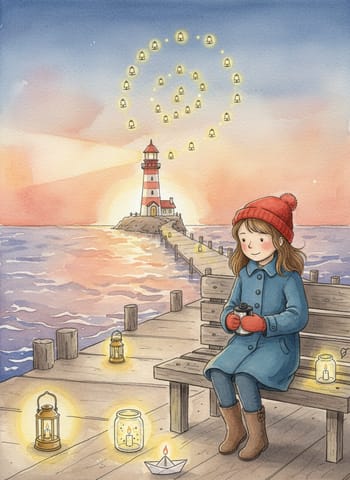
Alma walked to the end of the pier every evening. She liked the hour before dark. The lamps came on one by one. Each lamp drew a round yellow spot on the water.
阿尔玛每天傍晚都走到栈桥的尽头。她喜欢天黑前的那一个小时。路灯一盏接一盏亮起来,每盏灯都在水面上画出一个黄色的圆斑。
Her days were busy, but nobody needed her in a special way. On the pier, she needed nothing either. That was the whole point.
她的日子很忙,但没有人以特别的方式需要她。在栈桥上,她也什么都不需要。这正是全部意义所在。
This evening, a small black tube lay on the last bench. Alma picked it up. It was a case for camera film. Neat blue writing covered a label on its side.
这天傍晚,最后一张长椅上放着一个黑色的小圆筒。阿尔玛拿了起来。那是个装相机胶卷的盒子。侧面的标签上写着工整的蓝色字迹。
"Lamps one to thirty-six. Do not lose," she read.
“一到三十六号灯。别弄丢,”她读道。
She smiled a little. Someone lost it anyway.
她微微一笑。到头来还是有人弄丢了。
She opened the grey lid. A roll of film sat inside, tight in a metal case. She shut the lid fast. Light can spoil old film, she knew.
她打开灰色的盖子。里面有一卷胶卷,紧紧地裹在金属盒里。她赶紧把盖子盖上。她知道,光会毁掉旧胶卷。
"Lamps one to thirty-six," she said quietly. "One picture for each lamp."
“一到三十六号灯,”她轻声说,“每盏灯一张照片。”
She turned and counted the lamps along the pier. There were exactly thirty-six. Each iron post had a small white number near the bottom. She walked here every evening, but she never saw the numbers.
她转过身,数了数栈桥沿线的灯。正好三十六盏。每根铁灯柱的底部附近都有一个小小的白色编号。她每天傍晚都来这儿走,却从没注意过这些数字。
Alma did not own a camera. She did not know the owner. But the roll felt heavy in her hand. It was like a letter without a stamp. She put it in her pocket. Then she walked back toward the town.
阿尔玛没有相机,也不认识失主。可那卷胶卷在她手里沉甸甸的,像一封没贴邮票的信。她把它放进口袋,然后朝镇上走回去。
The bait shop stood at the start of the pier. It was still open. A woman in a blue coat sold hooks and worms there.
饵料店就在栈桥的起点,还开着门。一位穿蓝外套的女人在那里卖鱼钩和蚯蚓。
"Excuse me," said Alma. "I found this on the last bench."
“打扰一下,”阿尔玛说,“我在最后一张长椅上捡到了这个。”
The woman took the tube and read the label. "Film," she said. "Nobody uses that now. And lamps? What a strange thing to photograph."
女人接过圆筒,读了标签。“胶卷,”她说,“现在没人用这个了。还有灯?拍这个可真怪。”
"Do you know who lost it?"
“你知道是谁丢的吗?”
"No. But ask the man with the yellow bucket. He sits near the middle. He sees everyone."
“不知道。不过你去问问拎黄水桶的那个男人。他坐在中间附近,什么人他都见过。”
"Thank you."
“谢谢你。”
"Tell the owner to buy a better case," said the woman. "That lid is loose."
“告诉失主买个好点的盒子,”女人说,“那个盖子太松了。”
Alma walked out along the pier again. The lamps were all on now. The boards made a soft sound under her shoes.
阿尔玛又沿着栈桥往外走。灯都已经亮了。木板在她鞋底下发出轻轻的声音。
The man with the yellow bucket sat on a folding stool. Three lines hung over the rail. A small radio played soft music near his boots.
拎黄水桶的男人坐在一张折叠凳上。三根钓线垂在栏杆外。一台小收音机在他靴子旁放着轻柔的音乐。
"Good evening," said Alma. "Is this yours?"
“晚上好,”阿尔玛说,“这是你的吗?”
He looked at the tube for a while. "No. I only catch fish," he said. "But I know this writing."
他看了圆筒好一会儿。“不是。我只会钓鱼,”他说,“不过我认得这字迹。”
"You do?"
“你认得?”
"A young man came here all year. He stopped at every lamp. He took one picture, and then he wrote in his notebook." The man shook his head. "I thought he was a little crazy."
“有个年轻人一整年都来这儿。他在每盏灯前都停一下,拍一张照片,然后在笔记本上写点什么。”男人摇摇头。“我当时觉得他有点疯。”
"Did you see him today?"
“今天你见到他了吗?”
"I did. He sat on the last bench for a while. Then he ran down the stairs to the beach. He looked like someone who forgot something."
“见了。他在最后一张长椅上坐了一会儿,然后就跑下楼梯去海滩了。看起来像是落了什么东西的人。”
Alma looked at the stairs. The sky was almost black now. The air smelled of salt and old rope. She could go home. The tube was not her problem.
阿尔玛望向楼梯。天几乎全黑了。空气里有盐和旧绳子的味道。她可以回家。这圆筒不关她的事。
But she thought about thirty-six lamps. She thought about a whole year of evenings. It sat in her pocket, small and light. For once, something needed her. She sighed. Then she went down the stairs.
可她想到了三十六盏灯,想到了整整一年的傍晚。它就在她的口袋里,小小的,轻轻的。这一回,有样东西需要她了。她叹了口气,然后走下了楼梯。
The sand was cold and hard. Under the pier, wooden legs stood in rows. They looked like tall, quiet people. A small light moved between them. It went left, then right, then low to the ground.
沙子又冷又硬。栈桥下面,一排排木桩立在那里,像高大而安静的人。一小束光在它们之间移动,往左,往右,又贴近地面。
A man walked there with a torch. He bent over often and touched the sand with his hand. He talked to himself in a low, worried voice.
一个男人拿着手电筒走着。他不停地弯下腰,用手摸着沙子,低声忧心忡忡地自言自语。
"Hello?" Alma called. "Are you looking for something?"
“你好?”阿尔玛喊道,“你在找什么吗?”
The light jumped toward her. "A roll of film," said the man. "It is in a small black tube. I looked for an hour."
光束猛地跳向她。“一卷胶卷,”那人说,“装在一个黑色的小圆筒里。我找了一个小时了。”
"Does the tube say 'Lamps' on the side?"
“圆筒侧面写着‘灯’吗?”
He stopped. The light shook a little.
他停住了。光束微微发抖。
Alma held up the tube. The man did not move. Then he took it with both hands, as if it could break.
阿尔玛举起圆筒。那人一动不动。随后他用双手接了过去,像是怕它会碎。
"Where?" His voice was thin.
“在哪儿?”他的声音很细。
"On the last bench. By lamp thirty-six."
“最后一张长椅上,三十六号灯旁边。”
"I sat there to take it out of my camera," he said. "Then my phone rang. I went down to the beach to talk. Later my pocket was empty. I looked under the pier for an hour. I never thought of the bench." He pressed the tube against his coat. "My name is Naveen. I am sorry. I cannot say anything clever."
“我在那儿坐下来,把它从相机里取出来,”他说,“然后我的手机响了,我就下到海滩上去接电话。后来口袋就空了。我在栈桥下找了一个小时,怎么也没想到长椅那儿。”他把圆筒按在外套上。“我叫纳文。对不起,我说不出什么聪明话来。”
"I am Alma. You do not have to."
“我叫阿尔玛。你不用说什么。”
Naveen laughed, a short and shaky laugh. He sat down on the sand. After a moment, Alma sat beside him.
纳文笑了一声,短促而颤抖。他在沙地上坐了下来。过了一会儿,阿尔玛挨着他坐下。
"The town will take down the old lamps next month," he said. "They will put up new white ones. Plain ones. Nobody asked me."
“下个月镇上要把这些旧灯拆掉,”他说,“换成新的白色灯,普普通通的那种。没有人问过我。”
"I did not know."
“我不知道。”
"Most people do not. They are only lamps." He looked at the tube. "But number nineteen has a bent arm. Number four always has a gull on top. Number twelve hums when you stand close. I wanted to keep every one."
“大多数人都不知道。它们只是灯而已。”他看着圆筒。“可十九号灯有一条歪了的灯臂。四号灯顶上总有一只海鸥。十二号灯你站近了就会嗡嗡响。我想把每一盏都留下来。”
"One picture each?"
“每盏一张?”
"Only one. I have no money for more film. Every lamp got one chance." He wiped his eyes with his sleeve. "Without this roll, the whole year is gone."
“只有一张。我没钱买更多胶卷。每盏灯只有一次机会。”他用袖子擦了擦眼睛。“没了这卷胶卷,整整一年就白费了。”
Alma looked up. From the beach, the pier looked different. Thirty-six small suns stood in a long line over the water. Each one was a little different from the next.
阿尔玛抬起头。从海滩上看,栈桥像是换了一副模样。三十六个小太阳排成长长的一行,悬在水面上,每一个都和旁边那个略有不同。
"I walk here every evening," she said. "I never saw the numbers until tonight."
“我每天傍晚都来这儿走,”她说,“直到今晚,我才第一次看到那些编号。”
"Now you know them."
“现在你认得它们了。”
"Now I know them. I will look at number nineteen first."
“现在我认得了。我要先去看十九号。”
They stood up and brushed the sand from their coats. Naveen held the tube in both hands again. He did not open it. He only held it close.
他们站起来,拍掉外套上的沙子。纳文又用双手握住圆筒。他没有打开,只是把它紧紧抱在身前。
"Is it all right?" asked Alma.
“它没事吧?”阿尔玛问。
"It is perfect." He smiled for the first time. "Every lamp is in here. You saved my whole year."
“好得很。”他第一次露出了笑容。“每一盏灯都在里面。你救了我整整一年。”