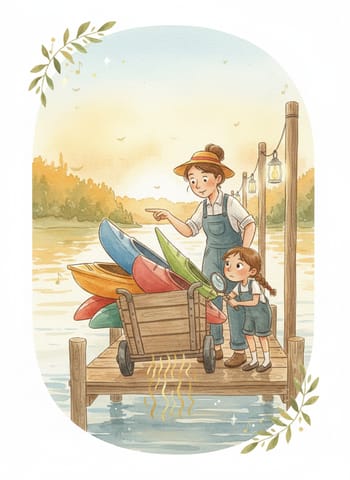
Every morning at ten to eight, the trolley at the canoe dock starts to sing. It is not a pleasant song. It is a thin, rising squeal, like a kettle that has lost its confidence, and it follows Gina down the whole length of the jetty.
每天早上七点五十分,独木舟码头的手推车就会开始唱歌。那歌并不好听。那是一种细细的、不断拔高的尖叫,像一只失去了信心的水壶,沿着整条栈桥一路跟着吉娜。
Gina has managed the hire dock for six summers, and she has made her peace with most noises. The water slaps the pontoons. The paddles knock together in their racks. The gulls complain about everything. The squeal is different, because customers have started to mention it.
吉娜管理这个租船码头已经六个夏天了,对大多数噪音她早已和解。水拍打着浮桥。船桨在架子上互相磕碰。海鸥对什么都抱怨。但这种尖叫不一样,因为顾客已经开始提起它了。
"Is that normal?" asks a man in a brand-new sun hat, pointing at the trolley with a paddle.
“这正常吗?”一个戴着崭新遮阳帽的男人用船桨指着手推车问。
"It is a feature," Gina says. "It tells the canoes that breakfast is coming."
“这是个特色,”吉娜说,“它在告诉独木舟,早饭要来了。”
The man does not laugh, and she cannot blame him. She wheels the load of life jackets to the end of the jetty, the squeal keeping time with her steps. The joke, she decides, has run out.
那人没有笑,她也不能怪他。她推着那一车救生衣走向栈桥尽头,尖叫声随着她的脚步打着拍子。她断定,这个玩笑已经用完了。
Jada arrives at eight, carrying two coffees and a toolbag that is too clean to have been used much. She is the new summer assistant, a student of engineering, and she has been told she will mostly be handing out paddles. She stops on the jetty and tilts her head.
贾达八点到了,手里拿着两杯咖啡和一个太干净、看着没怎么用过的工具包。她是新来的暑期助手,学工程的学生,别人告诉她,她大多数时候只需要发发船桨。她在栈桥上停住,歪着头。
"What is making that sound?" she asks.
“是什么在发出那个声音?”她问。
"The wheel," Gina says. "It is the squeaky wheel. Everyone knows the squeaky wheel gets the oil."
“轮子,”吉娜说,“就是那个吱吱响的轮子。谁都知道,吱吱响的轮子有油吃。”
"Have you tried oil?"
“你试过加油吗?”
"I have tried three kinds. I have tried a spray, a thick grease, and some cooking oil from the café. The squeak ignores all of them."
“试过三种。喷雾,浓稠的润滑脂,还有咖啡馆的一些食用油。那声音对它们全都置之不理。”
Jada puts down her coffee and crouches beside the trolley. She looks at the front wheel for a long time. It is a small grey wheel on a bent metal fork, and it looks perfectly innocent. Then she stands up, rubs her hands together, and smiles the way people smile when they have been given a puzzle.
贾达放下咖啡,在手推车旁蹲下。她盯着前轮看了很久。那是装在一个弯曲金属叉上的小灰轮子,看上去无辜极了。然后她站起来,搓搓手,露出了人们拿到一道谜题时那种微笑。
"I would like to solve this," she says. "If you do not mind."
“我想解决这个问题,”她说,“如果你不介意的话。”
"I would like you to solve it more than I would like almost anything," says Gina. "Be my guest."
“我想让你解决它,胜过我想要几乎任何东西,”吉娜说,“请便。”
Jada makes a rule before she starts. They will not touch the wheel until they know something real. First they will listen, and write down what they hear. Gina finds a pencil behind her ear and a crumpled hire form, and she turns it over to make a notebook.
动手之前,贾达先定了个规矩:在知道真正的情况之前,他们不碰轮子。先听,把听到的记下来。吉娜从耳朵后面找到一支铅笔,又找来一张皱巴巴的租船单,翻到背面当作笔记本。
The first clue arrives within ten minutes. Jada pushes the empty trolley up and down the jetty four times, and it makes no sound at all. It rolls as smoothly as a trolley in an advert. Then Gina loads it with twenty life jackets, and the squeal comes back at once, as shrill as before.
第一条线索十分钟内就来了。贾达推着空车在栈桥上来回走了四趟,一点声音也没有。它滚得像广告里的手推车一样平稳。然后吉娜给车装上二十件救生衣,尖叫声立刻回来了,和以前一样刺耳。
"So it is not the wheel," Jada says slowly. "Or not only the wheel. Something in it changes when there is weight."
“所以不是轮子的问题,”贾达慢慢地说,“或者不光是轮子。有了重量,里面有什么东西起了变化。”
"The wheel has not changed," says Gina. "I have been looking at that wheel for six years."
“轮子没变,”吉娜说,“这个轮子我看了六年。”
"Then the weight is pressing on something else. The frame, maybe, or a part under the load."
“那就是重量压到了别的地方。也许是车架,或是载重下面的某个部件。”
Gina writes on the form: Clue one, silent when empty.
吉娜在单子上写道:线索一,空车时无声。
The second clue comes from the customers. A family of four wants canoes at nine, and Gina sends Jada down the jetty with the loaded trolley while she deals with the paperwork. From the desk, she listens. The squeal starts at the top of the ramp, grows louder along the wooden boards. Then, near the very end of the jetty, it stops.
第二条线索来自顾客。一家四口九点要租独木舟,吉娜让贾达推着满载的车沿栈桥走下去,自己处理文书。她在柜台边听着。尖叫声从斜坡顶上响起,沿着木板越来越大。然后,就在栈桥的最末端附近,它停了。
Jada comes back, frowning. "It stopped by itself at the last three boards."
贾达回来了,皱着眉头。“最后三块木板那里,它自己停了。”
"It always does that," says Gina. "I assumed the boards were smoother there."
“它总是这样,”吉娜说,“我以为那儿的木板更平滑。”
"Are they?"
“是吗?”
"No. They are the oldest boards on the dock. They are the roughest."
“不是。那是码头上最老的木板,最粗糙。”
They look at each other. A rough surface should make a noise, not silence one. Gina writes: Clue two, stops on the oldest, bumpiest boards. Jada taps the pencil against her chin and watches the wake of a passing paddleboard slide across the water.
两人对视了一眼。粗糙的表面应该制造噪音,而不是让噪音消失。吉娜写道:线索二,在最老、最颠簸的木板上会停。贾达用铅笔敲着下巴,看着一块路过的桨板在水面上拖出的波纹滑过。
"What if the squeak is not rolling at all?" she says. "What if the bumps shake it loose?"
“要是这声音根本不是滚动发出来的呢?”她说,“要是颠簸把它震松了呢?”
"Shake what loose?"
“震松什么?”
"I do not know yet. Something that gets squeezed when the trolley is heavy and the ground is smooth, and that gets free when the ground is rough."
“我还不知道。一种东西,在车子很重、地面平滑的时候被挤压,在地面粗糙时就脱开了。”
The third clue is the strangest, and it is Gina who finds it, by accident, at lunchtime. She is sitting on an upturned bucket, eating a sandwich, when the youngest child of the morning family comes running up the jetty. Her father is close behind. The girl is about four, and she is crying with the full force of someone who has lost the most important thing in the world.
第三条线索最奇怪,是吉娜午饭时偶然发现的。她坐在一只倒扣的水桶上吃三明治,这时早上那家人最小的孩子跑上了栈桥。她爸爸紧跟在后面。女孩大约四岁,哭得声嘶力竭,像丢了世界上最重要的东西。
"Her duck," the father explains, out of breath. "She had it in the canoe. We looked everywhere. It is yellow, about this big. It makes a noise when you press it."
“她的鸭子,”父亲喘着气解释,“她把它带到独木舟上了。我们到处都找过了。黄色的,大概这么大。一捏就会响。”
Gina is already shaking her head, because nothing yellow has been left in any of her canoes. Then she stops, with the sandwich halfway to her mouth, and she hears something. It is faint. It is the memory of a sound she has been hearing for a month and has never once named.
吉娜已经在摇头了,因为她的独木舟里没有留下任何黄色的东西。然后她停住了,三明治举在嘴边,听到了一点什么。很微弱。那是一个她已经听了一个月、却从没给它起过名字的声音的记忆。
"Does the duck," she says carefully, "squeak?"
“那只鸭子,”她小心地问,“会吱吱叫吗?”
"Like a mouse with a cold," says the father.
“像一只感冒的老鼠,”父亲说。
Gina puts down her sandwich. She stands up. She walks to the trolley, which is parked in the shade by the desk. She presses down hard on the metal frame above the front wheel. Nothing happens. Then she calls for Jada and asks her to sit on the load of life jackets.
吉娜放下三明治,站起来。她走到停在柜台旁阴凉处的手推车边。她用力按下前轮上方的金属架。什么也没发生。然后她叫来贾达,请她坐到那堆救生衣上。
Jada sits. The trolley sinks a little on its springs. From somewhere deep inside the hollow tube of the handle frame comes a long, thin, unmistakable squeal.
贾达坐了上去。手推车在弹簧上微微下沉。从把手架那根空心管的深处,传来一声悠长、尖细、不会错认的尖叫。
"Clue three," Gina says. "It squeaks when somebody squeezes it."
“线索三,”吉娜说,“有人挤它的时候,它就会叫。”
Together they lie flat on the jetty and look up into the open end of the frame. For a moment they see nothing but darkness and a spider's old web. Then Jada shines her phone torch into the tube, and a small round yellow eye looks back at them.
她们一起趴在栈桥上,抬头望进车架的开口端。起初只看见黑暗和一张蜘蛛的旧网。然后贾达用手机手电筒照进管子里,一只小小的圆圆的黄眼睛回望着她们。
It takes a bent coat hanger and some patience to pull the thing out. The duck comes free with a soft pop, grey with dust and slightly flat. Its beak has been chewed. It has clearly spent a long time wedged in the tube. Every heavy load that rolled over the bumps has squeezed it.
要用一个弯曲的衣架和一点耐心,才能把那东西拉出来。鸭子“啵”的一声轻响掉了出来,沾满灰尘,有点瘪了。它的嘴被咬过。显然,它在管子里卡了很久。每一个滚过颠簸路面的重载,都挤压过它。
"It has been in there since the start of summer," says Gina. "Someone's child must have dropped it down the open end of the handle."
“它从夏天开始就在里面了,”吉娜说,“肯定是谁家的孩子把它从把手的开口处掉了进去。”
"And every time the trolley carries a heavy load," Jada says, "the frame bends a little and squeezes the poor thing."
“每当手推车载重很大的时候,”贾达说,“车架就会弯一点,把这可怜的东西挤一下。”
"And on the rough boards the bumps keep shaking it away from the squeezing point."
“而在粗糙的木板上,颠簸又把它从被挤压的位置震开了。”
"So the sound stops."
“所以声音就停了。”
They sit back on their heels and look at each other, and then they start to laugh. They laugh so hard that a man in a kayak turns his head to see what is wrong with them. A whole summer of oil, of grease, of apologies to customers, and the answer was a duck.
她们坐回自己的脚跟上,互相看着,然后开始大笑。她们笑得那么厉害,一个划皮划艇的男人都转过头来,看她们出了什么毛病。整整一个夏天,用了油,用了润滑脂,向顾客道了歉,答案竟然是一只鸭子。
The four-year-old is called to the desk. Her own duck is still lost somewhere on the lake, and Gina kneels down to her level. The trolley duck is wiped with a damp cloth, and it is held out with great ceremony.
四岁的小女孩被叫到柜台前。她自己的鸭子还丢在湖上的某个地方,吉娜蹲下来,与她视线平齐。手推车里的鸭子用湿布擦干净,郑重其事地递了过去。
"This one has been waiting for a new owner," Gina says.
“这只一直在等一位新主人,”吉娜说。
The girl presses it once, to check, and the familiar squeak fills the afternoon. Her tears stop as though someone has switched off a tap.
女孩按了一下,检查一下,熟悉的吱吱声填满了下午。她的眼泪止住了,仿佛有人拧上了水龙头。
"Thank you," says her father. "She will tell this story for years."
“谢谢你们,”她父亲说,“她会把这个故事讲上好多年的。”
"So will we," says Gina.
“我们也会,”吉娜说。
When the family has gone, the trolley rolls up the jetty in perfect silence. It is the quietest it has been in years.
那家人走后,手推车在栈桥上悄无声息地滚了上去。这是它多年来最安静的一次。
Jada fetches her clean toolbag and opens it for the first time. Inside is a small screwdriver, a tape measure, and a roll of bright blue tape. She tears off a strip, takes the pencil from Gina's hand, and writes on the tape in neat capital letters: DUCK-FREE SINCE JULY. Then she presses it firmly along the handle of the trolley, just above the open end of the tube.
贾达拿来她那个干净的工具包,第一次打开了它。里面有一把小螺丝刀,一把卷尺,还有一卷亮蓝色的胶带。她撕下一条,从吉娜手里拿过铅笔,用整齐的大写字在胶带上写道:“七月起无鸭”。然后她把它牢牢地按在手推车的把手上,就在管子开口端的上方。