The Megaphone from the Council
一个面向英语学习者的免费 B2 级英语故事,可用 7 种语言在线阅读,也可以在免费的 Storyteller 应用中收听。
The woman who chairs a village meeting asks the council for a way to be heard, and the answer turns up in a box on the post office counter.
试听结束!在免费的 Storyteller 应用中收听完整故事。 下载应用
音频暂时无法播放。
The post box in Linden Hollow stood beside the village well. It had been painted green so many times that its corners had gone soft, like a bar of soap. Every afternoon at four o'clock, Eli unlocked it, shook the letters into his canvas bag and read the postmarks out of habit.
林登洼的邮筒立在村里的水井旁。它被刷过太多次绿漆,棱角都变圆了,像一块用旧的肥皂。每天下午四点,伊莱会打开邮筒,把信倒进他的帆布包,再习惯性地看一遍邮戳。
He had done the job for twelve years. In that time he had learned that a village posts what it cannot say to a neighbour's face. There were complaints, apologies, recipes and, once, a very long poem about a goat.
这份差事他已经干了十二年。这些年里他明白了一件事:一个村子会把当面对邻居说不出口的话寄出去。有抱怨,有道歉,有菜谱,还有一次,是一首关于山羊的很长的诗。
On a Thursday in March, he found an envelope addressed in careful capital letters to the Regional Council, Department of Public Notices. The sender was Abena Osei, who chaired the Village Meeting. She had not stuck the flap down properly, so Eli pressed it shut with his thumb and dropped the letter into the bag.
三月里的一个星期四,他发现一个信封,用工整的大写字母写着收件人:地区议会公告事务部。寄信人是阿贝娜·奥塞,她是村民大会的主席。她没有把封口粘牢,伊莱就用拇指把它按紧,扔进了包里。
He did not read other people's mail. He did not need to, because Abena was already crossing the square toward him, out of breath.
他从不看别人的信。他也没必要看,因为阿贝娜已经气喘吁吁地穿过广场朝他走来了。
"Did you take my letter?" she asked.
“你把我的信拿走了吗?”她问。
"It's in the bag," said Eli. "It will be in the capital by Monday."
“在包里呢,”伊莱说,“星期一前就能到首府。”
"Good." She leaned against the well. "I asked them for a loudspeaker. The old one on the hall roof has been dead since a crow built a nest inside it. Last month I stood on the church steps and called the meeting to order, and only the front row heard me."
“好。”她靠在井边。“我向他们要一个扩音器。大厅屋顶上那个旧的,自从一只乌鸦在里面做了窝就一直是坏的。上个月我站在教堂台阶上宣布开会,只有前排的人听见了。”
"I was in the front row," said Eli. "You were very convincing."
“我就在前排,”伊莱说,“你讲得很有说服力。”
"It was a waste of my voice." She straightened her coat. "I wrote that the village needs a way to make itself heard. Those were my exact words. I think they will understand."
“白费了我的嗓子。”她整了整外套。“我在信里写,村子需要一个让自己的声音被听见的办法。原话就是这样。我想他们会明白的。”
Eli nodded. In his experience, a government office understood a request in whatever way cost the least, but he saw no reason to say so.
伊莱点了点头。照他的经验,政府机关理解一份请求,总是挑最省事的那种理解方式,不过他觉得没必要说出来。
For six weeks, nothing came back. Every afternoon Abena was waiting by the well, and every afternoon Eli shook his head. By the middle of April she had stopped asking and simply raised her eyebrows. He answered by lifting his shoulders, and that was the whole conversation.
六个星期过去了,什么也没有回来。每天下午阿贝娜都等在井边,每天下午伊莱都摇摇头。到四月中旬,她已经不再开口问,只是扬一扬眉毛。他就耸耸肩作答,两人的对话就是这样。
Then, on the first Monday of May, a box arrived at the post office. It was heavy, wrapped in brown paper and tied with string that had been knotted by someone in a hurry. The label read Abena Osei, Linden Hollow. Beside it, a purple stamp said REQUEST APPROVED.
后来,五月的第一个星期一,邮局收到了一个箱子。箱子很沉,用牛皮纸包着,系着一根被人匆忙打了结的绳子。标签上写着:阿贝娜·奥塞,林登洼。旁边盖着一个紫色的印章:请求已批准。
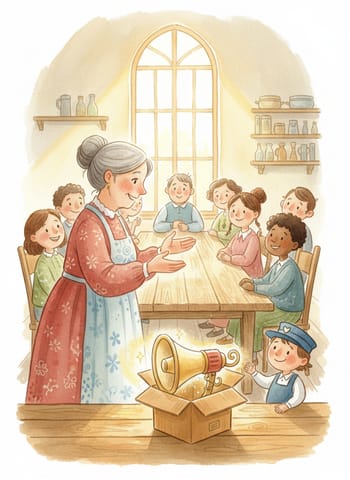
Eli carried it to her house himself. Abena cut the string with kitchen scissors and lifted the lid. Inside, on a bed of crumpled newspaper, lay a plain white megaphone with a black handle. A single sheet of paper had been taped to the horn.
伊莱亲自把它送到了她家。阿贝娜用厨房剪刀剪断绳子,掀开盖子。里面,在一堆皱巴巴的报纸上,躺着一个白色的普通扩音喇叭,配着黑色手柄。喇叭口上贴着一张纸。
"Read it to me," she said, because her hands were shaking.
“念给我听,”她说,因为她的手在发抖。
Eli cleared his throat. "'Your request for a means of making the village heard has been granted in the most economical form available. Please sign for receipt. Return Form 12 to this Department within ten days. The Department regrets that batteries are not supplied.'"
伊莱清了清嗓子。“‘贵方关于使本村声音被听见的方式的请求,已以最经济的形式予以批准。请签收。十日内向本部退回第十二号表格。本部遗憾地通知,电池不在供应之列。’”
Abena sat down on the floor, in the middle of the newspaper. "A megaphone," she said. "I asked for a system. I imagined speakers on poles, a microphone, and a small cupboard to keep it all in."
阿贝娜一屁股坐在地板上,坐在那堆报纸中间。“一个喇叭,”她说,“我要的是一套系统。我想象的是杆子上的音箱、一个麦克风,还有一个存放这些东西的小柜子。”
"You asked for a way to be heard," said Eli. "Technically, they delivered."
“你要的是一个能被听见的办法,”伊莱说,“严格说来,他们送到了。”
"Technically," she repeated. For a moment she looked ready to throw the thing out of the window. Then she began to laugh, and he laughed with her until the neighbour's cat left the garden wall.
“严格说来,”她重复道。有那么一刻,她看起来想把这东西从窗户扔出去。接着她笑了起来,他也跟着一起笑,一直笑到邻居家的猫从院墙上跳走。
The shop on the square did not sell the right batteries. Eli took the two out of his bicycle lamp and promised to buy new ones later. That evening they carried the megaphone to the church steps. Abena lifted it, took a breath and said, in her ordinary meeting voice, "Good evening."
广场上的商店没有卖合适的电池。伊莱把自行车灯里的两节取了出来,答应以后再买新的。那天晚上,他们把扩音器抬到了教堂台阶上。阿贝娜举起它,吸了一口气,用她平常开会的声音说:“晚上好。”
The sound hit the houses like a thrown plate. Pigeons burst off the school roof. A dog three streets away began to howl. The switch on the handle, it turned out, had no setting except the loudest one.
那声音像一只被扔出去的盘子,砸在房子上。鸽子从学校屋顶轰地飞起。三条街外的一条狗开始嚎叫。原来,手柄上的开关只有一档,就是最响的那一档。
"Say something else," Eli shouted, with both hands over his ears. "I want to know whether that was real."
“再说点别的,”伊莱双手捂着耳朵喊道,“我想知道刚才是不是真的。”
"Never mind that," said Abena, and pointed. "Look."
“先别管这个,”阿贝娜说着,伸手一指,“你看。”
Doors were opening all around the square. People stood in them holding dish towels, hammers and sleepy children. They had run outside because they believed something had burst or burned. Within five minutes, almost everyone in Linden Hollow was standing in front of the church, asking each other what had happened.
广场四周的门一扇扇打开了。人们站在门口,手里拿着擦碗布、锤子,或是睡眼惺忪的孩子。他们跑出来,是因为以为什么东西爆炸了或者着火了。不出五分钟,林登洼几乎所有人都站在了教堂前,互相打听出了什么事。
Abena looked at the crowd, then at the megaphone. For the first time all spring, she smiled like someone with a plan.
阿贝娜看了看人群,又看了看扩音器。整整一个春天里,她第一次露出了胸有成竹的笑容。
"Good evening, everyone," she said, and the whole square flinched. "I apologise. The first item tonight is the bridge fund. Please stay where you are."
“各位晚上好,”她说,整个广场的人都缩了一下。“抱歉。今晚的第一项议题是修桥基金。请大家留在原地。”
Nobody left. Eli watched them settle on the steps and the low wall. He knew that this was the biggest turnout in the history of the Village Meeting. The trouble was that the megaphone could not whisper. Every polite sentence landed like an order, and a toddler near the front had already started to cry.
没有人离开。伊莱看着他们在台阶上和矮墙边坐下。他知道,这是村民大会历史上到会人数最多的一次。问题是,这个扩音器不会小声说话。每一句客气话落下来都像命令,前排一个蹒跚学步的小孩已经哭了起来。
"Hold on," said Eli. He slipped away through the crowd and ran to his house. When he came back, panting, he was carrying a thick woollen sock. His sister had knitted it for him in a colour that did not exist in nature.
“等一下,”伊莱说。他从人群里溜出去,跑回了家。再回来时,他气喘吁吁,手里拿着一只厚厚的羊毛袜。那是他姐姐给他织的,颜色在大自然里根本不存在。
He pulled it over the horn. Abena tried again, and her voice came out round and warm, as if it were being spoken from the next room.
他把袜子套在喇叭口上。阿贝娜再试了一次,她的声音出来时圆润而温暖,就像从隔壁房间传来的一样。
"Perfect," she said. "Thank you, Eli. Now, the bridge fund."
“太好了,”她说,“谢谢你,伊莱。现在,说说修桥基金。”
The meeting lasted two hours. For once, everybody could hear the figures, so nobody could pretend to misunderstand them. By nine o'clock the village had voted to repair the footbridge, and the miller had agreed to donate the timber. People said it was the fastest decision Linden Hollow had made since the war of the allotments.
会议开了两个小时。这一次,人人都听得清数字,谁也没法假装听不懂。到九点钟,村里投票决定修缮那座人行桥,磨坊主也同意捐出木料。人们说,这是林登洼自“分地之战”以来做决定最快的一次。
The next afternoon, Eli arrived at the well at four o'clock sharp. Abena was already there, holding a pen and a sheet of pale green paper. The megaphone, wearing its sock, sat on the edge of the well like a very strange bird.
第二天下午,伊莱在四点整来到井边。阿贝娜已经在那儿了,手里拿着一支笔和一张淡绿色的纸。戴着袜子的扩音器坐在井沿上,像一只非常古怪的鸟。
"Form 12," she said. "It asks for the condition of the item on arrival. I have been staring at that line for an hour."
“第十二号表格,”她说,“上面要填物品到货时的状况。这一行我已经盯着看了一个小时。”
Eli looked at the megaphone, then at the sock, then at the faces peeking out from the doorways of the square.
伊莱看看扩音器,又看看袜子,再看看广场上从门口探出头来的一张张脸。
"Write 'loud'," he said.
“写‘响’,”他说。