The Dead Battery Above the Pharmacy
一个面向英语学习者的免费 B2 级英语故事,可用 7 种语言在线阅读,也可以在免费的 Storyteller 应用中收听。
A dance teacher traces her flat megaphone back through three borrowers to find out who drained its battery before a recital.
试听结束!在免费的 Storyteller 应用中收听完整故事。 下载应用
音频暂时无法播放。
The megaphone dies on a Wednesday morning, three days before the biggest recital of the year, and Fatou takes it personally.
扩音喇叭在星期三早晨坏了,离一年中最大的那场汇报演出只剩三天,法图觉得这简直是冲着她来的。
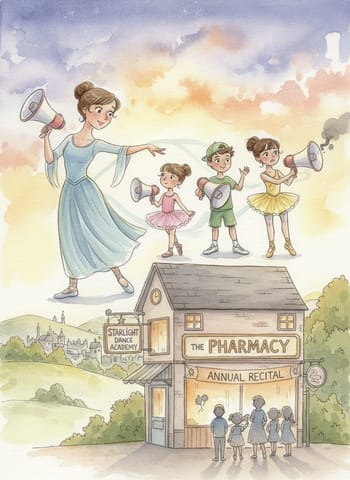
She stands in the middle of her dance studio, which sits on the first floor above a pharmacy. For the fourth time, she presses the trigger. Nothing comes out. The little light stays dark. Thirty small children are due in an hour, and they cannot hear a human voice over their own excitement, let alone Fatou's.
她站在舞蹈教室中央,这间教室在药店楼上的二层。她第四次按下扳机,什么声音也没有,那盏小灯依旧暗着。再过一个钟头,三十个小孩就要来了,他们兴奋起来,连人声都听不见,更别说法图的声音。
"Five, six, seven, eight," she says into the empty room, just to prove to herself that she has a voice. It sounds feeble and rather sad.
“五,六,七,八,”她对着空荡荡的房间说,只是想向自己证明她还有嗓子。那声音听起来又虚弱,又有点可怜。
The megaphone was working on Monday night. She is certain of that, because she used it at the end of the evening class to call the final stretch. The sound bounced off the mirrors so loudly that a woman in the back row clapped her hands over her ears. It lives in the open cupboard by the door, where anyone can reach it. So where did the battery go?
扩音喇叭星期一晚上还是好的。这一点她很肯定,因为晚班课结束时,她用它喊了最后一段口令。声音在镜子之间弹来弹去,响得后排有位女士赶紧捂住了耳朵。它平时就放在门边那个敞开的柜子里,谁都拿得到。那么,电池到哪儿去了?
Fatou is a person who solves things. She teaches fourteen classes a week, and she keeps the studio keys, the music and a spare pair of shoes in every size. She does not accept that a battery can die on its own. Somebody has used her megaphone, and she intends to find out who.
法图是个爱解决问题的人。她每周要上十四节课,手里管着教室的钥匙、音乐,还有每个尺码各备一双的备用鞋。她不接受电池会自己没电这种说法。一定是有人用了她的扩音喇叭,她打算把这个人查出来。
She tucks the dead megaphone under her arm and starts with a list on the back of an attendance sheet. Between Monday night and this morning, the megaphone passed through three sets of hands. She knows that because she asked the cleaner, who laughed and asked her to stop investigating her own cupboard.
她把没电的喇叭夹在腋下,在一张点名表的背面列了一张名单,从这里查起。从星期一晚上到今天早晨,喇叭经过了三个人的手。这是她问保洁员问出来的,对方笑着请她别再调查自己的柜子了。
The first name on the list is the ballroom teacher, who rents the studio on Tuesday evenings. Fatou finds her in the corridor, wrapping a scarf around her neck.
名单上的第一个名字是交谊舞老师,她每周二晚上租用这间教室。法图在走廊里找到她,她正往脖子上绕围巾。
"Yes, I borrowed it," the ballroom teacher says at once. "For about four minutes. I needed to shout over a very loud waltz. Then I put it straight back in the cupboard."
“对,是我借的,”交谊舞老师立刻说,“大概四分钟。有一支华尔兹吵得要命,我得压过它喊话。然后我就直接放回柜子里了。”
"Did it work properly when you finished?"
“您用完的时候,它还正常吗?”
"Of course it did. I even took a photograph of it, because the battery light was green and I wanted to show my husband how modern we are."
“当然正常。我还拍了张照片呢,因为电量灯是绿的,我想给我丈夫看看我们有多现代。”
She scrolls through her phone and finds the picture. A green light, three solid bars, time stamped half past seven on Tuesday. Fatou studies it with the grim attention of a detective in a film.
她在手机里翻了翻,找出那张照片。一盏绿灯,三格满电,时间戳是星期二晚上七点半。法图像电影里的侦探一样,神色严峻地端详着。
"That is useful," she says. "Thank you."
“这很有用,”她说,“谢谢您。”
"Is it a crime?" the ballroom teacher asks hopefully.
“这算犯罪吗?”交谊舞老师满怀希望地问。
"Not yet," says Fatou.
“暂时还不算,”法图说。
The second name is the courier, a young man with a bicycle. He delivers prescriptions for the pharmacy and sometimes uses the studio stairwell as a shortcut. Fatou catches him in the middle of lifting his bike up the stairs.
第二个名字是快递员,一个骑自行车的年轻人。他给药店送处方药,有时会抄近路穿过教室的楼梯间。法图撞见他时,他正把自行车往楼梯上抬。
He goes slightly pale when she says the word megaphone.
她一说出“扩音喇叭”这几个字,他的脸色就微微发白。
"I did take it," he admits, "but only for a minute. A dog escaped from a van outside and started running around the car park. I stood on the steps and shouted at it. It ignored me completely."
“我确实拿过,”他承认,“可只拿了一分钟。外面有辆货车上跑出一条狗,在停车场里乱窜。我站在台阶上冲它喊,它完全不理我。”
"What did you do with the megaphone afterwards?"
“后来你把喇叭怎么样了?”
"I put it on the shelf by the pharmacy door. The one in the back corridor, next to the boxes. I thought it would be safer there." He looks at his shoes. "Was that wrong?"
“我放在药店门口那个架子上了。就是后面走廊里、箱子旁边那个。我觉得放那儿更安全。”他低头看着自己的鞋。“这样不对吗?”
Fatou writes on the sheet: Courier, Tuesday, about eight. Moved it to the pharmacy shelf. Then, because she is fair, she writes: Why did it come back to my cupboard?
法图在表上写道:快递员,星期二,大约八点。把它挪到了药店的架子上。然后,因为她公平,她又写了一句:它为什么又回到了我的柜子里?
"Someone must have carried it up to me," she says. "Someone who knew whose it was."
“肯定有人把它送回楼上给我了,”她说,“而且那个人知道它是谁的。”
The courier shrugs. Fatou watches him carry his bicycle away.
快递员耸耸肩。法图看着他扛着自行车走远。
That leaves the third person, and he is the one she was trying not to think about. He is the pharmacist, a tall, patient, untidy man named Nikos. He sells her cough sweets and cheerfully complains about her music through the ceiling every afternoon. The two of them have been neighbours for four years, and she has never once suspected him of anything worse than a bad singing voice.
这样就只剩第三个人了,也是她一直不想去想的那个人。他是药剂师,一个高个子、有耐心、不修边幅的男人,名叫尼科斯。他卖给她润喉糖,每天下午还隔着天花板乐呵呵地抱怨她放的音乐。两人做了四年邻居,她从来没怀疑过他有什么比唱歌难听更严重的毛病。
She finds him behind the counter, writing a label with great care. His eyes are tired. There is a long queue in front of him, and she can see that the queue is not cheerful.
她在柜台后面找到他,他正一丝不苟地写着标签。他眼里满是倦意。他面前排着长长的队,她看得出,队伍里的人心情并不好。
"Nikos," she says. "A word."
“尼科斯,”她说,“借一步说话。”
"Fatou, I would love to, but as you can see, I am drowning." He waves at the line of customers. "The number machine broke on Tuesday, and since then everybody has been standing in a heap and arguing about who arrived first."
“法图,我倒是很想,可你也看到了,我快淹死了。”他朝那一排顾客挥了挥手。“叫号机星期二坏了,从那以后大家就挤成一团,争着说是谁先到的。”
Fatou stops. Something in her head clicks, the way a key clicks into a lock.
法图停住了。她脑子里咔哒一声,像钥匙插进了锁孔。
"Nikos, when did the number machine break?"
“尼科斯,叫号机是什么时候坏的?”
"Tuesday afternoon. Why?"
“星期二下午。怎么了?”
"And how did you call the customers on Tuesday evening?"
“那星期二晚上你是怎么叫顾客的?”
He opens his mouth and closes it again. He looks suddenly like a man who has been caught eating the last biscuit. "I had a little help," he says. "From the back corridor shelf."
他张开嘴,又闭上了。他忽然像个偷吃最后一块饼干被抓住的人。“我有一点小小的帮手,”他说,“来自后面走廊那个架子。”
"There is a megaphone on that shelf."
“那个架子上有一只扩音喇叭。”
"There was a megaphone on that shelf. It was very useful. It has a lovely loud voice."
“那个架子上曾经有一只扩音喇叭。它特别好用。它的嗓门可真好听。”
"Nikos," Fatou says, with enormous calm, "where is it now?"
“尼科斯,”法图非常平静地说,“它现在在哪儿?”
She does not wait for his answer. She lifts the dead megaphone from under her arm and sets it on the counter between them. Nikos looks at it the way a man looks at an old photograph of himself. Then he bends closer and points at the trigger, where a sticky grey stripe shows that clear tape was once wound around it. Beside the stripe, a ragged scrap of paper still clings to the plastic. On it, in the pharmacy's thick black marker, are two words: NEXT, PLEASE.
她没等他回答。她把没电的喇叭从腋下拿出来,放在两人之间的柜台上。尼科斯看着它,就像人看着自己的一张旧照片。然后他凑近一点,指着扳机,上面有一道黏糊糊的灰色痕迹,说明这里曾缠过透明胶带。痕迹旁边,还粘着一小片破纸,上面是药店用的那种粗黑马克笔,写着两个词:下一位。
"That is my label," he says weakly. "And that is my tape."
“那是我写的标签,”他有气无力地说,“那也是我的胶带。”
"You taped the trigger down," Fatou says.
“你把扳机用胶带按住了,”法图说。
"Only so that I would not have to hold it." Nikos is turning an interesting shade of pink. "I peeled the tape off before I brought it back, because I thought you would never notice. But it was not turned off properly when I carried it to the stockroom last night. I left it humming on the shelf. All night."
“只是为了不用一直握着。”尼科斯的脸涨成了一种有趣的粉红色。“我送回来之前把胶带撕掉了,想着你肯定发现不了。可昨晚我把它拿进库房的时候,没有关好。我把它留在架子上嗡嗡响了一整夜。”
"All night, calling for the next customer in an empty pharmacy."
“一整夜,在一间空药店里喊下一位顾客。”
"I am told it was a very polite night."
“听说那是个非常有礼貌的夜晚。”
In the line, someone laughs. Another customer starts to clap, slowly. Fatou presses her lips together, because she does not want to give him the satisfaction. A smile is creeping up on her, and she cannot stop it.
队伍里有人笑了起来。另一位顾客开始慢慢地鼓掌。法图抿紧嘴唇,因为她不想让他得意。可是笑意正悄悄爬上她的脸,她怎么也止不住。
"Three people," she says. "Three people, and the one I should have started with was downstairs the whole time."
“三个人,”她说,“三个人,而我本该最先去问的那个,一直就在楼下。”
"In my defence," Nikos says, "I did bring it back to you. I left it in your cupboard this morning, at six, before you came."
“我得替自己辩解一句,”尼科斯说,“我确实把它还给你了。今天早上六点,你来之前,我把它放进了你的柜子里。”
"Dead."
“没电了。”
"Humbly dead. I apologise." He pushes the megaphone an inch towards her across the counter. "I will buy you new batteries. I will buy you twelve of them, with a ribbon. And I will stand in the front row on Saturday and call every dance step you want."
“没电得很谦卑。我道歉。”他把喇叭隔着柜台朝她推了一英寸。“我给你买新电池。我给你买十二节,还系上缎带。星期六我会站在第一排,你想要什么舞步,我都替你喊。”
"That," Fatou says, "is the best offer I have had all week."
“这,”法图说,“是我这一周听到的最好的提议。”
"Left foot, right foot," says Nikos, lifting the dead megaphone to his lips and speaking into it with great seriousness. "Next customer, please."
“左脚,右脚,”尼科斯说着,把没电的喇叭举到嘴边,一本正经地对着它说。“请下一位顾客。”