The Wandering Wheelbarrow
Uma história gratuita em inglês de nível B1 para estudantes, para ler online em 7 idiomas, com opção de ouvir no app gratuito Storyteller.
A clock repairer and a city surveyor follow three clues to find out who moves a wheelbarrow every night.
Essa foi a prévia! Ouça a história completa no app gratuito Storyteller. Baixar o app
O áudio não está disponível no momento.
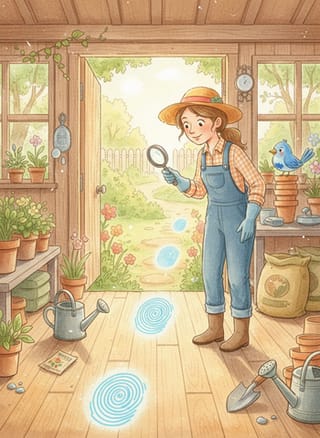
Clara opens the workshop door at seven and stops in the doorway. The wheelbarrow is in the wrong place again. Last night she left it beside the workbench, next to the sack of rags. Now it sits against the east wall, facing the stairs.
Clara abre a porta da oficina às sete e para na soleira. O carrinho de mão está no lugar errado de novo. Ontem à noite ela o deixou ao lado da bancada, junto ao saco de trapos. Agora ele está encostado na parede leste, virado para a escada.
"Not again," she says to the empty room.
"De novo não", diz ela para a sala vazia.
The workshop fills the ground floor of the clock tower. Above it, three hundred steps climb to the great clock, and Clara knows every one of them. She has repaired the clock for six years. She oils its gears, polishes its hands and winds its weights. The wheelbarrow carries those heavy iron weights from the cart to the stairs.
A oficina ocupa o andar térreo da torre do relógio. Acima dela, trezentos degraus sobem até o grande relógio, e Clara conhece cada um. Ela conserta o relógio há seis anos. Lubrifica as engrenagens, areia os ponteiros e dá corda nos pesos. O carrinho de mão leva esses pesados pesos de ferro da carroça até a escada.
She walks around it slowly. The wheel is flat and the handles are cold. Nobody has put anything inside. There is only a thin line of dust behind it, like a pencil mark on the floor.
Ela caminha em volta dele devagar. A roda está murcha e as alças estão frias. Ninguém pôs nada dentro. Há apenas uma linha fina de poeira atrás dele, como um traço de lápis no chão.
This is the fourth morning in a row. On the first morning, she blamed herself. On the second, she blamed the cleaner. On the third, she asked the guard at the gate. He laughed and said the tower had always been strange. Today she has no one left to blame.
É a quarta manhã seguida. Na primeira manhã, ela culpou a si mesma. Na segunda, culpou o faxineiro. Na terceira, perguntou ao guarda do portão. Ele riu e disse que a torre sempre fora estranha. Hoje ela não tem mais ninguém para culpar.
At ten, a woman in a yellow vest knocks on the open door. She carries a long metal ruler under one arm and a tablet in her other hand.
Às dez, uma mulher de colete amarelo bate à porta aberta. Carrega uma longa régua de metal debaixo de um braço e um tablet na outra mão.
"Hello," the woman says. "I'm Asha, from the city survey office. I'm checking the foundations of every old building on this street. May I come in?"
"Olá", diz a mulher. "Sou Asha, do departamento de levantamento da cidade. Estou verificando as fundações de todos os prédios antigos desta rua. Posso entrar?"
"You may," Clara says. "But first, do you believe in ghosts?"
"Pode", diz Clara. "Mas primeiro, você acredita em fantasmas?"
Asha blinks. "Professionally, no."
Asha pisca. "Profissionalmente, não."
"Good. Because someone is moving my wheelbarrow every night, and I want a better answer than a ghost."
"Ótimo. Porque alguém está mexendo no meu carrinho de mão toda noite, e quero uma resposta melhor do que um fantasma."
Asha looks at the wheelbarrow, then at Clara, and a smile pulls at her mouth. "That sounds like a puzzle. I like puzzles. Tell me everything."
Asha olha o carrinho, depois Clara, e um sorriso puxa o canto da boca. "Isso parece um enigma. Eu gosto de enigmas. Conte-me tudo."
Clara tells her. She describes the locked door, the single key, and the four mornings. Asha listens with her head tilted and writes notes on her tablet.
Clara conta. Descreve a porta trancada, a chave única e as quatro manhãs. Asha escuta com a cabeça inclinada e faz anotações no tablet.
"First clue," Asha says. "Nothing is stolen."
"Primeira pista", diz Asha. "Nada foi roubado."
"Right."
"Certo."
"So it isn't a thief. A thief wants something. This person only wants the wheelbarrow to be somewhere else." Asha crouches beside the wheel. "Second clue. Show me the line in the dust."
"Então não é um ladrão. Um ladrão quer alguma coisa. Essa pessoa só quer que o carrinho esteja em outro lugar." Asha se agacha ao lado da roda. "Segunda pista. Mostre-me a linha na poeira."
Clara points. Asha follows the line with one finger, from the east wall back to the workbench. It is straight, thin, and perfectly smooth.
Clara aponta. Asha segue a linha com um dedo, da parede leste de volta até a bancada. É reta, fina e perfeitamente lisa.
"No footprints," Asha says. "If someone pushed it, there would be shoe marks on both sides. There is only the wheel."
"Sem pegadas", diz Asha. "Se alguém o empurrasse, haveria marcas de sapato dos dois lados. Há só a roda."
"Maybe the person wore soft shoes."
"Talvez a pessoa usasse sapatos macios."
"Maybe. But look at the handles. If you pushed this thing every night, your hands would leave oil on the grips." Asha rubs a handle with her thumb and shows it to Clara. "Clean as a plate."
"Talvez. Mas olhe as alças. Se você empurrasse isso toda noite, suas mãos deixariam óleo nas empunhaduras." Asha esfrega uma alça com o polegar e mostra a Clara. "Limpa como um prato."
Clara feels a small chill. "So nobody touches it at all?"
Clara sente um pequeno calafrio. "Então ninguém toca nele?"
"That's what the dust says. Third clue." Asha stands and takes a glass marble from her vest pocket. "I always carry one. It's the oldest tool I own."
"É o que a poeira diz. Terceira pista." Asha se levanta e tira uma bola de gude de vidro do bolso do colete. "Sempre levo uma. É a ferramenta mais antiga que tenho."
She walks to the workbench and sets the marble on the floor. For a moment, it stays still. Then it begins to roll, very slowly, toward the east wall. Both women watch it cross the room.
Ela vai até a bancada e coloca a bola de gude no chão. Por um momento, ela fica parada. Então começa a rolar, muito devagar, em direção à parede leste. As duas mulheres a veem atravessar a sala.
"It's rolling uphill," Clara says.
"Está rolando ladeira acima", diz Clara.
"No," Asha says. "It's rolling downhill. We just can't see the hill."
"Não", diz Asha. "Está rolando ladeira abaixo. Só não conseguimos ver a ladeira."
She takes the long ruler from under her arm and lays a small spirit level along it. The bubble slides to one end and stays there. Asha reads the number on her tablet twice.
Ela pega a longa régua debaixo do braço e apoia nela um pequeno nível de bolha. A bolha desliza para uma ponta e fica lá. Asha lê o número no tablet duas vezes.
"The floor leans," she says. "Not much. Less than one degree. But enough for a marble."
"O chão é inclinado", diz. "Pouco. Menos de um grau. Mas o suficiente para uma bola de gude."
"And enough for a wheelbarrow with a flat tyre," Clara says, slowly. "It rolls by itself."
"E o suficiente para um carrinho de mão com pneu murcho", diz Clara, devagar. "Ele rola sozinho."
"One slow centimetre at a time, all night, until it hits the wall." Asha laughs out loud. "Your ghost is a very lazy wheelbarrow."
"Um centímetro lento por vez, a noite toda, até bater na parede." Asha ri alto. "Seu fantasma é um carrinho de mão muito preguiçoso."
Clara sits down on an upturned bucket and covers her face with both hands. Her shoulders shake, and for a moment Asha is afraid she is crying. Then the laughter comes out, loud and helpless, and echoes up the empty stairs.
Clara se senta num balde virado e cobre o rosto com as duas mãos. Os ombros dela tremem, e por um momento Asha teme que ela esteja chorando. Então a risada sai, alta e sem controle, e ecoa pela escada vazia.
"I called the guard," Clara says, wiping her eyes. "I checked the locks. I put a chair against the door on the third night. I stayed awake until one o'clock with a torch, and the wheelbarrow was cheating me the whole time."
"Eu chamei o guarda", diz Clara, enxugando os olhos. "Verifiquei as trancas. Pus uma cadeira contra a porta na terceira noite. Fiquei acordada até uma hora com uma lanterna, e o carrinho de mão me enganou o tempo todo."
"Did it move while you were watching?"
"Ele se mexeu enquanto você olhava?"
"No. It waits until I fall asleep."
"Não. Ele espera eu pegar no sono."
They laugh until the clock above them chimes eleven. The sound rolls down the stairwell like a drum. Clara stands up and brushes dust from her trousers.
Riem até o relógio acima deles soar onze horas. O som rola pela escada como um tambor. Clara se levanta e sacode a poeira das calças.
"Why does the floor lean?" she asks.
"Por que o chão é inclinado?", pergunta.
"It's the tower," Asha says. "The whole building tilts a little to the east. The ground underneath is softer on that side. It's been doing it for decades, very slowly, and nobody noticed because the clock still works."
"É a torre", diz Asha. "O prédio inteiro pende um pouco para o leste. O terreno embaixo é mais mole desse lado. Isso acontece há décadas, bem devagar, e ninguém notou porque o relógio continua funcionando."
"So my clock has been leaning all this time," Clara says. "Of course it has."
"Então meu relógio esteve inclinado esse tempo todo", diz Clara. "Claro que esteve."
"Does it keep good time?"
"Ele marca bem a hora?"
"Perfect time. I make sure of it."
"Hora perfeita. Eu garanto isso."
Asha smiles. "Then maybe the tower leans on purpose, to hold the clock more gently."
Asha sorri. "Então talvez a torre se incline de propósito, para segurar o relógio com mais delicadeza."
Clara looks at her for a moment too long. Then she looks away and picks up the marble. It has stopped against the wall. She turns it in her fingers. It is cool and clear, with a green twist at the centre.
Clara a olha por um instante longo demais. Depois desvia o olhar e pega a bola de gude. Ela parou junto à parede. Clara a gira entre os dedos. É fria e transparente, com um fio verde retorcido no centro.
"You can keep that," Asha says. "As a souvenir of your haunted barrow."
"Pode ficar com ela", diz Asha. "De lembrança do seu carrinho assombrado."
"I'd rather give it back and have you stay for lunch."
"Prefiro devolver e ter você para o almoço."
"That sounds like an invitation."
"Isso parece um convite."
"It's a small one," Clara says. "I only have sandwiches and a very good view of the stairs."
"É um convite pequeno", diz Clara. "Só tenho sanduíches e uma vista muito boa da escada."
Asha follows her up the first flight, then the second. On the landing, they pass a narrow window that frames the square below.
Asha a segue pelo primeiro lance, depois pelo segundo. No patamar, passam por uma janela estreita que emoldura a praça lá embaixo.
At the top, the clock room is full of slow sound. The great gears turn and the pendulum swings. A thin arm of sunlight slips across the iron floor. Clara shows Asha the mechanism that drives the hands. She explains how each weight is wound and why the escape wheel must never be hurried.
No alto, a sala do relógio está cheia de som lento. As grandes engrenagens giram e o pêndulo balança. Um braço fino de luz do sol desliza pelo piso de ferro. Clara mostra a Asha o mecanismo que move os ponteiros. Explica como cada peso recebe corda e por que a roda de escape nunca deve ser apressada.
Asha listens like a person hearing music. She asks questions about the teeth of the wheels. She asks how Clara learned to love it.
Asha escuta como quem ouve música. Faz perguntas sobre os dentes das rodas. Pergunta como Clara aprendeu a amar aquilo.
"I didn't learn," Clara says. "I just kept coming back. After a while, it felt strange to be anywhere else."
"Eu não aprendi", diz Clara. "Só continuei voltando. Depois de um tempo, ficou estranho estar em qualquer outro lugar."
Asha lays her hand on the cool brass frame. "I know that feeling. I have measured a thousand buildings, and only two of them made me want to stay."
Asha apoia a mão na fria armação de latão. "Conheço esse sentimento. Já medi mil prédios, e só dois deles me deram vontade de ficar."
"Which two?"
"Quais dois?"
"One is a library in the north. The other is this tower." She hesitates. "Maybe it's three, now."
"Um é uma biblioteca no norte. O outro é esta torre." Ela hesita. "Talvez agora sejam três."
Clara pretends to check a gear. Her heart is ticking much faster than the clock. She has no tool in the workshop to measure that, and she is not sure she wants one.
Clara finge verificar uma engrenagem. Seu coração faz tique-taque bem mais rápido que o relógio. Ela não tem ferramenta na oficina para medir isso, e não tem certeza de que quer uma.
"I'll write a report," Asha says. "The lean is small and stable. The tower is safe. You only need to put a block under the wheel."
"Vou escrever um relatório", diz Asha. "A inclinação é pequena e estável. A torre é segura. Você só precisa pôr um calço sob a roda."
"Or I could leave the wheelbarrow by the far wall," Clara says. "It can roll home every night."
"Ou posso deixar o carrinho de mão junto à parede do fundo", diz Clara. "Ele pode rolar para casa toda noite."
"It would be a shame to stop it. It's the best colleague you've ever had."
"Seria uma pena impedi-lo. É o melhor colega que você já teve."
"It's the only one who never talks back."
"É o único que nunca responde."
Asha laughs again. The clock begins to strike noon. Deep, round notes fill the room and shake the floor. When the last one fades, Asha turns to Clara and tilts her head.
Asha ri de novo. O relógio começa a bater meio-dia. Notas profundas e redondas enchem a sala e sacodem o chão. Quando a última se apaga, Asha se vira para Clara e inclina a cabeça.
"If the whole tower leans a little to the east," she says. "Which way do you think it is pulling us?"
"Se a torre inteira pende um pouco para o leste", diz ela. "Para que lado você acha que ela está nos puxando?"