The Hare and the Partridge
Uma história gratuita em inglês de nível B1 para estudantes, para ler online em 7 idiomas, com opção de ouvir no app gratuito Storyteller.
A partridge mocks her companion hare after hounds catch him — but soon meets her own doom when a hawk attacks her.
Essa foi a prévia! Ouça a história completa no app gratuito Storyteller. Baixar o app
O áudio não está disponível no momento.
Never mock at other people's misfortune; for you cannot tell how soon you yourself may be unhappy. Aesop the sage has given us one or two examples of this truth, and I am going to tell you of a similar one now.
Nunca zombe do infortúnio alheio; pois você não pode saber quão cedo você mesmo poderá ficar infeliz. Esopo, o sábio, já nos deu um ou dois exemplos dessa verdade, e vou lhes contar agora um semelhante.
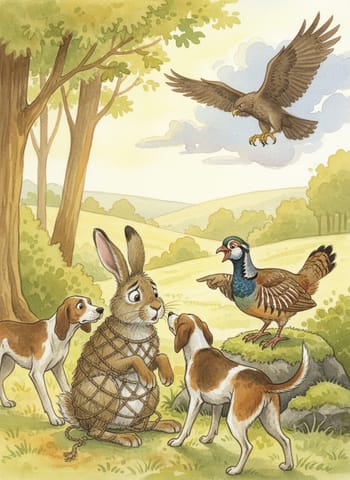
A hare and a partridge were living as fellow-citizens very peacefully in a field, when a pack of hounds making an onset obliged the hare to seek refuge. He rushed into his form and succeeded in putting the hounds at fault. But here the scent from his over-heated body betrayed him. Towler, philosophising, concluded that this scent came from his hare, and with admirable zeal routed him out. Then old Trusty, who never is at fault, proclaimed that the hare was gone away. The poor unfortunate creature at last died in his form.
Uma lebre e uma perdiz viviam como vizinhas muito pacificamente em um campo, quando uma matilha de cães, atacando de repente, obrigou a lebre a buscar refúgio. Ela correu para sua toca e conseguiu despistar os cães. Mas o cheiro de seu corpo superaquecido a traiu. Towler, filosofando, concluiu que aquele cheiro vinha da lebre e, com admirável zelo, a farejou até encontrá-la. Então o velho Trusty, que nunca erra, anunciou que a lebre havia fugido. A pobre criatura infeliz acabou morrendo em sua toca.
The partridge, his companion, thought fit to soothe his last moments with some scoffing remarks upon his fate. "You boasted of being so swift," she said "What has come to your feet, then?"
A perdiz, sua companheira, achou por bem suavizar os últimos momentos da lebre com alguns comentários zombeteiros sobre seu destino. — Você se gabava de ser tão veloz — disse ela. — O que aconteceu com suas patas, então?
But even as she was chuckling her own turn came. Secure in the belief that her wings would save her whatever happened, she did not reckon upon the cruel talons of the hawk.
Mas, mesmo enquanto ria, chegou sua própria vez. Confiante de que suas asas a salvariam do que quer que acontecesse, ela não contava com as garras cruéis do falcão.