The Fogged Mirror
भाषा सीखने वालों के लिए स्तर B2 की एक मुफ़्त अंग्रेज़ी कहानी, जिसे 7 भाषाओं में ऑनलाइन पढ़ा जा सकता है और मुफ़्त Storyteller ऐप में सुना भी जा सकता है।
A tailor's quiet routine changes when a nervous television host arrives with a torn jacket and only a few hours left.
झलक पूरी हुई! पूरी कहानी मुफ़्त Storyteller ऐप में सुनें। ऐप पाएँ
अभी ऑडियो उपलब्ध नहीं है।
Every morning at eight, Zahra turns on the three sewing machines in her shop, one after another, like a conductor waking an orchestra. The first is a heavy black machine that sews through leather. The second is quick and light and loves silk. The third rattles, and nobody remembers why she keeps it.
हर सुबह आठ बजे ज़हरा अपनी दुकान की तीनों सिलाई मशीनें एक के बाद एक चालू करती है, जैसे कोई संचालक किसी ऑर्केस्ट्रा को जगा रहा हो। पहली एक भारी काली मशीन है जो चमड़े के आर-पार सिलती है। दूसरी तेज़ और हल्की है और रेशम को पसंद करती है। तीसरी खड़खड़ाती है, और किसी को याद नहीं कि वह उसे क्यों रखे हुए है।
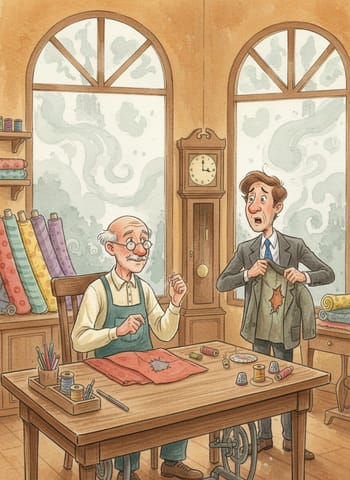
Today Mina and Pavel are already at their places, bent over a pile of trouser hems. The radio plays a slow song from a station that is mostly static. Steam rises from the iron at the back of the room. It drifts across the narrow fitting corner, where the tall mirror turns white in seconds.
आज मीना और पावेल पहले से अपनी जगहों पर हैं, पतलूनों की मोहरियों के ढेर पर झुके हुए। रेडियो पर एक ऐसे स्टेशन से धीमा गाना बज रहा है जिसमें ज़्यादातर खरखराहट है। कमरे के पिछले हिस्से में इस्तरी से भाप उठ रही है। वह फ़िटिंग वाले संकरे कोने में तैरती चली जाती है, जहाँ ऊँचा शीशा चंद सेकंड में सफ़ेद हो जाता है।
That is the one flaw in the shop. The mirror fogs up whenever the iron is on, and the iron is nearly always on. Customers learn to wipe it with a sleeve before they look. Zahra has been meaning to move the mirror for six years.
दुकान की यही एक ख़ामी है। इस्तरी चालू होते ही शीशे पर भाप जम जाती है, और इस्तरी लगभग हमेशा चालू रहती है। ग्राहक देखने से पहले आस्तीन से उसे पोंछना सीख जाते हैं। ज़हरा छह साल से शीशा हटाने की सोच रही है।
"Fog again," says Mina, without looking up.
"फिर धुंध," मीना सिर उठाए बिना कहती है।
"It builds character," says Zahra.
"इससे चरित्र बनता है," ज़हरा कहती है।
"It builds fingerprints."
"इससे उँगलियों के निशान बनते हैं।"
The morning follows its usual pattern. A woman brings a coat with a torn lining. A teenager wants his school trousers taken in, and he pretends not to enjoy being measured. A bank clerk collects a jacket and tells everyone, unprompted, how well it fits. By ten o'clock the pile of finished work is growing on the rail, and the shop smells pleasantly of hot cotton.
सुबह अपने रोज़ वाले ढर्रे पर चलती है। एक औरत फटे अस्तर वाला कोट लाती है। एक किशोर अपनी स्कूल की पतलून तंग करवाना चाहता है, और नाप लिए जाने का मज़ा न आने का दिखावा करता है। एक बैंक क्लर्क अपनी जैकेट लेने आता है और बिना पूछे सबको बताता है कि वह कितनी फ़िट बैठी है। दस बजे तक तैयार काम का ढेर रेल पर बढ़ता जा रहा है, और दुकान में गर्म सूती कपड़े की सुखद महक है।
At twenty past ten the door bangs open.
दस बजकर बीस मिनट पर दरवाज़ा धड़ाम से खुलता है।
A man comes in so quickly that the bell above the door gives only half a ring. He is perhaps thirty-five, with dark hair that has been combed in a hurry and a face the colour of paper. Over one arm he carries a black suit in a clear plastic cover. In his other hand is a phone that keeps lighting up and buzzing against his palm.
एक आदमी इतनी तेज़ी से भीतर आता है कि दरवाज़े के ऊपर की घंटी आधी ही बज पाती है। वह शायद पैंतीस साल का है, जल्दबाज़ी में काढ़े गए काले बालों और काग़ज़ जैसे सफ़ेद चेहरे वाला। एक बाँह पर वह पारदर्शी प्लास्टिक के कवर में एक काला सूट लिए है। दूसरे हाथ में एक फ़ोन है जो बार-बार जलता है और उसकी हथेली पर थरथराता है।
"Please tell me you can fix a seam," he says. "I'm so sorry. I know I should have called."
"प्लीज़ बताइए कि आप एक सीवन ठीक कर सकती हैं," वह कहता है। "मुझे बहुत अफ़सोस है। मुझे पता है कि मुझे फ़ोन करना चाहिए था।"
Zahra puts down her scissors. "Take a breath first. Then show me."
ज़हरा अपनी कैंची रख देती है। "पहले एक साँस लीजिए। फिर दिखाइए।"
He lays the suit on the counter. The trousers are fine, but the jacket has a long tear running down one side seam. It runs from the armpit to the hem, as if a knife had opened it.
वह सूट को काउंटर पर बिछा देता है। पतलून ठीक है, पर जैकेट में एक तरफ़ की सीवन के साथ-साथ लंबा चीरा है। वह बग़ल से लेकर नीचे के किनारे तक है, मानो किसी चाकू ने खोला हो।
"Last night I was packing," he says. "The hanger caught on a hook and I pulled too hard, and then I stood there looking at it. I'm Koji. I'm presenting an award at a ceremony this evening. Live, on television. They have my face on the posters."
"कल रात मैं सामान बाँध रहा था," वह कहता है। "हैंगर एक कुंडी में अटक गया और मैंने बहुत ज़ोर से खींच दिया, और फिर मैं खड़ा-खड़ा उसे देखता रहा। मैं कोजी हूँ। आज शाम एक समारोह में मुझे पुरस्कार देना है। सीधा प्रसारण, टेलीविज़न पर। पोस्टरों पर मेरा चेहरा लगा है।"
Mina has stopped sewing. Even the radio seems quieter.
मीना ने सिलना बंद कर दिया है। रेडियो भी जैसे धीमा पड़ गया है।
"What time?" Zahra asks.
"कितने बजे?" ज़हरा पूछती है।
"I leave here at four. The car is booked. I don't have another suit that fits, and the shops in the centre wanted two days." He swallows. "I can pay anything."
"मैं यहाँ से चार बजे निकलता हूँ। गाड़ी बुक है। मेरे पास दूसरा कोई सूट नहीं है जो फ़िट बैठे, और शहर के बीच की दुकानें दो दिन माँग रही थीं।" वह थूक निगलता है। "मैं कुछ भी दे सकता हूँ।"
Zahra studies the tear. It is clean, which helps, but the fabric is a fine wool that will punish every mistake. She looks at the clock, then at the rail of waiting orders, then at her two assistants.
ज़हरा चीरे को परखती है। वह सीधा कटा है, जो मददगार है, पर कपड़ा बारीक ऊन का है जो हर ग़लती की सज़ा देगा। वह घड़ी को देखती है, फिर इंतज़ार करते ऑर्डरों की रेल को, फिर अपनी दोनों सहायकों को।
"Mina, put aside the hems. Pavel, finish the coat lining in the next hour and nothing else." She turns back to Koji. "I can do it, but you will wait here. It is a delicate job, and I will need to measure you again as I go. If you walk out and come back, we lose time."
"मीना, मोहरियाँ अलग रख दो। पावेल, अगले एक घंटे में कोट का अस्तर पूरा करो और कुछ नहीं।" वह कोजी की ओर मुड़ती है। "मैं यह कर सकती हूँ, पर आप यहीं इंतज़ार करेंगे। यह नाज़ुक काम है, और मुझे चलते-चलते दोबारा आपका नाप लेना पड़ेगा। अगर आप बाहर जाकर लौटे, तो वक़्त चला जाएगा।"
"I'll wait. I'll wait wherever you want."
"मैं इंतज़ार करूँगा। जहाँ आप कहें, वहाँ करूँगा।"
"Good. Take off the jacket you are wearing and go to the mirror."
"अच्छा। आप जो जैकेट पहने हैं, उसे उतारिए और शीशे के पास जाइए।"
He goes to the fitting corner and stands there, tall and rigid. The white fog creeps up his reflection until only a pale outline is left. He wipes a small patch with his hand and stares at it, then lets his hand drop.
वह फ़िटिंग वाले कोने में जाकर खड़ा हो जाता है, ऊँचा और अकड़ा हुआ। सफ़ेद धुंध उसके प्रतिबिंब पर चढ़ती जाती है, जब तक बस एक फीकी रूपरेखा नहीं रह जाती। वह हाथ से एक छोटा हिस्सा पोंछता है और उसे घूरता है, फिर हाथ गिरा देता है।
"Does it always do that?" he asks.
"क्या यह हमेशा ऐसा करता है?" वह पूछता है।
"Every day. It is part of the shop."
"रोज़। यह दुकान का हिस्सा है।"
"Then how does anybody know what they look like?"
"तो फिर किसी को कैसे पता चलता है कि वह कैसा दिखता है?"
Zahra thinks that this is a more interesting question than he realises. "They learn to trust the tailor," she says.
ज़हरा सोचती है कि यह सवाल उसकी समझ से कहीं ज़्यादा दिलचस्प है। "वे दर्ज़ी पर भरोसा करना सीख जाते हैं," वह कहती है।
She works through the morning with total attention. She undoes the damaged seam stitch by stitch, matches the wool with a scrap from the inner pocket, and steams the edges so they relax. Her hands move with the quiet certainty of an old routine, and Koji watches her from a chair by the window. His phone keeps buzzing. After a while he turns it off.
वह पूरी सुबह पूरे ध्यान से काम करती है। वह टूटी सीवन को टाँका-दर-टाँका खोलती है, भीतरी जेब के एक टुकड़े से ऊन मिलाती है, और किनारों पर भाप देती है ताकि वे ढीले पड़ जाएँ। उसके हाथ किसी पुरानी दिनचर्या के शांत विश्वास से चलते हैं, और कोजी खिड़की के पास की कुर्सी से उसे देखता रहता है। उसका फ़ोन बार-बार थरथराता है। कुछ देर बाद वह उसे बंद कर देता है।
By midday the shop has found a new rhythm. Mina brings him a sandwich. Pavel, who is normally shy, asks him about the television studio and is told that it is much smaller than it looks and always freezing. The radio plays the same slow song again, and nobody changes it.
दोपहर तक दुकान को एक नई लय मिल गई है। मीना उसके लिए सैंडविच लाती है। पावेल, जो आम तौर पर शर्मीला है, उससे टेलीविज़न स्टूडियो के बारे में पूछता है और उसे बताया जाता है कि वह दिखने से बहुत छोटा है और हमेशा ठंडा रहता है। रेडियो वही धीमा गाना फिर बजाता है, और कोई उसे नहीं बदलता।
At two o'clock Zahra begins the final seam on the fastest machine. The needle chatters. Koji stands up without thinking and comes to stand behind her shoulder.
दो बजे ज़हरा सबसे तेज़ मशीन पर आख़िरी सीवन शुरू करती है। सुई खटखटाती है। कोजी बिना सोचे उठ खड़ा होता है और आकर उसके कंधे के पीछे खड़ा हो जाता है।
"Can I ask something?" he says. "Why does your work look so calm? I've been so frightened all day that I can't feel my fingers."
"क्या मैं कुछ पूछ सकता हूँ?" वह कहता है। "आपका काम इतना शांत क्यों दिखता है? मैं पूरे दिन इतना डरा हूँ कि मुझे अपनी उँगलियाँ महसूस नहीं हो रहीं।"
"I am frightened as well," says Zahra, not looking up. "I am always frightened for the first minute. After that there is only the seam."
"मैं भी डरी हुई हूँ," ज़हरा सिर उठाए बिना कहती है। "पहले मिनट में मैं हमेशा डरी होती हूँ। उसके बाद बस सीवन रह जाती है।"
"The first minute of what?"
"किसके पहले मिनट में?"
"Of anything that matters."
"हर उस चीज़ के जो मायने रखती है।"
He laughs under his breath and says nothing more.
वह दबी हँसी हँसता है और कुछ नहीं कहता।
At a quarter to four she cuts the last thread. She holds the jacket up, turns it slowly under the light, and runs her thumb down the repaired line. From the inside you can still see it; from the outside, the black wool lies flat and quiet, and there is nothing to find.
पौने चार बजे वह आख़िरी धागा काटती है। वह जैकेट को ऊपर उठाती है, उसे रोशनी में धीरे-धीरे घुमाती है, और मरम्मत की रेखा पर अँगूठा फिराती है। भीतर से वह अब भी दिखती है, पर बाहर से काला ऊन चिकना और शांत पड़ा है, और ढूँढ़ने को कुछ नहीं है।
Koji puts it on. He walks to the mirror, and for the first time that day it is almost clear, because the iron has been off for twenty minutes. He turns one way, then the other. His reflection straightens, as if the jacket has pulled him up by the shoulders.
कोजी उसे पहन लेता है। वह शीशे तक जाता है, और उस दिन पहली बार वह लगभग साफ़ है, क्योंकि इस्तरी बीस मिनट से बंद है। वह एक ओर मुड़ता है, फिर दूसरी ओर। उसका प्रतिबिंब सीधा हो जाता है, मानो जैकेट ने उसे कंधों से ऊपर खींच लिया हो।
"It is perfect," he says. "I cannot see anything."
"यह बेहतरीन है," वह कहता है। "मुझे कुछ दिख ही नहीं रहा।"
"You are not supposed to." Zahra brushes a thread from his collar. "That is the whole job."
"दिखना भी नहीं चाहिए।" ज़हरा उसके कॉलर से एक धागा झाड़ती है। "पूरा काम यही है।"
He pays her, and then pays her again until she pushes the extra notes back across the counter. Mina and Pavel clap, rather shyly, and Koji bows to them in the doorway with his hand on his heart. The car is waiting at the kerb with its engine running.
वह उसे पैसे देता है, और फिर दोबारा देता है, जब तक ज़हरा अतिरिक्त नोट काउंटर के उस पार वापस नहीं खिसका देती। मीना और पावेल, कुछ झेंपते हुए, ताली बजाते हैं, और कोजी दरवाज़े पर हाथ सीने पर रखे उन्हें झुककर प्रणाम करता है। गाड़ी इंजन चालू किए हुए सड़क किनारे इंतज़ार कर रही है।
At the last moment he looks back at the mirror. Behind him, the iron clicks on, and a pale mist starts to creep across the glass again.
आख़िरी पल में वह शीशे की ओर पलटकर देखता है। उसके पीछे इस्तरी खट से चालू होती है, और शीशे पर फिर हल्की धुंध रेंगने लगती है।
"You should never fix that mirror," he says. "I looked better in the fog."
"आपको यह शीशा कभी ठीक नहीं करना चाहिए," वह कहता है। "मैं धुंध में बेहतर दिख रहा था।"