The Page on Top of the Tower
Una historia gratuita en inglés de nivel A2 para estudiantes, para leer en línea en 7 idiomas, con opción de escucharla en la app gratuita Storyteller.
Two rival cadets must work as a pair to find the cook's missing recipe page before the station's Open Day.
¡Ese fue el avance! Escucha la historia completa en la app gratuita Storyteller. Descargar la app
El audio no está disponible en este momento.
Fabrice and Amit were cadets at the fire station. Every week, the cadets ran a hose race in the yard. The winner wore a gold star on his helmet.
Fabrice y Amit eran cadetes en la estación de bomberos. Cada semana, los cadetes hacían una carrera de mangueras en el patio. El ganador llevaba una estrella dorada en el casco.
Fabrice won on Monday. Amit won on Tuesday. On Wednesday, they crossed the line at the same moment. They argued about it for an hour.
Fabrice ganó el lunes. Amit ganó el martes. El miércoles cruzaron la línea en el mismo instante. Discutieron por eso durante una hora.
"My foot was first," Fabrice said.
«Mi pie llegó primero», dijo Fabrice.
"My hose was first," said Amit. "Hoses count more than feet."
«Mi manguera llegó primero», dijo Amit. «Las mangueras cuentan más que los pies».
They did not speak for the rest of the day.
No se hablaron durante el resto del día.
On Thursday, the station cook came running into the yard. She held a big green recipe book in both hands. Her face was white.
El jueves, la cocinera de la estación entró corriendo al patio. Llevaba un gran libro de recetas verde sujeto con las dos manos. Tenía la cara pálida.
"Cadets!" she cried. "Stop. I need your help."
«¡Cadetes!», gritó. «Alto. Necesito su ayuda».
The cadets came close. Fabrice stood on one side of the circle. Amit stood on the other.
Los cadetes se acercaron. Fabrice se paró a un lado del círculo. Amit se paró en el otro.
"Open Day starts at six," the cook said. "Many people come to visit. I must make my famous chili for all of them. But page fourteen is gone!"
«El Día de Puertas Abiertas empieza a las seis», dijo la cocinera. «Viene mucha gente a visitarnos. Tengo que hacer mi famoso chili para todos. ¡Pero la página catorce desapareció!».
She opened the book. Between pages thirteen and fifteen, a thin line of torn paper showed. The old page was always loose.
Abrió el libro. Entre las páginas trece y quince se veía una fina línea de papel rasgado. La página vieja siempre estuvo suelta.
"I wrote that recipe forty years ago," she said. "I do not remember the numbers. How many beans? How many onions? How much spice? Only the page knows."
«Escribí esa receta hace cuarenta años», dijo. «No recuerdo las cantidades. ¿Cuántos frijoles? ¿Cuántas cebollas? ¿Cuánto condimento? Solo la página lo sabe».
"When did you see it last?" asked Fabrice.
«¿Cuándo la vio por última vez?», preguntó Fabrice.
"At breakfast," said the cook. "I left the book on the bench. The wind opened it. I went to help the captain. When I came back, the page was gone."
«En el desayuno», dijo la cocinera. «Dejé el libro sobre la banca. El viento lo abrió. Fui a ayudar al capitán. Cuando volví, la página ya no estaba».
Everybody looked at the bench. It stood next to the practice tower. The cadets ate their snacks there.
Todos miraron la banca. Estaba junto a la torre de prácticas. Allí los cadetes comían sus meriendas.
"Amit sat there at ten," Fabrice said.
«Amit se sentó ahí a las diez», dijo Fabrice.
"And you sat there at eleven," said Amit.
«Y tú te sentaste ahí a las once», dijo Amit.
They began to argue again.
Empezaron a discutir otra vez.
The captain stepped out of the station door. He was a tall man with a very quiet voice. The cadets stopped talking at once.
El capitán salió por la puerta de la estación. Era un hombre alto, de voz muy tranquila. Los cadetes dejaron de hablar de inmediato.
"Here is what we will do," the captain said. "Fabrice and Amit will find the page. They will work as a pair. In my yard, nobody works alone."
«Esto es lo que vamos a hacer», dijo el capitán. «Fabrice y Amit encontrarán la página. Trabajarán en pareja. En mi patio, nadie trabaja solo».
"With him?" said Fabrice.
«¿Con él?», dijo Fabrice.
"With him?" said Amit.
«¿Con él?», dijo Amit.
"With him," said the captain. "You have two hours. After that, the cook starts from nothing. She will not be happy."
«Con él», dijo el capitán. «Tienen dos horas. Después, la cocinera empezará de cero. No le va a gustar».
The two cadets stood side by side. They looked at the empty bench. They did not look at each other.
Los dos cadetes se quedaron lado a lado. Miraron la banca vacía. No se miraron entre ellos.
"Let us start with facts," Amit said at last. "The page was white. It was thin. It could fly."
«Empecemos por los hechos», dijo Amit por fin. «La página era blanca. Era delgada. Podía volar».
"Or it could stick," said Fabrice. He bent down and touched the bench. The wood was wet. "Look. Someone sprayed water here."
«O podía pegarse», dijo Fabrice. Se agachó y tocó la banca. La madera estaba mojada. «Mira. Alguien roció agua aquí».
"The hose crew did the drill at eleven thirty," said Amit slowly. "They pulled the wet hose across this bench. The wind pulled out the loose page. The wet hose took it. Then they hung the hose up to dry."
«El equipo de mangueras hizo el simulacro a las once y media», dijo Amit despacio. «Arrastraron la manguera mojada por esta banca. El viento sacó la página suelta. La manguera mojada se la llevó. Luego colgaron la manguera a secar».
"Where?" asked Fabrice.
«¿Dónde?», preguntó Fabrice.
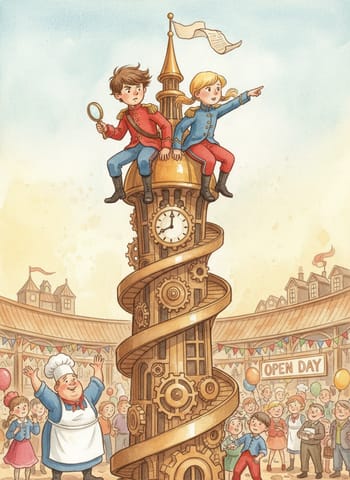
They both turned and looked up at the practice tower. A long fire hose hung from the top rail. It was three floors up. It moved a little in the air, like a very long snake.
Los dos se dieron vuelta y miraron hacia la torre de prácticas. Una larga manguera colgaba de la barandilla más alta. Estaba tres pisos arriba. Se movía un poco con el aire, como una serpiente larguísima.
Amit pointed. "I see something white on it," he said.
Amit señaló. «Veo algo blanco en ella», dijo.
Fabrice shaded his eyes. "That is a page," he said. "That is our page."
Fabrice se tapó el sol con la mano. «Eso es una página», dijo. «Esa es nuestra página».
For a moment, neither of them moved. Then both ran to the ladder. Both tried to climb it together. They pushed and pulled in the narrow space.
Por un momento, ninguno de los dos se movió. Luego los dos corrieron hacia la escalera. Los dos intentaron subir a la vez. Empujaron y tiraron en el espacio estrecho.
"I go first," said Fabrice.
«Yo subo primero», dijo Fabrice.
"I am taller," said Amit. "I can reach the top rail."
«Yo soy más alto», dijo Amit. «Puedo alcanzar la barandilla de arriba».
"I am faster."
«Yo soy más rápido».
"The captain said we work as a pair," said Amit. He stopped pulling. "One climbs and one holds the ladder. That is the rule."
«El capitán dijo que trabajamos en pareja», dijo Amit. Dejó de tirar. «Uno sube y el otro sujeta la escalera. Esa es la regla».
Fabrice looked at him. Then he looked at the ladder, which shook a little.
Fabrice lo miró. Luego miró la escalera, que temblaba un poco.
"You climb," he said. "I will hold. I am heavier, and I hold better."
«Sube tú», dijo. «Yo la sujeto. Soy más pesado y sujeto mejor».
Amit blinked. It was the first kind thing Fabrice said all week.
Amit parpadeó. Fue lo primero amable que Fabrice le decía en toda la semana.
"Thank you," he said. He put on a safety belt. Then he began to climb.
«Gracias», dijo. Se puso un cinturón de seguridad. Luego empezó a subir.
Fabrice stood at the bottom and held the ladder with both arms. He called out advice. "Left hand now. Not that step, the next one. Do not look down."
Fabrice se quedó abajo y sujetó la escalera con los dos brazos. Gritaba consejos. «Mano izquierda ahora. Ese peldaño no, el siguiente. No mires hacia abajo».
"I do not look down," said Amit. "I look at you. Your hands shake."
«No miro hacia abajo», dijo Amit. «Te miro a ti. Te tiemblan las manos».
"They are not," said Fabrice. "It is the ladder."
«No me tiemblan», dijo Fabrice. «Es la escalera».
Amit climbed three floors. It felt like thirty. At the top, he reached out and found the page. It was wet and soft. The ink ran across the paper in blue lines. He folded it carefully and put it inside his shirt.
Amit subió tres pisos. Le parecieron treinta. Arriba, estiró el brazo y encontró la página. Estaba mojada y blanda. La tinta se había corrido por el papel en líneas azules. La dobló con cuidado y se la guardó dentro de la camisa.
On the ground, the two cadets sat down and opened the page. They looked sad.
En el suelo, los dos cadetes se sentaron y abrieron la página. Se veían tristes.
"The numbers are unclear," said Fabrice. "I can see a three, or maybe an eight."
«Los números no se entienden», dijo Fabrice. «Veo un tres, o quizá un ocho».
"I see one cup of something," said Amit. "Or is it one carrot?"
«Yo veo una taza de algo», dijo Amit. «¿O es una zanahoria?».
They put the page in the sun and held it flat. Fabrice read the left side. Amit read the right side. They shouted the numbers to each other. When one was not sure, the other leaned close. Together they decided.
Pusieron la página al sol y la mantuvieron estirada. Fabrice leyó el lado izquierdo. Amit leyó el derecho. Se gritaban los números el uno al otro. Cuando uno no estaba seguro, el otro se acercaba a mirar. Entre los dos decidían.
"Eight onions," said Fabrice.
«Ocho cebollas», dijo Fabrice.
"Two spoons of spice," said Amit. "No, three."
«Dos cucharadas de condimento», dijo Amit. «No, tres».
"The cook always makes it hot," said Fabrice. "Three."
«La cocinera siempre lo hace picante», dijo Fabrice. «Tres».
After half an hour, they had a whole recipe on clean paper. They carried it to the cook. She sat on the steps with her head in her hands.
Después de media hora, tenían una receta completa en papel limpio. Se la llevaron a la cocinera. Estaba sentada en los escalones con la cabeza entre las manos.
She read the list. She read it again. Then she jumped up and hugged them both. Their helmets fell off.
Leyó la lista. La leyó otra vez. Luego se levantó de un salto y los abrazó a los dos. Se les cayeron los cascos.
"You saved Open Day!" she said. "Oh, this is exactly right. Come inside. You must help me cook."
«¡Salvaron el Día de Puertas Abiertas!», dijo. «Ay, esto está exactamente bien. Pasen. Tienen que ayudarme a cocinar».
For hours, the two cadets chopped onions and stirred the pot. Fabrice cut the onions. Amit counted out the spice. The chili smelled wonderful. Their eyes watered, but they laughed.
Durante horas, los dos cadetes picaron cebollas y revolvieron la olla. Fabrice cortaba las cebollas. Amit medía el condimento. El chili olía maravilloso. Les lloraban los ojos, pero se reían.
At last, the cook looked at the bottom of the old page. One line of her own writing was still clear. She read it out loud.
Al final, la cocinera miró la parte de abajo de la página vieja. Una línea de su propia letra todavía se leía con claridad. La leyó en voz alta.
"Serves a big crowd. Whoever loses this page must wash the pot."
«Alcanza para mucha gente. Quien pierda esta página tiene que lavar la olla».
The kitchen went quiet. The pot was as big as a bathtub.
La cocina quedó en silencio. La olla era tan grande como una bañera.
The cook smiled and held out one small sponge.
La cocinera sonrió y les extendió una pequeña esponja.
"There is only one sponge," Amit said.
«Solo hay una esponja», dijo Amit.
"I know," said the cook.
«Ya lo sé», dijo la cocinera.