The Monkey and the Cat
Una historia gratuita en inglés de nivel B1 para estudiantes, para leer en línea en 7 idiomas, con opción de escucharla en la app gratuita Storyteller.
A sly monkey talks a gullible cat into snatching chestnuts from the fire for him — and lets him take all the burns.
¡Ese fue el avance! Escucha la historia completa en la app gratuita Storyteller. Descargar la app
El audio no está disponible en este momento.
Bertrand was a monkey and Ratter was a cat. They shared the same dwelling and had the same master, and a pretty mischievous pair they were. It was impossible to intimidate them. If anything was missed or spoilt, no one thought of blaming the other people in the house. Bertrand stole all he could lay his hands upon, and as for Ratter, he gave more attention to cheese than he did to the mice.
Bertrand era un mono y Ratero era un gato. Compartían la misma morada y tenían el mismo amo, y formaban un par travieso y bonito por cierto. Era imposible intimidarlos. Si algo faltaba o se echaba a perder, a nadie se le ocurría culpar a las demás personas de la casa. Bertrand robaba todo lo que podía echarle mano, y en cuanto a Ratero, él prestaba más atención al queso que a los ratones.
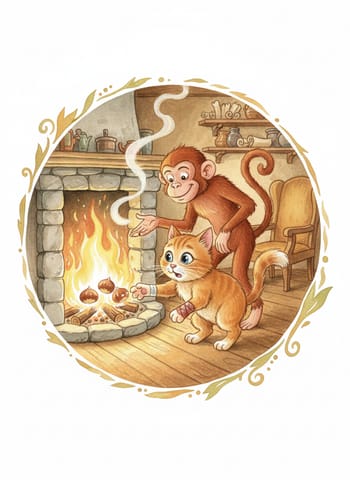
One day, in the chimney corner, these two rascals sat watching some chestnuts that were roasting before the fire. How jolly it would be to steal them they thought: doubly desirable, for it would not only be joy to themselves, but an annoyance to others.
Un día, en el rincón de la chimenea, estos dos pícaros estaban sentados observando unas castañas que se asaban ante el fuego. Qué divertido sería robarlas, pensaron: doblemente deseable, pues no solo sería gozo para ellos mismos, sino una molestia para los demás.
"Brother," said Bertrand to Ratter, "this day you shall achieve your master-stroke: you shall snatch some chestnuts out of the fire for me. Providence has not fitted me for that sort of game. If it had, I assure you chestnuts would have a fine time."
«Hermano,» dijo Bertrand a Ratero, «hoy realizarás tu obra maestra: sacarás algunas castañas del fuego para mí. La Providencia no me dotó para ese tipo de juego. Si lo hubiera hecho, te aseguro que las castañas la pasarían mal.»
No sooner said than done. Ratter delicately stirred the cinders with his paw, stretched out his claws two or three times to prepare for the stroke, and then adroitly whipped out first one, then two, then three of the chestnuts, whilst Bertrand crunched them up between his teeth. In came a servant, and there was an end of the business. Farewell, ye rogues!
Dicho y hecho. Ratero removió delicadamente las brasas con su pata, estiró las garras dos o tres veces para prepararse para el golpe, y luego sacó hábilmente primero una, luego dos, luego tres de las castañas, mientras Bertrand las masticaba entre los dientes. Entonces entró un criado, y ahí terminó el asunto. ¡Adiós, pícaros!
I am told that Ratter was by no means satisfied with the affair.
Me dicen que Ratero no quedó nada satisfecho con el asunto.
And princes are equally dissatisfied when, flattered to be employed in any uncomfortable concern, they burn their fingers in a distant province for the profit of some king.
Y los príncipes quedan igualmente insatisfechos cuando, halagados por ser empleados en algún asunto incómodo, se queman los dedos en una provincia lejana para el provecho de algún rey.