The Monkey and the Cat
Cerita bahasa Inggris gratis level B1 untuk pelajar, bisa dibaca online dalam 7 bahasa, dengan pilihan untuk mendengarkannya di aplikasi Storyteller gratis.
A sly monkey talks a gullible cat into snatching chestnuts from the fire for him — and lets him take all the burns.
Itu cuplikannya! Dengarkan cerita lengkapnya di aplikasi Storyteller gratis. Unduh aplikasi
Audio belum tersedia saat ini.
Bertrand was a monkey and Ratter was a cat. They shared the same dwelling and had the same master, and a pretty mischievous pair they were. It was impossible to intimidate them. If anything was missed or spoilt, no one thought of blaming the other people in the house. Bertrand stole all he could lay his hands upon, and as for Ratter, he gave more attention to cheese than he did to the mice.
Bertrand adalah seekor monyet dan Ratter adalah seekor kucing. Mereka berbagi tempat tinggal yang sama dan memiliki majikan yang sama, dan mereka berdua adalah pasangan yang cukup nakal. Mustahil untuk menakut-nakuti mereka. Jika ada sesuatu yang hilang atau rusak, tak seorang pun berpikir untuk menyalahkan orang lain di rumah itu. Bertrand mencuri apa saja yang bisa ia raih, dan adapun Ratter, ia lebih memperhatikan keju daripada tikus-tikus.
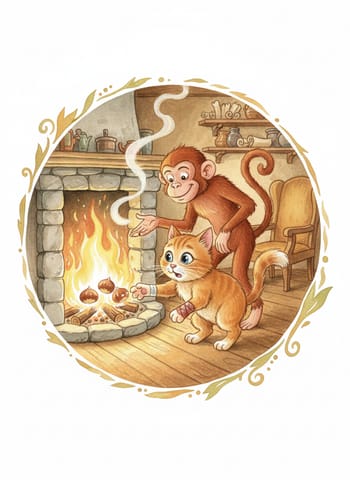
One day, in the chimney corner, these two rascals sat watching some chestnuts that were roasting before the fire. How jolly it would be to steal them they thought: doubly desirable, for it would not only be joy to themselves, but an annoyance to others.
Suatu hari, di sudut perapian, kedua bajingan ini duduk mengamati beberapa buah berangan yang sedang dipanggang di depan api. Betapa menyenangkannya jika bisa mencurinya, pikir mereka: kesenangan ganda, sebab itu bukan hanya kegembiraan bagi mereka sendiri, tetapi juga akan mengganggu orang lain.
"Brother," said Bertrand to Ratter, "this day you shall achieve your master-stroke: you shall snatch some chestnuts out of the fire for me. Providence has not fitted me for that sort of game. If it had, I assure you chestnuts would have a fine time."
"Saudaraku," kata Bertrand kepada Ratter, "hari ini kau akan melakukan aksi terbaikmu: kau akan mengambil beberapa buah berangan dari api untukku. Alam tidak menakdirkanku untuk permainan semacam itu. Jika iya, aku jamin, buah berangan akan mengalami masa yang sulit."
No sooner said than done. Ratter delicately stirred the cinders with his paw, stretched out his claws two or three times to prepare for the stroke, and then adroitly whipped out first one, then two, then three of the chestnuts, whilst Bertrand crunched them up between his teeth. In came a servant, and there was an end of the business. Farewell, ye rogues!
Tak lama setelah dikatakan, langsung dilakukan. Ratter dengan hati-hati mengaduk bara api dengan cakarnya, mengulurkan kukunya dua atau tiga kali untuk bersiap-siap, lalu dengan cekatan menyambar keluar satu, lalu dua, lalu tiga buah berangan, sementara Bertrand mengunyahnya di antara giginya. Seorang pelayan pun masuk, dan berakhirlah urusan itu. Selamat tinggal, wahai para bajingan!
I am told that Ratter was by no means satisfied with the affair.
Aku dengar Ratter sama sekali tidak puas dengan urusan itu.
And princes are equally dissatisfied when, flattered to be employed in any uncomfortable concern, they burn their fingers in a distant province for the profit of some king.
Dan para pangeran pun sama tidak puasnya ketika, karena tersanjung dipekerjakan dalam urusan yang tidak menyenangkan, mereka membakar jari-jari mereka di provinsi yang jauh demi keuntungan seorang raja.