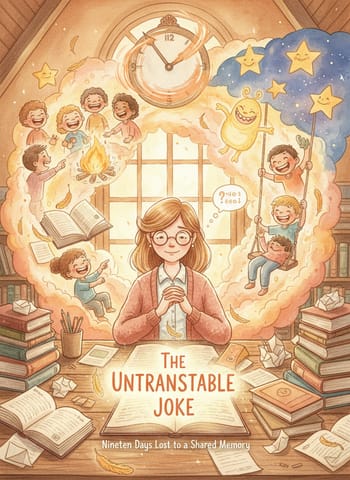
For nineteen days Maia has been stuck on a single line. It is not a long line: a character in the novel she is translating says three words to a bank clerk, and every reader of the original laughs. But the laugh depends on something her language does not contain. The three words are the opening of a children's radio programme that every child in that country heard at the same hour for forty years. The clerk, a stern woman, answers by humming the next phrase without noticing that she has done it.
整整十九天,玛雅一直卡在一句话上。那不是一句长话:她正在翻译的小说里,一个人物对一位银行职员说了三个词,原文的每一位读者读到这里都会笑。可这个笑点,靠的是她的语言里没有的东西。这三个词,是一档儿童广播节目的开场白,那个国家的每个孩子,四十年来都在同一个钟点听到过。那位严厉的职员,没有察觉自己是在做什么,就哼出了下一句。
Maia has tried the obvious things. A footnote explaining the programme kills the joke, which is rather like explaining an echo. A local equivalent, a jingle or a catchphrase or a nursery rhyme, feels false, because her readers' own childhoods would have to be moved into a foreign bank. She has tried leaving the line out, and the whole scene, which hangs from it, sags like a tent with one pole missing.
玛雅试过那些显而易见的办法。加脚注解释这档节目,会把笑话杀死,就像解释一声回音。找一个本地的对应物,一段广告歌,一句口头禅,一首童谣,又显得虚假,因为得把读者自己的童年搬进一家外国的银行里。她试过干脆删掉这句话,可整场戏都挂在它上面,像少了一根支柱的帐篷,塌了下来。
The obsession has begun to leak. She hums the theme tune, learned from a scratchy recording, in the supermarket queue, and watches the people around her with the odd hope that one of them will answer. On the bus she asks the driver whether any sentence makes him finish it automatically. After some thought he offers, "Please move down inside the vehicle," and looks startled by how quickly it came out. Rarely has a bus driver been thanked so warmly. Maia goes home to a page that has not changed.
这种执念已经开始外溢。她在超市排队时,哼起了那首主题曲,是从一段沙沙作响的录音里学来的,一边看着周围的人,抱着一种古怪的希望,盼着其中有谁会接上。在公共汽车上,她问司机,有没有哪句话,他一听到开头就会自动说完。他想了想,说:“请往车厢里面走。”说完自己也被这句话脱口而出的速度吓了一跳。很少有公共汽车司机被人这样热情地道谢。玛雅回到家里,面对的仍是那一页纹丝未动的稿子。
Her editor, on the phone, is kind and no help at all.
她的编辑在电话里很和气,却一点忙也帮不上。
"It's one joke, Maia. Readers will survive."
“不过是一个笑话,玛雅。读者不会有事的。”
"I know they will," Maia says. "It's not the readers I'm worried about."
“我知道他们不会有事,”玛雅说。“我担心的不是读者。”
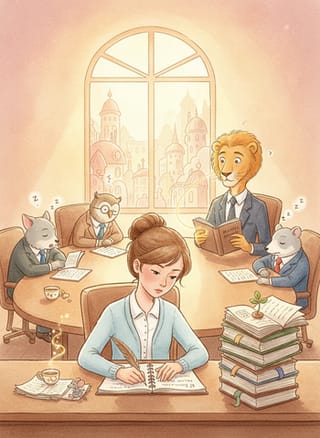
What finally moves her is, absurdly, the memory of the supermarket. Standing in the queue on the twentieth morning, she understands that what made the original funny was never the programme itself. It was the instant of recognition passing through a room, the sudden proof that these strangers had once been the same child. Her readers will never have that proof, but they can watch it happen to somebody else. Had she been less tired, she might have seen it on the second day.
最终打动她的,说来荒唐,竟是超市的那段记忆。第二十天的早晨,她站在队伍里,忽然明白,原文之所以好笑,从来都不是因为那档节目本身。而是认出的那一瞬间,在一个房间里传过去,一下子证明了这些陌生人曾经是同一个孩子。她的读者永远不会有这份证明,却可以看着它发生在别人身上。要是她没那么累,也许第二天就能看出来。
So she leaves the three words exactly as they are, unexplained, and adds only what the room does next. The clerk hums. A man behind the speaker sets down his pen. A woman stops in the middle of a sentence, and for a moment the whole bank is perfectly silent, like a congregation that has been reminded of something. The English reader will not know why. The English reader will know only that a thing has passed between strangers that they were not invited to share. That, she suspects, is the joke's real mechanism; the laughing was only one way of showing it.
于是她让那三个词保持原样,不加解释,只补写房间里接下来发生的事。职员哼了起来。说话人身后的一个男人放下了笔。一个女人话说到一半停了下来,有那么一会儿,整家银行安静得出奇,像一群被人提醒了什么的会众。英语读者不会知道为什么。英语读者只会知道,有一样东西在陌生人之间传递过,而他们没有受邀分享。她猜想,那才是这个笑话真正的机制;发笑,只是显示它的一种方式。
It takes forty minutes to type. Having lost nineteen days to the problem, she is faintly insulted that the solution takes less time than a kettle. She sends the page to her editor with a single line beneath it: "It is not as funny as the original. It is, I think, as accurate, and I'm beginning to suspect that comes to the same thing."
打出来花了四十分钟。为了这个问题搭进去十九天,她隐隐觉得受了冒犯,因为解决办法用的时间,还不及烧开一壶水。她把这一页发给编辑,下面只附了一行字:“它没有原文那么好笑。但我认为,它同样准确,而我渐渐怀疑,这两者是一回事。”