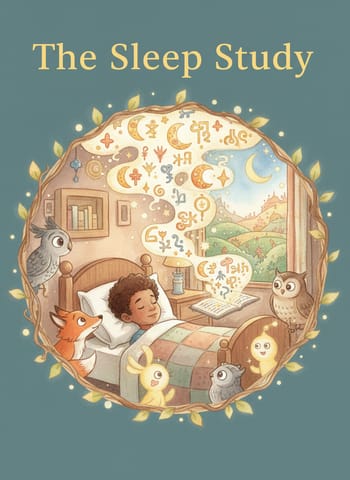
Amadou signs up for the sleep study because it pays for a month of groceries. All he has to do is spend three nights in a quiet room at the university, wired to a machine that watches him breathe.
阿马杜报名参加睡眠研究,是因为它的报酬够付一个月的伙食费。他要做的只是在大学里一个安静的房间待三个晚上,身上接着一台监测呼吸的仪器。
The report arrives by email on Friday. Most of it is ordinary: his sleep cycles are normal, his heart rate is calm. Then he reaches the last line. "Sleep speech detected: 47 episodes. Language: unidentified. Confidence that speech is structured language rather than noise: 94 percent."
报告在星期五通过电子邮件寄到了。大部分内容很平常:他的睡眠周期正常,心率平稳。然后他看到了最后一行。“检测到说梦话:47次。语言:无法识别。该语音是有结构的语言而非噪音的可信度:94%。”
He reads it three times. Then he phones the lab. "Maybe the machine made a mistake," he says.
他读了三遍。然后给实验室打了电话。“也许是机器弄错了。”他说。
"The analysis software compares your speech with thousands of recordings," the technician says. "It found no match. I'm sorry, I can't tell you more than that."
“分析软件会把您的语音与成千上万条录音比对,”技术员说,“没有找到匹配的。抱歉,我只能告诉您这么多。”
After that, Amadou can think of nothing else. He asks for the audio clips and listens to them on his laptop, wearing headphones. His own voice, thick with sleep, produces slow, rhythmic phrases that rise at the end like questions.
从那以后,阿马杜满脑子都是这件事。他要来了音频片段,戴着耳机在笔记本电脑上听。他自己的声音带着浓浓的睡意,发出缓慢而有节奏的短语,句尾像疑问一样上扬。
He plays them for a friend who studies languages. "It has real grammar," she says, frowning. "Or something that behaves like it. But I've never heard it before."
他把录音放给一位研究语言的朋友听。“这有真正的语法,”她皱着眉说,“或者说是某种表现得像语法的东西。但我从来没听过这种语言。”
For a week, Amadou fills a notebook with spellings of the sounds. He wonders whether he picked up a forgotten language from a grandparent, and he phones his mother to ask. She says that nobody in the family ever spoke anything but the usual two languages, and that he should go to bed earlier.
整整一个星期,阿马杜在笔记本上写满了这些声音的拼写。他想,自己是不是从某位祖辈那里学到了一种被遗忘的语言,便打电话去问母亲。她说家里从来没人说过平常那两种语言以外的话,还让他早点睡觉。
Of course, he cannot sleep. The more he thinks about it, the less he rests, and the less he rests, the more he lies awake in the dark, listening.
当然,他睡不着。他越想越睡不好,越睡不好,就越是在黑暗里醒着躺着,竖着耳朵听。
On Thursday night, he sets his phone to record, mostly out of stubbornness. At twenty to midnight, he hears a calm voice coming through the wall beside his bed. It speaks one slow phrase, then pauses. A different voice answers it, then the first voice repeats the phrase, a little faster.
星期四晚上,他把手机设成录音,多半是出于倔强。十一点四十分,他听到隔着床边的墙,传来一个平静的声音。它说了一个缓慢的短语,停顿了一下。另一个声音回应,然后第一个声音又重复了那个短语,快了一点。
Amadou sits up very slowly. He opens the notebook. The phrase on the other side of the wall is one of the phrases he has written down.
阿马杜非常缓慢地坐了起来。他翻开笔记本。墙那边的那个短语,正是他记下来的短语之一。
The next morning he knocks on his neighbor's door. She opens it in a bathrobe, holding a mug. "Sorry," he says. "This is strange. Do you play language lessons at night?"
第二天早上,他去敲邻居的门。她穿着浴袍开了门,手里端着一个马克杯。“抱歉,”他说,“这事有点奇怪。你晚上是不是在放语言课?”
"Every night," she says, surprised. "It's a small language, and the course is the only one I could find. I play it while I fall asleep. Why?"
“每天晚上都放,”她惊讶地说,“这是一种小语种,我只找到了这一门课程。我是边放边入睡的。怎么了?”
"Because I have been repeating them in my sleep. A university machine says I speak an unknown language."
“因为我一直在睡梦里重复这些话。大学里的一台机器说我在讲一种未知的语言。”
She stares at him, and then she bursts out laughing. "So you're the one who answers back! For two weeks I've been hearing someone mumble the lessons through the wall. I thought I was losing my mind."
她盯着他看,然后哈哈大笑起来。“原来答话的人是你!两个星期了,我一直听到有人隔着墙嘟囔那些课文。我还以为自己要疯了。”
"Well," Amadou says, "my pronunciation must be excellent."
“嗯,”阿马杜说,“看来我的发音一定很棒。”
"That depends," she says. "Can you tell me which one of us has been getting the vowels right?"
“那可不一定,”她说,“你能告诉我,我们俩谁的元音念得对吗?”