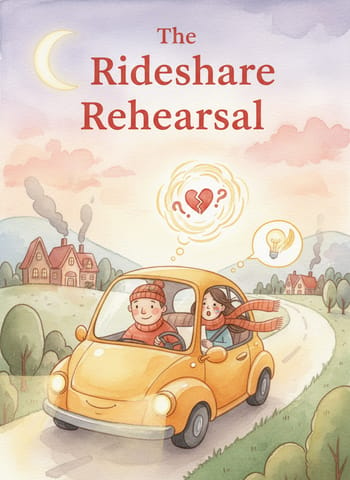
Fadi has been driving since six, and the evening's first fare is the first one to talk to herself. The woman in the back seat, a green scarf pulled up to her chin, is whispering at the window. Then she clears her throat and says, quite loudly, "Dear friend, this is very hard for me."
法迪从早上六点就开始开车了,今晚的第一位乘客是第一个自言自语的人。后座上的女人把绿色围巾拉到下巴,正对着车窗低声嘀咕。接着她清了清嗓子,大声说道:“亲爱的朋友,这对我来说非常艰难。”
Fadi glances at the mirror. She does not look up. He understands that he is not being addressed; he is simply the audience.
法迪瞥了一眼后视镜。她没有抬头。他明白对方并不是在跟自己说话,他只是个听众。
"I have thought about this for weeks," she goes on. "It's not you, it's me. We want different things. I will always remember the good times." She stops. "No. Too much like a greeting card."
“我想了好几个星期了,”她接着说,“不是你的错,是我的问题。我们想要的不一样。我会永远记得那些美好的时光。”她停住了。“不行,太像贺卡上的话了。”
By the second traffic light, she has started again four times. The opening changes. The ending changes. The sentence "I'm not angry, just disappointed" survives every version. Fadi counts it quietly and decides that if he had to grade the speech, he would give it four out of ten. He keeps his eyes on the road and a bag of mints in the door pocket. At the next red light he holds the bag over his shoulder without a word. She takes one.
到第二个红绿灯时,她已经重新开始了四次。开头变了,结尾也变了。“我不生气,只是失望”这句话在每个版本里都留了下来。法迪默默数着,心想如果让他给这篇讲话打分,他会打四分,满分十分。他的目光一直盯着路面,车门的储物袋里放着一包薄荷糖。下一个红灯时,他一言不发地把那包糖举到肩后。她拿了一颗。
"Sorry," she says. "I'm practicing. I'm ending something tonight."
“不好意思,”她说,“我在练习。今晚我要结束一段感情。”
"I noticed," Fadi says. "It was hard to miss. May I say one thing? You don't have to answer."
“我听出来了,”法迪说,“很难听不出来。我能说一句吗?您不用回答。”
"Go ahead. You've heard all of it by now anyway."
“说吧。反正现在你什么都听到了。”
"When my wife and I nearly split up, I wrote a speech too. It was perfect. Every sentence had a lock on it, so she couldn't argue." He signals and turns into a narrow street. "She listened to the whole thing. Then she asked me one question: what do you actually want?"
“我和妻子差点分开的时候,我也写过一篇讲话稿。写得完美极了。每句话都上了锁,这样她就没法反驳。”他打了转向灯,拐进一条窄街。“她把整篇都听完了。然后只问了我一个问题:你到底想要什么?”
"What did you say?"
“你怎么说的?”
"Nothing. I had no line for that. I had only prepared the part where I was right."
“什么也没说。我没有准备这句的台词。我只准备了我有理的那部分。”
The woman laughs, then stops. She holds up her phone, and the notes screen glows with a long block of text. "Eleven paragraphs. I've been polishing them since Sunday."
女人笑了起来,随即又停住。她举起手机,备忘录的屏幕上亮着一大段文字。“十一段。从星期天起我就一直在打磨。”
"A speech is a good way to avoid a conversation," Fadi says. "But I'm only a driver. What do I know?"
“讲稿是逃避谈话的好办法,”法迪说,“不过我只是个司机,我懂什么呢?”
"More than my friends. They all said, 'Just be firm.'" She holds her thumb over the screen, hesitates and deletes the whole note.
“比我的朋友们懂得多。他们都说:‘态度坚决点就好。’”她的拇指悬在屏幕上方,犹豫了一下,把整篇备忘录删掉了。
"What will you say instead?" he asks.
“那您打算说什么?”他问。
"That I'm unhappy. That I think he is too. That I want to talk about it properly, and that I'm scared." She says it quickly, as if testing the sentences. "That's all I've got."
“说我不快乐。说我觉得他也不快乐。说我想好好谈一谈,还有,我很害怕。”她说得很快,像是在试这几句话。“我就只有这些了。”
"That's nine out of ten," says Fadi.
“这可以打九分。”法迪说。
They stop in front of a narrow house with a lamp in the window. She sits still for a moment, one hand on the door handle. "Could you wait?" she asks. "Ten minutes. If it goes badly, I'd rather not stand alone on the street."
车停在一栋窄窄的房子前,窗口亮着一盏灯。她一动不动地坐了片刻,一只手搭在车门把手上。“你能等一等吗?”她问,“十分钟。要是谈得不好,我不想一个人站在街上。”
Fadi presses the button on the meter, and the numbers stop. "Take your time," he says, and he turns off the engine.
法迪按下计价器上的按钮,数字停住了。“您慢慢来。”他说,然后熄了火。