The Shift Nobody Wanted
一个面向英语学习者的免费 B2 级英语故事,可用 7 种语言在线阅读,也可以在免费的 Storyteller 应用中收听。
When an automated scheduling system assigns him four closing shifts in a row, Toma documents the pattern until his manager forces a human check back into the process.
试听结束!在免费的 Storyteller 应用中收听完整故事。 下载应用
音频暂时无法播放。
Toma had worked the same closing shift at the store for three years, trading it occasionally with coworkers whenever life required it. The new scheduling system had been installed to make that kind of trading easier, not harder.
托马在店里上同一个打烊班已经三年了,生活有需要的时候,偶尔会和同事换班。装新的排班系统本来是为了让这种换班更容易,而不是更难。
Instead, it had started assigning shifts by an algorithm nobody fully understood, optimizing for something the company called "coverage efficiency."
结果,它开始按一个没人完全弄得懂的算法来分配班次,优化的是公司所说的“覆盖效率”。
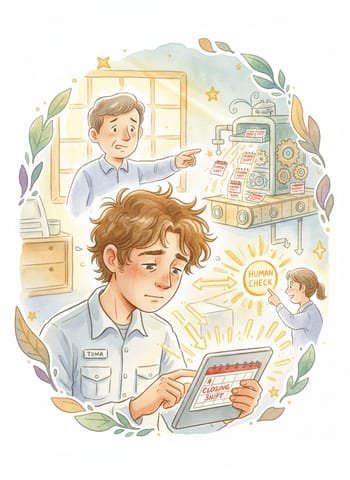
"It gave me four closes in a row this week," Toma told his manager, staring at the app's neat, color-coded calendar. "I haven't had that happen since I started here."
“这星期它给我连排了四个打烊班,”托马对经理说,眼睛盯着应用里那份整齐的、用颜色标记的日历,“我入职以来从没碰到过这种事。”
"The system says it's balancing everyone's availability," his manager said, sounding almost as confused as Toma felt. "I don't actually control the assignments anymore."
“系统说它是在平衡每个人的可用时间,”经理说,听起来几乎和托马一样困惑,“我现在已经管不了班次分配了。”
If a human had built this schedule, Toma thought, someone would have noticed a person working four closing shifts straight. The algorithm had simply optimized around the constraints it was given, and fairness hadn't been one of them.
托马想,要是这份排班是人排的,肯定有人会注意到一个人连着上四个打烊班。算法只是围绕着给它的限制条件做了优化,而公平并不在其中。
He tried requesting a swap through the app, but the system rejected it automatically, citing "insufficient coverage" for the shift he wanted to give away. A coworker had reportedly been told the same thing the previous month.
他试着通过应用申请换班,但系统自动驳回了,理由是他想让出去的那个班次“覆盖不足”。据说上个月也有一位同事得到了同样的答复。
"Has anyone actually complained to the company directly?" Toma asked during break, looking around at the tired faces of his coworkers.
“有人真的直接向公司投诉过吗?”休息时托马问,环顾着同事们疲惫的面孔。
"I did, once," said a woman from the bakery counter. "Got a message back saying the system 'learns from patterns over time.' Didn't say what that meant."
“我投诉过一次,”面包柜台的一位女士说,“收到一条回复,说系统‘会随着时间从模式中学习’。没说这是什么意思。”
Toma decided to keep a written log instead, documenting exactly which shifts he'd been assigned and when he'd requested swaps that got rejected. If the algorithm wouldn't listen, maybe a manager reading actual evidence would.
托马决定改为写一份书面记录,准确记下他被分到了哪些班次,以及他什么时候申请过换班却被驳回。要是算法不听,也许一位经理看到真正的证据,就会听了。
Three weeks and one detailed log later, his manager brought the printed pages into a meeting with regional management.
三个星期和一份详细记录之后,他的经理把打印出来的几页纸带进了与区域管理层的会议。
"This isn't sustainable," she said, pointing to the pattern. "Someone should have caught this months ago. We need a human to review the schedule before it's finalized, every week."
“这样下去不行,”她指着那个规律说,“早就该有人在几个月前发现这个问题。我们需要在排班敲定之前,每周都由人审核一遍。”
The change wasn't instant, but within a month, a manager's approval step had been added before any schedule went live.
改变不是立刻发生的,但一个月之内,任何排班生效之前,都增加了经理批准这一步。
"Still not perfect," Toma said. "But at least a person looks at it now, not just a number."
“还是不完美,”托马说,“但至少现在有人在看它,而不只是一个数字。”