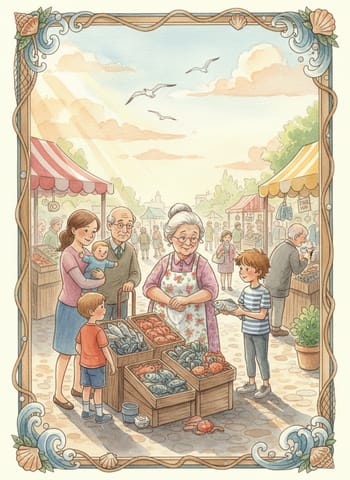
Bianca woke at four o'clock, as she did every day. It was dark and cold. She made tea and drank it by the window. Today was her last day at the fish stall.
比安卡四点钟醒来,和每天一样。天又黑又冷。她泡了茶,站在窗边喝。今天是她在鱼摊的最后一天。
She was sixty-eight years old. For forty years, she sold fish at the street market. She sold cod, trout, and small silver fish for soup. Her back hurt now, and her hands hurt too. Her daughter said, "Mama, it is time."
她六十八岁了。四十年来,她一直在街边集市卖鱼。她卖鳕鱼、鳟鱼,还有煮汤用的银色小鱼。现在她的背很疼,手也很疼。她女儿说:“妈妈,是时候了。”
At five o'clock, she arrived at the market. The street was quiet. The only light came from a lamp over her stall. A young man was already there. His name was Emeka. He was her helper, and he was twenty years old.
五点钟,她来到集市。街上很安静。唯一的光来自她摊位上方的一盏灯。一个年轻人已经在那儿了。他叫埃梅卡,是她的帮手,今年二十岁。
"Good morning," Emeka said.
“早上好。”埃梅卡说。
"I put the ice out."
“我把冰摆出来了。”
"Thank you," said Bianca. They laid the fish on the ice, row by row. The fish were bright and shiny. Bianca touched each one with two fingers. She did not think about it. Her hands knew the work.
“谢谢你。”比安卡说。他们把鱼一排一排地铺在冰上。鱼又亮又闪。比安卡用两根手指摸过每一条。她没有多想,她的手自己就知道怎么干活。
At seven o'clock, the first customers came. A tall man bought two trout. He did not say anything about the day. He just put a few extra coins on the table.
七点钟,第一批顾客来了。一个高个子男人买了两条鳟鱼。他没提这一天的事,只是在桌上多放了几枚硬币。
"That is too much," Bianca said. "It is for the years," he said. Bianca looked at the coins. She did not answer. She put them in a small tin.
“给多了。”比安卡说。“这是为了这些年。”他说。比安卡看着那些硬币。她没有回答,把它们放进了一个小铁盒里。
A woman came with her little daughter. The girl pointed at a fish. "That one has big eyes," she said.
一位女士带着小女儿来了。小女孩指着一条鱼。“那条的眼睛好大。”她说。
"He is a good fish," said Bianca.
“它是条好鱼。”比安卡说。
"He saw a lot of the sea." The girl laughed. Her mother smiled, and they bought him.
“它见过好多的海。”小女孩笑了。她妈妈也笑了,她们买下了那条鱼。
All morning, people came. Some brought flowers. One man brought a small cake in a paper box. A boy gave her a drawing of a fish. Bianca put the drawing on the front of the stall. Emeka said, "It looks like you."
整个上午,人来人往。有的人带来了鲜花。一个男人带来一小块装在纸盒里的蛋糕。一个男孩送给她一幅画着鱼的画。比安卡把画挂在摊位前面。埃梅卡说:“画得像你。”
"The fish?" she asked. "No. The smiling face." She laughed out loud. It was a deep laugh, and it surprised her. At noon, the crowd got smaller. The sun warmed the street. Bianca sat on her old wooden stool. She looked at the scale, the knives, and the apron. She touched them all, many times.
“那条鱼吗?”她问。“不是,是那张笑脸。”她大声笑了起来。那是低沉的笑声,连她自己都吃了一惊。中午,人群渐渐少了。阳光暖暖地照在街上。比安卡坐在她那张旧木凳上。她看着秤、刀和围裙,一遍又一遍地摸着它们。
Emeka sat next to her on a box. "I am a little sad," he said.
埃梅卡坐在她旁边的一个箱子上。“我有点难过。”他说。
"Why?" she asked.
“为什么?”她问。
"You are young. You have the whole market."
“你还年轻。整个集市都是你的。”
"I do not have you."
“我没有你。”
Bianca was quiet. Then she said, "Listen. When the ice melts, pour the water on the street. It keeps the dust down. And never leave the knives wet. And always smile at people who buy one fish."
比安卡沉默了一会儿。然后她说:“听着。冰化了以后,把水泼在街上。这样可以压住灰尘。还有,刀千万别湿着放。还有,对只买一条鱼的人,也要一直微笑。”
"Why them?" "Because they come back the most." Emeka wrote it all in his small notebook. He wrote slowly, in big letters.
“为什么是他们?”“因为他们回来得最多。”埃梅卡把这些都写进了他的小笔记本。他写得很慢,字写得很大。
By two o'clock, only five fish remained. Bianca put them in a bag for Emeka. "Take these home," she said.
到两点钟,只剩下五条鱼了。比安卡把它们装进一个袋子,递给埃梅卡。“带回家吧。”她说。
"Cook them with butter and lemon."
“用黄油和柠檬煎着吃。”
"But this is your last day."
“可这是你的最后一天。”
"Yes. That is why you cook them."
“对。所以你要把它们煎来吃。”
They cleaned the stall together. They washed the table and the scale. They folded the umbrella. In the end, only the blue apron was left. Bianca took it off its hook. She held it in her hands for a long time. It was old and soft. It smelled of the sea.
他们一起收拾摊位。他们洗了桌子和秤,收起了遮阳伞。最后,只剩下那条蓝围裙了。比安卡把它从挂钩上取下来。她把它捧在手里很久。它又旧又软,带着海的气味。
Then she gave it to Emeka. He took it without a word. Bianca picked up her tin of coins. She did not look back. She walked up the street in the afternoon sun. Behind her, a metal hook rang. Emeka hung the apron up again.
然后她把它交给了埃梅卡。他一句话也没说,接了过去。比安卡拿起她的钱盒。她没有回头。她沿着街道,走进午后的阳光里。身后,一只金属挂钩叮的一声响。埃梅卡又把围裙挂了起来。