The clock in the break room said 12:40. Sigrid looked at it and groaned.
休息室的钟指着十二点四十分。西格丽德看着它,哀叹了一声。
"The children come at two," she said. "We have eighty minutes."
“孩子们两点到,”她说,“我们只有八十分钟。”
Hamza stood in the middle of the room. He held one pillow. "Where are the others?" he asked.
哈姆扎站在房间中央,手里拿着一个枕头。“其他的在哪儿?”他问。
"The town hall forgot to send them," said Sigrid. "I brought nine from home."
“市政厅忘了送来,”西格丽德说,“我从家里带了九个。”
"Nine pillows make a very small fort."
“九个枕头只能搭一座很小的堡垒。”
"Nine pillows make a very small hat." She put one on his head. "We need sixty."
“九个枕头只能做一顶很小的帽子。”她把一个放在他头上。“我们需要六十个。”
Hamza took the pillow off. "Why did we say yes to this?"
哈姆扎把枕头拿下来。“我们当初为什么答应这事?”
"The manager asked us nicely."
“经理客客气气地求我们的。”
"I said yes because she promised us a free lunch."
“我答应是因为她承诺请我们吃免费午饭。”
Sigrid laughed. "Then we must finish. No fort, no lunch."
西格丽德笑了。“那我们就得做完。没有堡垒,就没有午饭。”
It was Family Day at the bus depot. Every year, the drivers showed children the big buses. This year, the manager wanted something new. She wanted a quiet fort in the break room. It had books and soft light. The children could rest there after the noisy engines. She gave the job to Sigrid and Hamza. They had the same long break.
这天是公交车场的家庭日。每年,司机们都会带孩子们看大巴车。今年,经理想要点新花样。她想在休息室里弄一座安静的堡垒。里面有书和柔和的灯光。孩子们在嘈杂的引擎之后可以在那里歇一歇。她把这个任务交给了西格丽德和哈姆扎。他们的长休时间是同一段。
"Right," said Hamza. "A fort needs walls. Let us make walls."
“好,”哈姆扎说,“堡垒需要墙。我们来做墙。”
They put the nine pillows in a circle. Then they added the sofa cushions. There were six of them. Fifteen cushions made a low ring. It was as high as a sleeping dog.
他们把九个枕头摆成一圈。然后又加上沙发垫。一共有六个。十五个垫子堆成一个矮矮的圈。只有一只睡着的狗那么高。
"This is not a fort," said Sigrid. "It is a pillow puddle."
“这不是堡垒,”西格丽德说,“这是一个枕头水洼。”
"Then we need a bigger puddle." Hamza stacked the cushions higher. The wall wobbled. He leaned on it to hold it. The whole wall fell on top of him.
“那我们需要一个更大的水洼。”哈姆扎把垫子堆得更高。墙晃了晃。他靠上去扶住它。整面墙压到了他身上。
Sigrid laughed so hard that she had to sit down. Then she looked at the clock again. It said 12:55.
西格丽德笑得太厉害,只好坐下。然后她又看了一眼钟。十二点五十五分。
"I will ask the other drivers for pillows," said Hamza. He ran out to the yard.
“我去问问其他司机要枕头,”哈姆扎说。他跑出去,到了车场里。
He came back ten minutes later. He had no pillows. A man in the yard gave him a strange look.
十分钟后他回来了。他没带回枕头。院子里一个男人给了他一个奇怪的眼神。
"Nobody has spare pillows," he said. "All the drivers are out on their routes."
“没人有多余的枕头,”他说,“司机们都出车跑线路了。”
"Of course they are. That is their job."
“当然了。那是他们的工作。”
Hamza dropped onto the sofa. Sigrid did not look at him. She looked at the room. It was a plain room. It had a long table and six chairs. It also had a row of tall lockers. Two big cardboard boxes stood in the corner. They came with the new coffee machine. A grey blanket lay on top of the first-aid cupboard.
哈姆扎一屁股坐到沙发上。西格丽德没有看他。她看着房间。这是个普通的房间。有一张长桌和六把椅子。还有一排高高的储物柜。角落里有两个大纸箱。是新咖啡机的包装。急救柜上面放着一条灰色的毯子。
"Hamza," she said slowly. "We have this all wrong."
“哈姆扎,”她慢慢地说,“我们整个想错了。”
"I know. Next year, we say no."
“我知道。明年,我们就说不。”
"Not that. We used pillows for the walls, and pillows make bad walls." She pointed around the room. "Pillows make a good floor. We need walls from something else."
“不是那个。我们用枕头做墙,可枕头做不好墙。”她指着房间四周。“枕头适合做地板。墙得用别的东西来做。”
Hamza sat up. "What else is a wall?"
哈姆扎坐直了。“还有什么能当墙?”
"A table. A locker. A box."
“桌子。储物柜。箱子。”
He looked at the long table. Then he smiled. "What time is it?"
他看着那张长桌。然后他笑了。“现在几点?”
"Five past one. We have fifty-five minutes."
“一点零五分。我们还有五十五分钟。”
"Then let us move!"
“那我们动起来!”
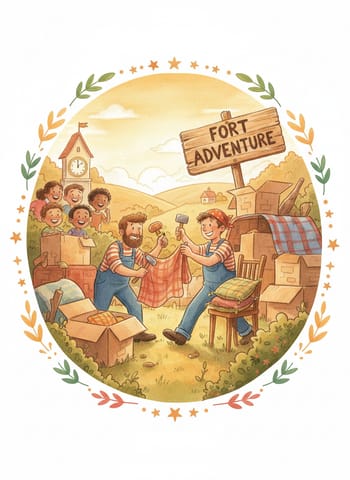
They turned the long table on its side. It made a wall as high as Sigrid's shoulder. The lockers already stood against the back of the room. They made a second wall for free. Hamza opened the two big boxes and taped them together. That made a third wall. Sigrid cut a small door in it.
他们把长桌侧翻过来。它成了一面到西格丽德肩膀那么高的墙。储物柜本来就靠着房间后墙。它们白送了第二面墙。哈姆扎打开那两个大箱子,把它们粘在一起。这就成了第三面墙。西格丽德在上面剪出一扇小门。
"Where is the roof?" asked Hamza.
“屋顶在哪儿?”哈姆扎问。
Sigrid held up the grey blanket. "Here. And my coat. And yours."
西格丽德举起那条灰毯子。“这儿。还有我的外套。还有你的。”
"Not my coat. It is my best coat."
“别拿我的外套。那是我最好的外套。”
"It is your only coat." She took it anyway.
“那是你唯一的外套。”她还是拿走了。
They tied the blanket to the table and to a locker door. Two broom handles held up the middle. The roof sagged a little, but it stayed up.
他们把毯子系在桌子和一扇柜门上。两根扫帚柄撑住中间。屋顶有点下垂,但没有塌下来。
At 1:30, they started on the floor. They laid all nine pillows down in a thick layer. They put the sofa cushions on top. The floor looked like a soft white cloud. Then Hamza found a string of small lights in the cupboard. He hung it inside the roof and plugged it in. The whole fort glowed.
一点半,他们开始做地板。他们把九个枕头全部铺成厚厚的一层。把沙发垫放在上面。地板看起来像一片柔软的白云。然后哈姆扎在橱柜里找到一串小彩灯。他把它挂在屋顶内侧,插上电。整座堡垒都亮了起来。
Sigrid crawled in through the small door. She lay on her back and looked at the lights. "It is perfect," she said. "I could sleep here until Friday."
西格丽德从小门爬进去。她仰面躺着,看着灯光。“太完美了,”她说,“我能在这儿一直睡到星期五。”
"Do not sleep," said Hamza. "It is 1:50."
“别睡,”哈姆扎说,“一点五十了。”
"Ten minutes!" She came out fast. "The books! Where are the books?"
“还有十分钟!”她飞快爬了出来。“书呢!书在哪儿?”
They ran to the shelf by the window. They took twenty picture books. They put them in a box inside the fort. At 1:58, the roof dropped on one side. Hamza held it up with his head. Sigrid pushed a chair under it, but the chair was too short. At 1:59, Hamza's head was still the roof.
他们跑向窗边的架子。拿了二十本图画书。把它们放进堡垒里的一个箱子里。一点五十八分,屋顶一侧塌了下来。哈姆扎用头顶住它。西格丽德推了一把椅子来垫在下面,可椅子太矮了。一点五十九分,哈姆扎的头还是屋顶。
"Do not move," whispered Sigrid.
“别动,”西格丽德小声说。
"I cannot move," whispered Hamza. "My head is the roof."
“我动不了,”哈姆扎小声说,“我的头就是屋顶。”
The door opened at exactly two o'clock. Twelve children ran into the room, and the manager came behind them. They all stopped in front of the fort. For a long moment, nobody spoke.
门在两点整被推开。十二个孩子跑进房间,经理跟在后面。他们都停在堡垒前。有好一会儿,没有人说话。
Then a small boy pointed. "Is it a house?"
然后一个小男孩指着问:“那是一座房子吗?”
"It is a fort," said Hamza, from under the roof. "You can read inside."
“是堡垒,”哈姆扎在屋顶下说,“你们可以在里面看书。”
The children crawled in one by one. Soon the fort was full of bright eyes and loud whispers.
孩子们一个接一个爬进去。不一会儿,堡垒里就挤满了明亮的眼睛和很响的悄悄话。
"It is bigger inside than outside," said a girl.
“里面比外面大,”一个女孩说。
"That is how a good fort works," said Sigrid.
“好堡垒就是这样的,”西格丽德说。
The manager stood by the walls and looked at them. She looked at the boxes and the lockers. She looked at the long table on its side. Then she looked at Hamza's head under the roof.
经理站在墙边看着他们。她看看箱子和储物柜。她看看侧翻的长桌。然后她看向屋顶下哈姆扎的头。
"Where are the sixty pillows from the town hall?" she asked.
“市政厅的那六十个枕头呢?”她问。
"They never came," said Sigrid. "Our nine pillows hold up the whole floor."
“根本没送来,”西格丽德说,“我们的九个枕头撑起了整个地板。”
"And the walls?"
“那墙呢?”
"Lockers, boxes and one table," said Hamza. "The table is not happy about it."
“储物柜、箱子和一张桌子,”哈姆扎说,“桌子对此很不高兴。”
The manager laughed. She got down on her knees. She looked in through the small door. "May I come in?"
经理笑了。她跪下来。她从小门往里看。“我可以进来吗?”
"No," said a small voice. "Shoes off first. That is the rule."
“不行,”一个小小的声音说,“先脱鞋。这是规矩。”
"Whose rule?"
“谁的规矩?”
"Ours," said the girl in the back. "We made it."
“我们的,”后面的女孩说,“我们定的。”
The manager looked at Sigrid. Sigrid looked at the ceiling. Then the manager took off her shoes and crawled in.
经理看着西格丽德。西格丽德看着天花板。然后经理脱了鞋,爬了进去。
Hamza leaned close to Sigrid. "I came here eleven years ago," he whispered. "Nobody ever made her take off her shoes."
哈姆扎凑近西格丽德。“我十一年前就来这儿了,”他低声说,“从来没人让她脱过鞋。”
"Twelve children did it in twelve seconds," said Sigrid.
“十二个孩子,十二秒就做到了,”西格丽德说。
Hamza smiled. "Next year, let us ask them to run the depot."
哈姆扎笑了。“明年,我们请他们来管车场吧。”