On the day of the Lantern Festival, the workshop smelled of glue and warm paper. Lars sat at the long table with a pot of ink and a stack of plain lanterns. Across from him, Yusra painted silver stars on a blue one without looking up.
灯笼节那天,作坊里弥漫着胶水和温热纸张的气味。拉尔斯坐在长桌前,面前放着一罐墨水和一摞素灯笼。对面,优丝拉头也不抬地在一只蓝灯笼上画银色的星星。
They had painted since sunrise. The master had left early for the harbour, where the great festival lantern needed hanging. Before he went, he put a list on the wall. It said that one hundred and twenty small lanterns must be ready by dusk.
他们从日出时就开始画了。师傅一早就去了港口,那里要挂大节日灯笼。临走前,他在墙上贴了一张清单,上面写着:天黑之前必须做好一百二十只小灯笼。
"How many have we finished?" Lars asked.
“我们完成了多少?”拉尔斯问。
"Eighty-one," Yusra said. "I counted twice. Do not ask me again."
“八十一只,”优丝拉说,“我数了两遍。别再问我了。”
Lars sighed and painted another moon. It was his fortieth moon of the day, and it looked exactly like the other thirty-nine. His wrist hurt, and his brush was falling apart. The tip had split into three loose bits, and the ink ran in lines instead of curves.
拉尔斯叹了口气,又画了一轮月亮。这是他今天画的第四十轮月亮,跟前面三十九轮一模一样。他的手腕酸痛,笔也快散架了。笔尖裂成了三缕散毛,墨水画出来的是一道道细线,而不是弯弯的弧形。
"I need a new brush," he said.
“我需要一支新笔,”他说。
"The spare ones are in the old jar by the window," Yusra said. "Take the best one."
“备用的都在窗边那个旧罐子里,”优丝拉说,“挑最好的拿。”
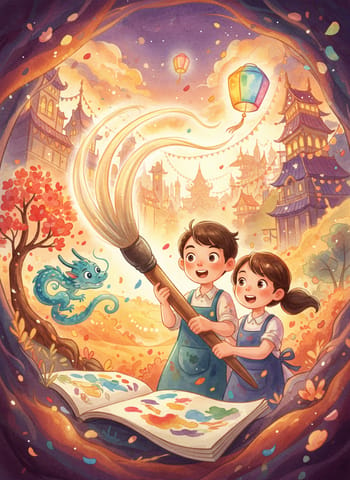
Lars walked across the room and tipped the jar over his hand. Dusty brushes fell out. Most had bent handles or hard, dry tips. At the very bottom lay a thin brush of dark wood. It was so light that he almost missed it.
拉尔斯走过房间,把罐子倒扣在手上。灰扑扑的毛笔掉了出来,大多数笔杆弯了,或是笔尖又硬又干。在最底下,躺着一支深色木杆的细笔。它轻得他差点没发现。
He held it up to the window. It had only three hairs. One was silver, one was gold, and one was black as a crow's feather.
他把它举到窗前。它只有三根毛:一根银色,一根金色,一根像乌鸦羽毛那样黑。
"That is not a brush," Yusra said. "That is a joke."
“那不是笔,”优丝拉说,“那是个玩笑。”
"Maybe. But it is thin enough for small work." Lars dipped it in the ink and tried it on a spoiled lantern. The paper had a crack. He painted a little fish with a curved tail, and he gave it one round eye.
“也许吧。不过它够细,能画小东西。”拉尔斯蘸了蘸墨,在一只坏掉的灯笼上试了试。纸上有一道裂痕。他画了一条小鱼,尾巴弯弯的,还给它点了一只圆圆的眼睛。
The ink was still wet when the fish moved.
墨迹还没干,那条鱼就动了。
It happened slowly. First the tail twitched. Then the whole fish pulled away from the paper, shining, and hung in the air above the table. It was as small as his thumb. It turned once in a circle and looked at him with its round eye. Then it swam towards Yusra's nose.
它动得很慢。先是尾巴抽动了一下。然后整条鱼从纸上脱离出来,闪着光,悬在桌子上方的空中。它只有拇指那么大。它转了一圈,用圆圆的眼睛看着他。然后它朝优丝拉的鼻子游了过去。
Yusra dropped her brush.
优丝拉的笔掉了。
"Lars," she whispered. "Did you do that?"
“拉尔斯,”她小声说,“是你做的吗?”
"I only painted it," he said. His voice shook. "I did not know it would do that."
“我只是画了它,”他说,声音在发抖,“我不知道它会这样。”
The fish flew a lazy circle around the lamp above them. Then it landed on the edge of the ink pot. It looked quite happy. Neither of them dared to breathe.
小鱼在头顶的灯周围懒洋洋地飞了一圈,然后落在墨水罐的边上。它看上去相当开心。他们俩谁也不敢喘气。
"Try again," Yusra said at last. "But try something small."
“再试一次,”优丝拉终于说,“不过画个小的。”
Lars chose a spare lantern and used only the silver hair. He drew a simple line, a short curve that might be a lamp. The line began to glow, as soft and white as the moon. When he touched the paper, it was cool.
拉尔斯挑了一只备用灯笼,只用那根银毛。他画了一道简单的线,一道短短的弧线,也许是盏灯。这条线开始发光,柔和洁白,像月亮一样。他碰了碰纸,是凉的。
"That one gives light," Yusra said. She took the brush from him and tried the gold hair on a leaf. The leaf turned green and warm, and it curled its stem around her finger like a tiny hand.
“这根能发光,”优丝拉说。她从他手里接过笔,用金毛在一片叶子上试了试。叶子变得又绿又温暖,叶柄像一只小小的手,卷住了她的手指。
"The gold one gives life," she said, laughing. "And the black one?"
“金色这根能赋予生命,”她笑着说,“那黑色这根呢?”
"I am not sure I want to know."
“我不确定自己想不想知道。”
But she dipped the black hair anyway, and she drew a short, dark line on the wall. At once a shadow came away from the paint. It was a mouse's shadow, small and fast. It ran along the floor and vanished under the door.
可她还是蘸了黑毛,在墙上画了一道短短的黑线。立刻,一团影子从颜料里脱落出来。那是一只老鼠的影子,又小又快。它沿着地板跑过去,消失在门底下。
"Well," said Yusra. "The black one is for shadows."
“好吧,”优丝拉说,“黑色这根是画影子的。”
For a few minutes they forgot the festival. They painted tiny stars that floated, and a moth that carried its own light. The room filled with soft, moving colours. Lars had never been so happy.
有那么几分钟,他们把灯笼节忘得一干二净。他们画了会漂浮的小星星,还画了一只自己带着光的飞蛾。房间里充满了柔和而流动的色彩。拉尔斯从来没有这么快乐过。
Then he looked at the wall. The list was still there, and the sun was lower than before.
然后他看向墙壁。清单还在那里,太阳比刚才低了。
"We have thirty-nine lanterns left," he said. "And no time."
“我们还剩三十九只灯笼,”他说,“可是没时间了。”
"And the fish is gone."
“而且鱼不见了。”
He turned. The little fish was no longer on the ink pot. The window stood open, and a cool breeze moved the curtain. Far away, over the roofs, a spark of silver was flying towards the harbour.
他转过身。小鱼不在墨水罐上了。窗户敞开着,一阵凉风吹动了窗帘。远处,在屋顶之上,一点银光正朝港口飞去。
"Oh, no," Lars said. "The master will see it. He will want to know what we did."
“糟了,”拉尔斯说,“师傅会看到的。他会问我们做了什么。”
"If it follows the lanterns, it will go to the festival." Yusra was already pulling a wooden cart from the corner. "We cannot leave it. Somebody might catch it and break it."
“要是它跟着灯笼,它就会去节日现场。”优丝拉已经从角落里拖出一辆木头小推车。“我们不能不管它。万一有人抓住它,把它弄坏了呢。”
"And the thirty-nine lanterns?"
“那三十九只灯笼呢?”
"We take them with us. We can paint on the cart."
“带上它们一起走。我们可以在推车上画。”
They loaded the lanterns into boxes and ran down the hill, with the cart bumping over the cobbles. The streets were full of people hanging ribbons, and nobody noticed two apprentices running past. Lars held the three-haired brush tightly in his fist. It felt warm.
他们把灯笼装进箱子,推着车跑下山坡,车子在鹅卵石路上颠簸。街上挤满了挂彩带的人,谁也没注意到两个学徒跑过去。拉尔斯攥紧了那支三毛笔。它摸起来暖暖的。
At the harbour, a crowd had gathered under the great lantern. It was ten metres tall, and it hung from a tall wooden frame above the water. It was supposed to shine first, at dusk, and light all the others.
在港口,人群聚在大灯笼下面。它有十米高,挂在水面上方一个高高的木架上。按计划,它要在黄昏时第一个亮起来,点亮所有其他灯笼。
But a long, ugly tear ran across one side. A gull had flown into it, and the paper hung open like a torn sail.
可它的一侧裂开了一道又长又难看的口子。一只海鸥撞了上去,纸像撕破的船帆一样耷拉着。
The master stood below with his hands on his head. "It will never be repaired in time," he said to the people near him. "The paper is too thin to patch. Without the great lantern, we cannot start."
师傅站在下面,双手抱着头。“来不及修了,”他对身边的人说,“纸太薄,没法补。没有大灯笼,我们就没法开始。”
On top of the frame, a tiny silver fish swam around the hole. It looked as if it wanted to help.
架子顶上,一条小小的银鱼正围着那个破洞游来游去。它看上去像是想帮忙。
"There," Yusra said quietly. "That is where it went."
“看,”优丝拉轻声说,“它跑到那儿去了。”
Lars pushed through the crowd. His heart was beating hard. He did not stop to ask for permission, because he did not think he would get it. He climbed the ladder, one step at a time, with the brush between his teeth. At the top, he could feel the heat of the sun on the paper.
拉尔斯挤过人群。他的心怦怦直跳。他没有停下来请求许可,因为他觉得不会被批准。他爬上梯子,一步一步地往上,嘴里咬着那支笔。到了顶上,他能感觉到阳光晒在纸上的热度。
He dipped the silver hair into a small pot of ink that hung from his belt. Then he drew a moon on the torn paper. It was a big, round, simple moon, like the forty he had painted that morning.
他把银毛蘸进挂在腰带上的一小罐墨水里。然后在破裂的纸上画了一轮月亮。那是一轮又大又圆又简单的月亮,就像他今天早上画的那四十轮一样。
For a second, nothing happened. The crowd below was quiet, and he thought he had made a mistake.
有那么一秒钟,什么也没有发生。下面的人群静悄悄的,他以为自己出了错。
Then the moon began to glow. The light spread through the paper from the edge of the tear. The hole closed like a mouth. The whole lantern lit up white and gold, so brightly that the water below shone like glass.
然后月亮开始发光。光从裂口的边缘在纸里扩散开来。破洞像一张嘴一样合上了。整只灯笼亮了起来,白中带金,亮得下面的水面像玻璃一样闪闪发光。
The crowd cheered. The little fish dived into the light, circled twice, and became a part of the moon. Somewhere on the quay, a band began to play.
人群欢呼起来。那条小鱼一头扎进光里,转了两圈,变成了月亮的一部分。码头上,一支乐队开始演奏。
When Lars climbed down, the master was waiting. His face was very serious. He looked at the brush, then at Lars, then at the lantern.
拉尔斯爬下来时,师傅正等着他。他的脸色非常严肃。他看看那支笔,看看拉尔斯,又看看灯笼。
"Where did you find that?" he asked.
“你在哪儿找到那个的?”他问。
"In the old jar," Lars said. "I am sorry. I should have asked."
“在旧罐子里,”拉尔斯说,“对不起。我应该先问一声的。”
The master looked at him for a long moment. Then his mouth moved, and it turned into a wide smile. "That jar has been there for thirty years," he said. "I always wondered who would be brave enough to look at the bottom."
师傅看了他很久。然后他的嘴动了动,变成了一个大大的笑容。“那个罐子放在那儿三十年了,”他说,“我一直想知道,谁有勇气去看看罐底。”
Yusra grinned and pointed back at the hill. "Lars, how many lanterns do we still have to paint?" she asked.
优丝拉咧嘴笑着,指了指山上。“拉尔斯,我们还有多少灯笼没画?”她问。
"Thirty-nine."
“三十九只。”
"Then tell the fish to help."
“那就让鱼来帮忙吧。”