Why the Sea is Salt
A free B1-level English story for language learners, readable online in 7 languages, with an option to listen via the free Storyteller app.
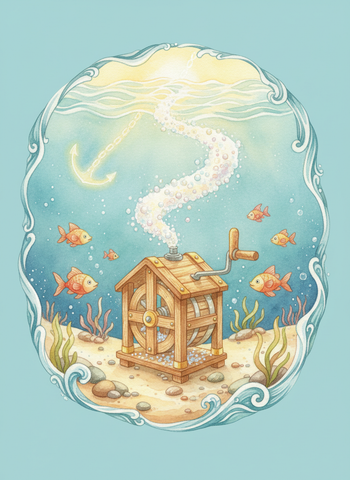
A magic hand-mill that grinds anything its owner asks for ends up at the bottom of the sea, grinding salt to this very day.
Once on a time, but it was a long, long time ago, there were two brothers, one rich and one poor. Now, one Christmas eve, the poor one hadn’t so much as a crumb in the house, either of meat or bread, so he went to his brother to ask him for something to keep Christmas with, in God’s name. It was not the first time his brother had been forced to help him, and you may fancy he wasn’t very glad to see his face, but he said:
Era uma vez, mas foi há muito, muito tempo, dois irmãos, um rico e um pobre. Ora, numa véspera de Natal, o pobre não tinha nem uma migalha em casa, nem de carne nem de pão, então foi até o irmão pedir alguma coisa para passar o Natal, em nome de Deus. Não era a primeira vez que o irmão era obrigado a ajudá-lo, e podem imaginar que ele não ficou nada feliz em vê-lo, mas disse:
“If you will do what I ask you to do, I’ll give you a whole flitch of bacon.”
"Se você fizer o que eu lhe pedir, eu lhe dou uma peça inteira de toucinho."
So the poor brother said he would do anything, and was full of thanks.
Então o irmão pobre disse que faria qualquer coisa, e ficou cheio de agradecimentos.
“Well, here is the flitch”, said the rich brother, “and now go straight to Hell.”
"Pois bem, aqui está o toucinho", disse o irmão rico, "e agora vá direto para o Inferno."
“What I have given my word to do, I must stick to”, said the other; so he took the flitch and set off. He walked the whole day, and at dusk he came to a place where he saw a very bright light.
"O que dei minha palavra de fazer, tenho que cumprir", disse o outro; então pegou o toucinho e partiu. Caminhou o dia inteiro, e ao anoitecer chegou a um lugar onde viu uma luz muito forte.
“Maybe this is the place”, said the man to himself. So he turned aside, and the first thing he saw was an old, old man, with a long white beard, who stood in an outhouse, hewing wood for the Christmas fire.
"Talvez seja aqui", disse o homem para si mesmo. Então se desviou, e a primeira coisa que viu foi um velho, bem velho, de longa barba branca, que estava num galpão, cortando lenha para o fogo de Natal.
“Good even”, said the man with the flitch.
"Boa noite", disse o homem do toucinho.
“The same to you; whither are you going so late?” said the man.
"Igualmente a você; para onde vai tão tarde?" disse o velho.
“Oh! I’m going to Hell, if I only knew the right way”, answered the poor man.
"Ah! estou indo para o Inferno, se ao menos soubesse o caminho certo", respondeu o pobre homem.
“Well, you’re not far wrong, for this is Hell”, said the old man; “when you get inside they will be all for buying your flitch, for meat is scarce in Hell; but mind, you don’t sell it unless you get the hand-quern which stands behind the door for it. When you come out, I’ll teach you how to handle the quern, for it’s good to grind almost anything.”
"Bem, você não está muito longe, pois isto é o Inferno", disse o velho; "quando você entrar, todos vão querer comprar seu toucinho, pois a carne está escassa no Inferno; mas cuidado, não o venda a menos que consiga em troca o moinho de mão que fica atrás da porta. Quando você sair, eu vou lhe ensinar como usar o moinho, pois ele mói quase qualquer coisa."
So the man with the flitch thanked the other for his good advice, and gave a great knock at the Devil’s door.
Então o homem do toucinho agradeceu ao velho pelo bom conselho, e bateu forte na porta do Diabo.
When he got in, everything went just as the old man had said. All the devils, great and small, came swarming up to him like ants round an anthill, and each tried to outbid the other for the flitch.
Quando entrou, tudo se passou exatamente como o velho tinha dito. Todos os diabos, grandes e pequenos, vieram se aglomerar em volta dele como formigas ao redor de um formigueiro, e cada um tentava dar um lance maior que o outro pelo toucinho.
“Well!” said the man, “by rights my old dame and I ought to have this flitch for our Christmas dinner; but since you have all set your hearts on it, I suppose I must give it up to you; but if I sell it at all, I’ll have for it that quern behind the door yonder.”
"Bem!" disse o homem, "por direito, eu e minha velha deveríamos ter esse toucinho para nossa ceia de Natal; mas já que todos vocês colocaram o coração nele, acho que tenho que ceder a vocês; mas se eu vendê-lo, será por aquele moinho ali atrás da porta."
At first the Devil wouldn’t hear of such a bargain, and chaffered and haggled with the man; but he stuck to what he said, and at last the Devil had to part with his quern. When the man got out into the yard, he asked the old woodcutter how he was to handle the quern; and after he had learned how to use it, he thanked the old man and went off home as fast as he could, but still the clock had struck twelve on Christmas eve before he reached his own door.
A princípio o Diabo não quis nem ouvir falar de tal barganha, e regateou e discutiu com o homem; mas ele manteve o que tinha dito, e por fim o Diabo teve que abrir mão do moinho. Quando o homem saiu para o pátio, perguntou ao velho lenhador como devia usar o moinho; e depois de aprender como usá-lo, agradeceu ao velho e foi para casa o mais rápido que pôde, mas o relógio já tinha batido meia-noite na véspera de Natal quando ele chegou à sua própria porta.
“Wherever in the world have you been?” said his old dame, “here have I sat hour after hour waiting and watching, without so much as two sticks to lay together under the Christmas brose.”
"Onde no mundo você esteve?" disse sua velha esposa, "aqui fiquei sentada hora após hora esperando e vigiando, sem nem dois gravetos para pôr debaixo do mingau de Natal."
“Oh!” said the man, “I couldn’t get back before, for I had to go a long way first for one thing, and then for another; but now you shall see what you shall see.”
"Ah!" disse o homem, "eu não pude voltar antes, pois tive que ir bem longe primeiro por uma coisa, e depois por outra; mas agora você vai ver o que vai ver."
So he put the quern on the table, and bade it first of all grind lights, then a table-cloth, then meat, then ale, and so on till they had got everything that was nice for Christmas fare. He had only to speak the word, and the quern ground out what he wanted. The old dame stood by blessing her stars, and kept on asking where he had got this wonderful quern, but he wouldn’t tell her.
Então ele pôs o moinho na mesa, e mandou que moesse primeiro velas, depois uma toalha de mesa, depois carne, depois cerveja, e assim por diante até terem tudo o que era gostoso para uma ceia de Natal. Bastava falar a palavra, e o moinho moía o que ele quisesse. A velha esposa ficou ali, agradecendo a sua sorte, e não parava de perguntar onde ele tinha conseguido aquele moinho maravilhoso, mas ele não quis contar.
“It’s all one where I got it from; you see the quern is a good one, and the mill-stream never freezes, that’s enough.”
"Não importa de onde eu o tirei; você vê que o moinho é bom, e o riacho do moinho nunca congela, isso já basta."
So he ground meat and drink and dainties enough to last out till Twelfth Day, and on the third day he asked all his friends and kin to his house, and gave a great feast. Now, when his rich brother saw all that was on the table, and all that was behind in the larder, he grew quite spiteful and wild, for he couldn’t bear that his brother should have anything.
Então ele moeu carne e bebida e guloseimas o suficiente para durar até o Dia de Reis, e no terceiro dia convidou todos os seus amigos e parentes para sua casa, e deu um grande banquete. Ora, quando seu irmão rico viu tudo o que havia na mesa, e tudo o que havia guardado na despensa, ficou bastante despeitado e furioso, pois não podia suportar que seu irmão tivesse coisa alguma.
“’Twas only on Christmas eve”, he said to the rest, “he was in such straits, that he came and asked for a morsel of food in God’s name, and now he gives a feast as if he were count or king”; and he turned to his brother and said:
"Foi só na véspera de Natal", disse ele para os outros, "que ele estava em tal aperto, que veio pedir um pedaço de comida em nome de Deus, e agora ele dá um banquete como se fosse conde ou rei"; e virou-se para seu irmão e disse:
“But whence, in Hell’s name, have you got all this wealth?”
"Mas de onde, em nome do Inferno, você tirou toda essa riqueza?"
“From behind the door”, answered the owner of the quern, for he didn’t care to let the cat out of the bag. But later on the evening, when he had got a drop too much, he could keep his secret no longer, and brought out the quern and said:
"De trás da porta", respondeu o dono do moinho, pois não queria deixar escapar o segredo. Mas mais tarde naquela noite, quando tinha bebido um pouco a mais, não conseguiu mais guardar segredo, e trouxe o moinho e disse:
“There, you see what has gotten me all this wealth”; and so he made the quern grind all kind of things. When his brother saw it, he set his heart on having the quern, and, after a deal of coaxing, he got it; but he had to pay three hundred dollars for it, and his brother bargained to keep it till hay-harvest, for he thought, if I keep it till then, I can make it grind meat and drink that will last for years. So you may fancy the quern didn’t grow rusty for want of work, and when hay-harvest came, the rich brother got it, but the other took care not to teach him how to handle it.
"Ali está, você vê o que me trouxe toda essa riqueza"; e então fez o moinho moer todo tipo de coisas. Quando o irmão viu aquilo, colocou o coração em ter o moinho, e, depois de muita insistência, conseguiu-o; mas teve que pagar trezentos dólares por ele, e o irmão fez questão de mantê-lo até a colheita do feno, pois pensou, se eu o mantiver até lá, posso fazê-lo moer carne e bebida que vai durar anos. Então podem imaginar que o moinho não enferrujou por falta de trabalho, e quando chegou a colheita do feno, o irmão rico o conseguiu, mas o outro cuidou de não lhe ensinar como usá-lo.
It was evening when the rich brother got the quern home, and next morning he told his wife to go out into the hay-field and toss, while the mowers cut the grass, and he would stay at home and get the dinner ready. So, when dinner-time drew near, he put the quern on the kitchen table and said:
Era noite quando o irmão rico levou o moinho para casa, e na manhã seguinte disse à esposa que fosse até o campo de feno revirar o feno, enquanto os ceifeiros cortavam o capim, e ele ficaria em casa preparando o jantar. Então, quando a hora do jantar se aproximou, ele pôs o moinho na mesa da cozinha e disse:
“Grind herrings and broth, and grind them good and fast.”
"Moa arenque e caldo, e moa bem depressa."
So the quern began to grind herrings and broth; first of all, all the dishes full, then all the tubs full, and so on till the kitchen floor was quite covered. Then the man twisted and twirled at the quern to get it to stop, but for all his twisting and fingering the quern went on grinding, and in a little while the broth rose so high that the man was like to drown.
Então o moinho começou a moer arenque e caldo; primeiro encheu todos os pratos, depois todas as tinas, e assim por diante até que o chão da cozinha ficou totalmente coberto. Então o homem torceu e girou o moinho para tentar fazê-lo parar, mas por mais que torcesse e mexesse, o moinho continuava moendo, e em pouco tempo o caldo subiu tanto que o homem quase se afogou.
So he threw open the kitchen door and ran into the parlour, but it wasn’t long before the quern had ground the parlour full too, and it was only at the risk of his life that the man could get hold of the latch of the house door through the stream of broth. When he got the door open, he ran out and set off down the road, with the stream of herrings and broth at his heels, roaring like a waterfall over the whole farm.
Então ele abriu a porta da cozinha de par em par e correu para a sala, mas não demorou muito para que o moinho enchesse a sala também, e foi só com risco de vida que o homem conseguiu alcançar a tranca da porta da casa por entre a torrente de caldo. Quando conseguiu abrir a porta, saiu correndo pela estrada, com a torrente de arenque e caldo em seus calcanhares, rugindo como uma cachoeira por toda a fazenda.
Now, his old dame, who was in the field tossing hay, thought it a long time to dinner, and at last she said:
Ora, sua velha esposa, que estava no campo revirando o feno, achou que o jantar estava demorando muito, e por fim disse:
“Well! though the master doesn’t call us home, we may as well go. Maybe he finds it hard work to boil the broth, and will be glad of my help.”
"Bem! embora o patrão não nos chame para casa, podemos ir mesmo assim. Talvez ele esteja achando difícil cozinhar o caldo, e vá gostar da minha ajuda."
The men were willing enough, so they sauntered homewards; but just as they had got a little way up the hill, what should they meet but herrings, and broth, and bread, all running and dashing, and splashing together in a stream, and the master himself running before them for his life, and as he passed them he bawled out:
Os homens estavam dispostos, então caminharam devagar de volta para casa; mas assim que tinham subido um pouco a colina, o que viram senão arenques, e caldo, e pão, tudo correndo e se espalhando, e respingando junto num rio, e o próprio patrão correndo à frente deles por sua vida, e ao passar por eles gritou:
“Would to heaven each of you had a hundred throats! but take care you’re not drowned in the broth.”
"Quisera o céu que cada um de vocês tivesse cem gargantas! mas tomem cuidado para não se afogarem no caldo."
Away he went, as though the Evil One were at his heels, to his brother’s house, and begged him for God’s sake to take back the quern that instant; for, said he:
E lá se foi ele, como se o Maligno estivesse em seus calcanhares, até a casa do irmão, e implorou que pelo amor de Deus levasse de volta o moinho naquele instante; pois, disse ele:
“If it grinds only one hour more, the whole parish will be swallowed up by herrings and broth.”
"Se ele moer só mais uma hora, a paróquia inteira será engolida por arenques e caldo."
But his brother wouldn’t hear of taking it back till the other paid him down three hundred dollars more.
Mas o irmão não quis ouvir falar em recebê-lo de volta até que o outro lhe pagasse mais trezentos dólares.
So the poor brother got both the money and the quern, and it wasn’t long before he set up a farm-house far finer than the one in which his brother lived, and with the quern he ground so much gold that he covered it with plates of gold; and as the farm lay by the sea-side, the golden house gleamed and glistened far away over the sea. All who sailed by put ashore to see the rich man in the golden house, and to see the wonderful quern, the fame of which spread far and wide, till there was nobody who hadn’t heard tell of it.
Assim, o irmão pobre ficou tanto com o dinheiro quanto com o moinho, e não demorou muito para que construísse uma casa de fazenda muito mais bonita do que aquela em que seu irmão morava, e com o moinho moeu tanto ouro que a cobriu com placas de ouro; e como a fazenda ficava à beira-mar, a casa dourada brilhava e reluzia bem longe sobre o mar. Todos os que navegavam por ali atracavam para ver o homem rico na casa dourada, e para ver o maravilhoso moinho, cuja fama se espalhou longe e largo, até que não havia quem não tivesse ouvido falar dele.
So one day there came a skipper who wanted to see the quern; and the first thing he asked was if it could grind salt.
Então um dia chegou um capitão de navio que queria ver o moinho; e a primeira coisa que perguntou foi se ele conseguia moer sal.
“Grind salt!” said the owner; “I should just think it could. It can grind anything.”
"Moer sal!" disse o dono; "acho até que consegue. Ele mói qualquer coisa."
When the skipper heard that, he said he must have the quern, cost what it would; for if he only had it, he thought he should be rid of his long voyages across stormy seas for a lading of salt. Well, at first the man wouldn’t hear of parting with the quern; but the skipper begged and prayed so hard, that at last he let him have it, but he had to pay many, many thousand dollars for it.
Quando o capitão ouviu isso, disse que precisava ter o moinho, custasse o que custasse; pois se o tivesse, pensou, ficaria livre de suas longas viagens por mares tempestuosos em busca de um carregamento de sal. Bem, a princípio o homem não quis nem ouvir falar em se separar do moinho; mas o capitão implorou e insistiu tanto, que por fim deixou que ele o levasse, mas teve que pagar muitos, muitos milhares de dólares por ele.
Now, when the skipper had got the quern on his back, he soon made off with it, for he was afraid lest the man should change his mind; so he had no time to ask how to handle the quern, but got on board his ship as fast as he could, and set sail. When he had sailed a good way off, he brought the quern on deck and said:
Ora, quando o capitão pôs o moinho nas costas, logo partiu com ele, pois temia que o homem mudasse de ideia; então não teve tempo de perguntar como usar o moinho, mas subiu a bordo do navio o mais rápido que pôde, e zarpou. Quando já tinha navegado uma boa distância, trouxe o moinho para o convés e disse:
“Grind salt, and grind both good and fast.”
"Moa sal, e moa bem e depressa."
Well, the quern began to grind salt so that it poured out like water; and when the skipper had got the ship full, he wished to stop the quern, but whichever way he turned it, and however much he tried, it was no good; the quern kept grinding on, and the heap of salt grew higher and higher, and at last down sank the ship.
Bem, o moinho começou a moer sal de um jeito que jorrava como água; e quando o capitão já tinha enchido o navio, quis fazer o moinho parar, mas por mais que o virasse, e por mais que tentasse, não adiantava nada; o moinho continuava moendo, e o monte de sal ficava cada vez mais alto, e por fim o navio afundou.
There lies the quern at the bottom of the sea, and grinds away at this very day, and that’s why the sea is salt.
Ali está o moinho no fundo do mar, moendo até hoje, e é por isso que o mar é salgado.
