Bruin and Reynard
Uma história gratuita em inglês de nível B1 para estudantes, para ler online em 7 idiomas, com opção de ouvir no app gratuito Storyteller.
A bear and a fox stash a firkin of butter away for Yule, but the fox keeps slipping off with suspicious excuses — and when the butter turns up empty, a clever trick decides who takes the blame.
Essa foi a prévia! Ouça a história completa no app gratuito Storyteller. Baixar o app
O áudio não está disponível no momento.
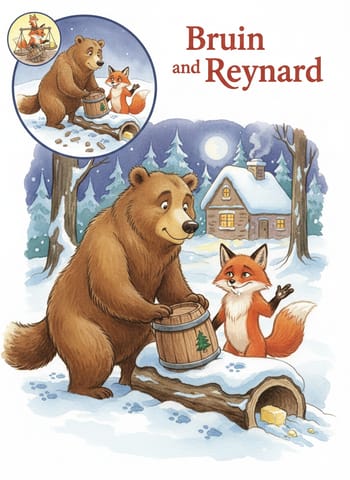
The Bear and the Fox had once bought a firkin of butter together; they were to have it at Yule and hid it till then under a thick spruce bush.
Certa vez, o Urso e a Raposa haviam comprado juntos um barril de manteiga; guardariam para o Natal e, até lá, o esconderam debaixo de um espesso arbusto de abeto.
After that they went a little way off and lay down on a sunny bank to sleep. So when they had lain a while the Fox got up, shook himself, and bawled out “yes”.
Depois disso, afastaram-se um pouco e deitaram-se numa encosta ensolarada para dormir. Quando já estavam deitados havia um tempo, a Raposa se levantou, sacudiu-se e gritou: — Sim!
Then he ran off straight to the firkin and ate a good third part of it. But when he came back, and the Bear asked him where he had been, since he was so fat about the paunch, he said:
Então correu direto para o barril e comeu uma boa terça parte dele. Mas quando voltou, e o Urso lhe perguntou onde tinha estado, já que estava tão gorda na barriga, ela disse:
“Don’t you believe then that I was bidden to barsel, to a christening feast.”
— Você não vai acreditar, mas fui convidada para um batizado, uma festa de batismo.
“So, so”, said the Bear, “and pray what was the bairn’s name.”
— Ah, é mesmo — disse o Urso — e qual era o nome da criança, se pode saber?
“Just-begun”, said the Fox.
— Recém-começada — disse a Raposa.
So they lay down to sleep again. In a little while up jumped the Fox again, bawled out “yes”, and ran off to the firkin.
Então voltaram a deitar-se para dormir. Pouco depois, a Raposa deu um pulo outra vez, gritou: — Sim! — e correu para o barril.
This time too he ate a good lump. When he came back, and the Bear asked him again where he had been, he said:
Dessa vez também comeu um bom pedaço. Quando voltou, e o Urso lhe perguntou de novo onde tinha estado, ela disse:
“Oh, wasn’t I bidden to barsel again, don’t you think.”
— Ah, não fui convidada de novo para um batizado, você acredita?
“And pray what was the bairn’s name this time”, asked the Bear.
— E qual era o nome da criança dessa vez? — perguntou o Urso.
“Half-eaten”, said the Fox.
— Meio-comida — disse a Raposa.
The Bear thought that a very queer name, but he hadn’t wondered long over it before he began to yawn and gape and fell asleep. Well, he hadn’t lain long before the Fox jumped up as he had done twice before, bawled out “yes” and ran off to the firkin, which this time he cleared right out. When he got back he had been bidden to barsel again, and when the Bear wanted to know the bairn’s name, he answered:
O Urso achou aquele um nome muito estranho, mas não teve tempo de pensar muito nisso antes de começar a bocejar e cochilar até adormecer. Pois bem, não tinha dormido havia muito quando a Raposa deu um pulo, como fizera duas vezes antes, gritou: — Sim! — e correu para o barril, que dessa vez ela esvaziou por completo. Quando voltou, tinha sido convidada para um batizado outra vez, e quando o Urso quis saber o nome da criança, ela respondeu:
“Licked-to-the-bottom.”
— Lambida-até-o-fundo.
After that they lay down again, and slept a long time; but then they were to go to the firkin to look at the butter, and when they found it eaten up, the Bear threw the blame on the Fox, and the Fox on the Bear; and each said the one had been at the firkin while the other slept.
Depois disso, deitaram-se de novo e dormiram por um bom tempo; mas então deveriam ir ver a manteiga no barril, e quando a encontraram toda comida, o Urso culpou a Raposa, e a Raposa culpou o Urso; e cada um dizia que o outro tinha ido ao barril enquanto o parceiro dormia.
“Well, well”, said Reynard, “we’ll soon find this out, which of us has eaten the butter. We’ll just lay down in the sunshine, and he whose cheeks and chaps are greasiest when we wake, he is the thief.”
— Bem, bem — disse Reinaldo — logo vamos descobrir qual de nós comeu a manteiga. Vamos apenas nos deitar ao sol, e aquele cujas bochechas e focinho estiverem mais engordurados quando acordarmos, esse é o ladrão.
Yes, that trial Bruin was ready to stand; and as he knew in his heart he had never so much as tasted the butter, he lay down without a care to sleep in the sun.
Sim, a essa prova Bruin estava disposto a se submeter; e como sabia no fundo do coração que jamais sequer provara a manteiga, deitou-se sem preocupação alguma para dormir ao sol.
Then Reynard stole off to the firkin for a morsel of butter, which stuck there in a crack, and then he crept back to the Bear, and greased his chaps and cheeks with it; and then he, too, lay down to sleep as if nothing had happened.
Então Reinaldo esgueirou-se até o barril para pegar um resto de manteiga que ficara grudado numa rachadura, e depois voltou de mansinho até o Urso e lhe besuntou o focinho e as bochechas com ela; e então ela também se deitou para dormir como se nada tivesse acontecido.
So when they both woke, the sun had melted the butter, and the Bear’s whiskers were all greasy; and so it was Bruin after all, and no one else, who had eaten the butter.
Assim, quando os dois acordaram, o sol já tinha derretido a manteiga, e os bigodes do Urso estavam todos engordurados; e assim foi Bruin, afinal, e mais ninguém, quem tinha comido a manteiga.