The Second Chair
Uma história gratuita em inglês de nível C1 para estudantes, para ler online em 4 idiomas, com opção de ouvir no app gratuito Storyteller.
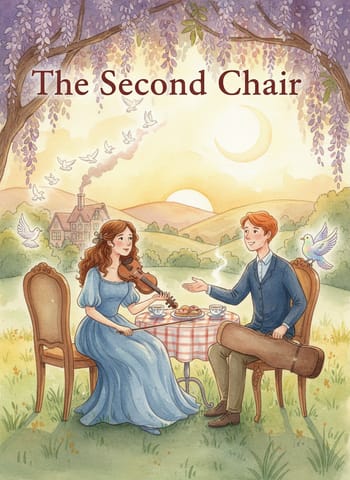
Two years after her husband's death, a widowed violinist has to decide whether accepting her new stand partner's invitation to dinner means betraying eleven years of marriage or simply making room for something else.
Essa foi a prévia! Ouça a história completa no app gratuito Storyteller. Baixar o app
O áudio não está disponível no momento.
Ilse had played second chair violin in the community orchestra for eleven years, by choice rather than lack of skill. Bram had come to every rehearsal he could manage, sitting in the third row with a paperback he rarely opened. He seemed content simply to be present while she played a part she'd never once tried to trade up from. After he died, she kept the seat. She told herself this was about the music, not about him, though she was never entirely convinced by her own explanation.
Ilse tinha tocado violino na segunda estante da orquestra comunitária por onze anos, por escolha e não por falta de talento. Bram ia a todos os ensaios que conseguia, sentando na terceira fileira com um livro de bolso que raramente abria. Ele parecia contente apenas em estar presente enquanto ela tocava uma parte que nunca tentara trocar por outra melhor. Depois que ele morreu, ela manteve o lugar. Ela dizia a si mesma que isso era sobre a música, não sobre ele, embora nunca estivesse totalmente convencida da própria explicação.
Cyrus took the empty first-chair seat beside her in the spring, two years after Bram's funeral. He was new to the city and, at first, unaware that he'd been placed next to a woman whose husband's absence occupied the third row more thoroughly than any of the audience members did. He was a decent player, better than decent, and he had the specific, undemanding kindness of someone who noticed things without commenting on them. There were the flowers she sometimes left, unexplained, near a particular seat after rehearsal. There was the way she avoided a certain Brahms passage that came up more often than either of them found convenient.
Cyrus assumiu o lugar vazio da primeira estante ao lado dela na primavera, dois anos depois do funeral de Bram. Ele era novo na cidade e, a princípio, não sabia que tinha sido colocado ao lado de uma mulher cujo marido ausente ocupava a terceira fileira de forma mais completa do que qualquer um dos espectadores. Ele era um músico bom, mais do que bom, e tinha aquela gentileza específica e discreta de quem repara nas coisas sem comentar. Havia as flores que ela às vezes deixava, sem explicação, perto de um assento em especial, depois dos ensaios. Havia o jeito como ela evitava uma certa passagem de Brahms que surgia com mais frequência do que qualquer um dos dois achava conveniente.
Their friendship built itself slowly, out of shared stands and shared jokes about the conductor's tempo. Then, one evening in autumn, walking her to her car the way he had for several weeks without either of them naming it, he finally said the thing he'd clearly been rehearsing. "I'd like to take you to dinner. Not as colleagues."
A amizade deles foi se construindo devagar, a partir de estantes compartilhadas e piadas sobre o andamento do maestro. Então, numa noite de outono, enquanto a acompanhava até o carro do jeito que fazia havia várias semanas sem que nenhum dos dois desse nome àquilo, ele finalmente disse o que claramente vinha ensaiando. "Eu gostaria de te levar para jantar. Não como colegas."
Had she answered immediately, she suspects she would have said no, out of a reflex closer to loyalty than to honesty. She didn't answer immediately. "I don't know if I'm allowed to want that," she said instead, which surprised her more than it seemed to surprise him.
Se ela tivesse respondido na hora, desconfia que teria dito não, por um reflexo mais parecido com lealdade do que com honestidade. Ela não respondeu na hora. "Não sei se tenho permissão para querer isso", disse ela, o que a surpreendeu mais do que pareceu surpreender a ele.
"Allowed by whom?"
"Permissão de quem?"
"I don't actually know. Bram, maybe. Or some version of myself that thinks wanting this means the eleven years before it mattered less."
"Eu não sei ao certo. Do Bram, talvez. Ou de alguma versão de mim mesma que acha que querer isso faz os onze anos antes disso importarem menos."
What Cyrus said next was not, she would think later, the reassurance she'd braced for. "I'm not asking you to stop being his. I'm asking whether there's room for something that isn't instead of him — just additional." He paused. "I'll still be second chair to whatever you decide about that. I'm used to the seat."
O que Cyrus disse em seguida não foi, ela pensaria depois, o consolo que ela esperava. "Não estou pedindo para você deixar de ser dele. Estou perguntando se há espaço para algo que não seja em vez dele — só a mais." Ele fez uma pausa. "Vou continuar sendo a segunda estante para o que você decidir sobre isso. Já estou acostumado com o lugar."
She laughed despite herself, the first unguarded laugh she'd managed in the third row's general direction in longer than she could easily count. Rarely had a joke about orchestra seating landed quite so precisely on the actual question underneath it.
Ela riu sem querer, a primeira risada solta que conseguira soltar na direção geral da terceira fileira havia mais tempo do que conseguia contar com facilidade. Raramente uma piada sobre lugares na orquestra tinha acertado com tanta precisão a pergunta de verdade por trás dela.
She didn't answer him that night, not fully. But the following Tuesday, she brought two coffees to rehearsal instead of one and set the second down on the stand beside her own. She let that stand as the answer neither of them needed spelled out any further.
Ela não respondeu a ele naquela noite, não por completo. Mas na terça-feira seguinte, ela levou dois cafés para o ensaio em vez de um e colocou o segundo na estante ao lado da sua. Ela deixou aquilo valer como a resposta que nenhum dos dois precisava explicar mais.