The Prompt Book
Uma história gratuita em inglês de nível C1 para estudantes, para ler online em 4 idiomas, com opção de ouvir no app gratuito Storyteller.
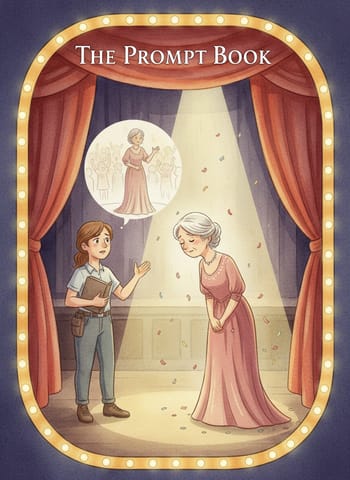
On the closing night of a retiring star's final show, the stage manager who once went on for her just once, years ago, decides whether to finally say what that single performance still means to her.
Essa foi a prévia! Ouça a história completa no app gratuito Storyteller. Baixar o app
O áudio não está disponível no momento.
Sloane had stage-managed forty-one productions in this building, and she could still recite, without looking, every cue in Act Two of the one she had never officially been in charge of.
Sloane havia trabalhado como contrarregra em quarenta e uma produções naquele teatro, e ainda conseguia recitar, sem olhar, cada deixa do Segundo Ato daquela em que nunca tinha sido oficialmente a responsável.
That had been eleven years ago, the night Vivienne Ashworth lost her voice three hours before curtain and the twenty-four-year-old understudy nobody expected to use was told to get dressed. Sloane went on. She said every line, hit every mark, and by the time the curtain came down she had already decided never to mention how it felt, mostly because no one asked.
Isso tinha acontecido onze anos antes, na noite em que Vivienne Ashworth perdeu a voz três horas antes da abertura das cortinas, e a substituta de vinte e quatro anos que ninguém esperava usar recebeu ordem de se vestir. Sloane entrou em cena. Disse cada fala, acertou cada marca, e quando a cortina caiu ela já tinha decidido nunca mencionar como aquilo tinha sido, principalmente porque ninguém perguntou.
What she had never told anyone — not the director, not her husband, not Vivienne herself — was that she still owned the prompt book from that single performance. Its margins were so dense with her own handwriting that the printed script beneath was barely visible. She had photocopied the official one before returning it and kept her copy folded inside a drawer she rarely opened. Rarely had she needed to; she knew the marginal notes by heart. Breathe here. She would have paused here. Don't rush the silence.
O que ela nunca tinha contado a ninguém — nem ao diretor, nem ao marido, nem à própria Vivienne — era que ainda guardava o caderno de marcação daquela única apresentação. As margens estavam tão cheias da própria letra dela que o texto impresso por baixo mal dava para ver. Ela tinha tirado uma cópia do oficial antes de devolvê-lo e guardado a sua dobrada dentro de uma gaveta que raramente abria. Raramente precisava; sabia as anotações de margem de cor. Respire aqui. Ela teria feito uma pausa aqui. Não apresse o silêncio.
Tonight was Vivienne's last performance before retiring, and Sloane was calling the show from the booth for the final time in this production's run. Through the headset she gave the cues in her usual flat, competent voice — lights, fly, sound cue forty. Underneath it ran another voice, one that belonged only to her: this is where I would have turned upstage instead.
Aquela noite era a última apresentação de Vivienne antes de se aposentar, e Sloane estava chamando o espetáculo da cabine pela última vez nessa temporada. Pelo fone, ela dava as deixas com sua voz habitual, neutra e competente — luzes, cenário, deixa de som quarenta. Por baixo disso corria outra voz, uma que pertencia só a ela: é aqui que eu teria virado para o fundo do palco.
Had Vivienne never recovered her voice that season, Sloane thought, she might have gone on again, and again after that, until the part had genuinely become hers rather than borrowed for a single Tuesday. It hadn't happened that way, and she had made her peace with it years ago, or believed she had, which she was no longer certain was the same thing.
Se Vivienne nunca tivesse recuperado a voz naquela temporada, Sloane pensou, ela talvez tivesse continuado em cena, e depois de novo, até que o papel tivesse realmente se tornado dela, em vez de emprestado por uma única terça-feira. Não tinha acontecido assim, e ela tinha feito as pazes com isso havia anos, ou achava que tinha, o que já não tinha certeza se era a mesma coisa.
After the curtain call, having coiled her headset and signed off the deck, Sloane found herself outside Vivienne's dressing room. Flowers already crowded the narrow table, and a stagehand was unscrewing the star on the door. Vivienne caught her eye in the mirror.
Depois dos aplausos finais, já tendo enrolado o fone e encerrado o serviço na cabine, Sloane se viu do lado de fora do camarim de Vivienne. Flores já lotavam a mesinha estreita, e um contrarregra estava desparafusando a estrela da porta. Vivienne encontrou o olhar dela no espelho.
"You called a clean show," Vivienne said. "You always do."
"Você conduziu um espetáculo impecável", Vivienne disse. "Você sempre conduz."
"Thank you." Sloane hesitated, one hand still on the door frame. "There's a pause you take in the letter scene. Right before you say his name. I've always—" She stopped.
"Obrigada." Sloane hesitou, uma mão ainda no batente da porta. "Tem uma pausa que você faz na cena da carta. Bem antes de você dizer o nome dele. Eu sempre—" Ela parou.
"You've always what?"
"Você sempre o quê?"
Sloane considered, for one unhurried moment, telling her everything: the folded prompt book, the handwriting, the version of the letter scene that only existed in a drawer at home. Whatever she might have said next would not have changed the run, which had already closed, or the part, which was no longer being cast. It would only have been true.
Sloane considerou, por um momento sem pressa, contar tudo a ela: o caderno de marcação dobrado, a letra, a versão da cena da carta que só existia numa gaveta em casa. O que quer que ela dissesse a seguir não mudaria a temporada, que já tinha encerrado, nem o papel, que não estava mais sendo escalado. Só seria verdade.
"I've always thought it was the best moment in the show," she said instead.
"Sempre achei que era o melhor momento do espetáculo", ela disse, em vez disso.
Vivienne smiled, already half turned back to the mirror, and said something about the flowers that Sloane didn't quite catch. Sloane nodded, stepped back into the corridor, and let the door swing shut behind her, the prompt book at home no less full for having stayed unmentioned.
Vivienne sorriu, já meio virada de volta para o espelho, e disse algo sobre as flores que Sloane não entendeu direito. Sloane assentiu, deu um passo para trás no corredor, e deixou a porta se fechar atrás dela, o caderno de marcação em casa não menos completo por ter ficado sem ser mencionado.