The Prompt Book
Una historia gratuita en inglés de nivel C1 para estudiantes, para leer en línea en 3 idiomas, con opción de escucharla en la app gratuita Storyteller.
On the closing night of a retiring star's final show, the stage manager who once went on for her just once, years ago, decides whether to finally say what that single performance still means to her.
¡Ese fue el avance! Escucha la historia completa en la app gratuita Storyteller. Descargar la app
El audio no está disponible en este momento.
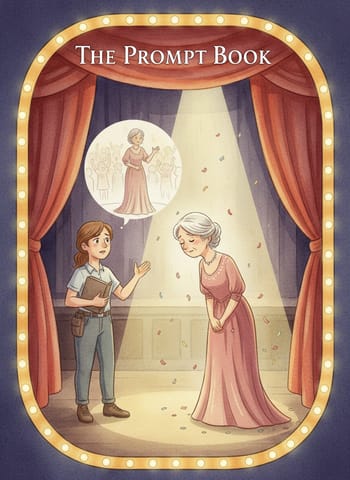
Sloane had stage-managed forty-one productions in this building, and she could still recite, without looking, every cue in Act Two of the one she had never officially been in charge of.
Sloane había sido directora de escena en cuarenta y una producciones en este edificio, y todavía podía recitar, sin mirar, cada indicación del segundo acto de aquella en la que nunca había estado oficialmente a cargo.
That had been eleven years ago, the night Vivienne Ashworth lost her voice three hours before curtain and the twenty-four-year-old understudy nobody expected to use was told to get dressed. Sloane went on. She said every line, hit every mark, and by the time the curtain came down she had already decided never to mention how it felt, mostly because no one asked.
Eso había sido once años atrás, la noche en que Vivienne Ashworth perdió la voz tres horas antes de que se alzara el telón, y le dijeron a la suplente de veinticuatro años que nadie esperaba usar que se vistiera. Sloane salió a escena. Dijo cada línea, marcó cada posición, y para cuando cayó el telón ya había decidido no mencionar nunca cómo se había sentido, sobre todo porque nadie le preguntó.
What she had never told anyone — not the director, not her husband, not Vivienne herself — was that she still owned the prompt book from that single performance. Its margins were so dense with her own handwriting that the printed script beneath was barely visible. She had photocopied the official one before returning it and kept her copy folded inside a drawer she rarely opened. Rarely had she needed to; she knew the marginal notes by heart. Breathe here. She would have paused here. Don't rush the silence.
Lo que nunca le había contado a nadie —ni al director, ni a su esposo, ni a la propia Vivienne— era que todavía conservaba el libro de apuntador de aquella única actuación. Sus márgenes estaban tan llenos de su propia letra que el texto impreso apenas se veía debajo. Había fotocopiado el ejemplar oficial antes de devolverlo, y guardaba su copia doblada dentro de un cajón que rara vez abría. Rara vez lo necesitaba; se sabía las notas de los márgenes de memoria. Respira aquí. Aquí habría hecho una pausa. No apresures el silencio.
Tonight was Vivienne's last performance before retiring, and Sloane was calling the show from the booth for the final time in this production's run. Through the headset she gave the cues in her usual flat, competent voice — lights, fly, sound cue forty. Underneath it ran another voice, one that belonged only to her: this is where I would have turned upstage instead.
Esta noche era la última función de Vivienne antes de retirarse, y Sloane estaba dando las órdenes de escena desde la cabina por última vez en esta temporada de la obra. Por los auriculares daba las indicaciones con su voz de siempre, plana y competente: luces, telar, cue de sonido cuarenta. Por debajo corría otra voz, una que le pertenecía solo a ella: aquí es donde yo me habría dado la vuelta hacia el fondo.
Had Vivienne never recovered her voice that season, Sloane thought, she might have gone on again, and again after that, until the part had genuinely become hers rather than borrowed for a single Tuesday. It hadn't happened that way, and she had made her peace with it years ago, or believed she had, which she was no longer certain was the same thing.
Si Vivienne nunca hubiera recuperado la voz aquella temporada, pensó Sloane, tal vez habría vuelto a salir a escena, y otra vez después de eso, hasta que el papel se hubiera vuelto genuinamente suyo en lugar de prestado por un solo martes. No había ocurrido así, y ella había hecho las paces con eso hacía años, o creía haberlo hecho, algo que ya no estaba segura de que fuera lo mismo.
After the curtain call, having coiled her headset and signed off the deck, Sloane found herself outside Vivienne's dressing room. Flowers already crowded the narrow table, and a stagehand was unscrewing the star on the door. Vivienne caught her eye in the mirror.
Después de los saludos finales, tras enrollar sus auriculares y despedirse del equipo, Sloane se encontró frente al camerino de Vivienne. Las flores ya abarrotaban la mesa estrecha, y un tramoyista estaba desatornillando la estrella de la puerta. Vivienne la vio a través del espejo.
"You called a clean show," Vivienne said. "You always do."
«Dirigiste una función impecable», dijo Vivienne. «Siempre lo haces».
"Thank you." Sloane hesitated, one hand still on the door frame. "There's a pause you take in the letter scene. Right before you say his name. I've always—" She stopped.
«Gracias». Sloane dudó, con una mano aún en el marco de la puerta. «Hay una pausa que haces en la escena de la carta. Justo antes de decir su nombre. Siempre he—». Se detuvo.
"You've always what?"
«¿Siempre has qué?»
Sloane considered, for one unhurried moment, telling her everything: the folded prompt book, the handwriting, the version of the letter scene that only existed in a drawer at home. Whatever she might have said next would not have changed the run, which had already closed, or the part, which was no longer being cast. It would only have been true.
Sloane consideró, por un instante sin apuro, contarle todo: el libro de apuntador doblado, la letra manuscrita, la versión de la escena de la carta que solo existía en un cajón de su casa. Lo que fuera que dijera a continuación no habría cambiado la temporada, que ya había terminado, ni el papel, que ya no se estaba repartiendo. Solo habría sido verdad.
"I've always thought it was the best moment in the show," she said instead.
«Siempre pensé que era el mejor momento de la obra», dijo en su lugar.
Vivienne smiled, already half turned back to the mirror, and said something about the flowers that Sloane didn't quite catch. Sloane nodded, stepped back into the corridor, and let the door swing shut behind her, the prompt book at home no less full for having stayed unmentioned.
Vivienne sonrió, ya medio vuelta de nuevo hacia el espejo, y dijo algo sobre las flores que Sloane no llegó a entender bien. Sloane asintió, retrocedió hacia el pasillo y dejó que la puerta se cerrara detrás de ella; el libro de apuntador en casa no era menos pleno por haber quedado sin mencionar.