The Unanswered Letters
Cerita bahasa Inggris gratis level C1 untuk pelajar, bisa dibaca online dalam 5 bahasa, dengan pilihan untuk mendengarkannya di aplikasi Storyteller gratis.
Marguerite drives to her silent brother's house after a year of unanswered letters and finds out why he never opened one.
Itu cuplikannya! Dengarkan cerita lengkapnya di aplikasi Storyteller gratis. Unduh aplikasi
Audio belum tersedia saat ini.
Marguerite had written to her brother every Sunday for eleven months before she let herself notice that he never wrote back.
Marguerite sudah menulis surat untuk adik laki-lakinya setiap Minggu selama sebelas bulan sebelum ia membiarkan dirinya menyadari bahwa adiknya tak pernah membalas.
The letters were not complicated. She told him about the garden, about her knee giving her trouble on the stairs, about a neighbor's dog that had taken to sleeping under her porch. She signed each one the same way, "with love, as always," and dropped it in the mailbox before her coffee got cold. Kojo did not reply, not once. For a long time she told herself that was simply who he had become — a man too busy, or too proud, or too far gone into whatever quiet resentment had opened between them. It had started, she assumed, the year their mother died.
Surat-suratnya tidak rumit. Ia bercerita tentang kebun, tentang lututnya yang bermasalah di tangga, tentang anjing tetangga yang suka tidur di bawah beranda rumahnya. Ia menandatangani semuanya dengan cara yang sama, "dengan cinta, seperti biasa", dan memasukkannya ke kotak pos sebelum kopinya dingin. Kojo tak membalas, tak sekali pun. Lama sekali ia mengatakan pada dirinya bahwa begitulah Kojo sekarang, terlalu sibuk, atau terlalu bangga, atau terlalu tenggelam dalam kebencian diam-diam yang muncul di antara mereka. Itu bermula, duganya, pada tahun ibu mereka meninggal.
It was the silence itself that finally undid her, not any single letter. Had she known how heavy eleven months of it would feel, she might have stopped after the third or fourth. Instead she kept writing, less because she expected an answer and more because stopping would have meant admitting the distance was permanent.
Kesunyian itu sendiri yang akhirnya menjatuhkannya, bukan satu surat pun. Seandainya ia tahu betapa beratnya sebelas bulan kesunyian itu, mungkin ia sudah berhenti setelah surat ketiga atau keempat. Namun ia terus menulis, bukan karena berharap dibalas, melainkan karena berhenti berarti mengakui bahwa jarak itu permanen.
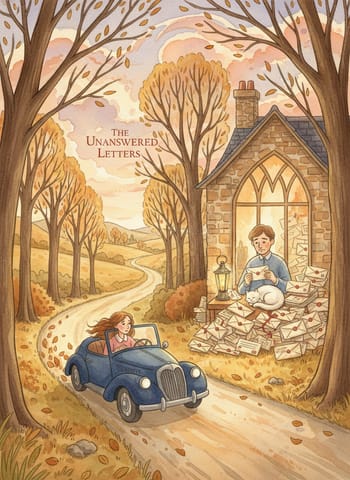
She drove the four hours to his house in October, unannounced, telling herself she only wanted to see that he was well. Kojo opened the door looking older than she remembered, and for a moment neither of them said anything useful.
Ia menyetir empat jam ke rumah Kojo pada bulan Oktober, tanpa memberi kabar, sambil mengatakan pada dirinya bahwa ia hanya ingin melihat adiknya baik-baik saja. Kojo membuka pintu dengan tampak lebih tua daripada yang ia ingat, dan sesaat tak ada dari mereka yang mengatakan sesuatu yang berguna.
"You could have called," he said finally.
"Kamu bisa menelepon," kata Kojo akhirnya.
"I wrote," she said. "Every week. You never wrote back."
"Aku menulis," kata Marguerite. "Setiap minggu. Kamu tak pernah membalas."
He didn't answer right away. Instead he led her to a kitchen drawer, the kind every house has, crowded with rubber bands and dead batteries and a spare key to a door that no longer existed. Underneath all of it, in a bundle held together with a hair tie, were her letters, every one unopened, the envelopes gone soft at the corners from handling. Reading none of them, he had still touched every single one, turning each over the way a person turns over a decision not yet made.
Kojo tak langsung menjawab. Ia justru membawanya ke laci dapur, jenis laci yang ada di setiap rumah, penuh karet gelang dan baterai mati dan kunci cadangan untuk pintu yang sudah tak ada. Di bawah semuanya, dalam seikat yang diikat karet rambut, ada surat-suratnya, semuanya belum dibuka, sudut-sudut amplopnya melunak karena sering dipegang. Tanpa membaca satu pun, ia tetap menyentuh setiap surat, membalik-baliknya seperti orang membalik sebuah keputusan yang belum diambil.
"I couldn't open them," he said. "Not because I didn't want to know how you were. Because I was afraid of what it would mean if I read one and you sounded fine without me."
"Aku tak sanggup membukanya," kata Kojo. "Bukan karena aku tak ingin tahu kabarmu. Tapi karena aku takut apa artinya kalau aku membaca satu dan kamu terdengar baik-baik saja tanpaku."
Marguerite sat down at his table without being asked. What surprised her most was not that he had kept the letters, but that he had handled them so often without ever opening one.
Marguerite duduk di meja Kojo tanpa diminta. Yang paling mengejutkannya bukan bahwa Kojo menyimpan surat-surat itu, melainkan bahwa ia memegangnya begitu sering tanpa pernah membuka satu pun.
"They're not that interesting," she said eventually. "Mostly the garden."
"Isinya tak begitu menarik," kata Marguerite akhirnya. "Kebanyakan soal kebun."
"I know," Kojo said. "I could tell by the weight."
"Aku tahu," kata Kojo. "Aku bisa merasakannya dari beratnya."
She almost laughed. Rarely had a joke landed so strangely, half comfort and half accusation. But it was the first thing either of them had said all afternoon that sounded like the two of them, ten years ago, before whatever had gone wrong between them.
Ia nyaris tertawa. Jarang sekali sebuah lelucon terasa seaneh itu, setengah penghiburan, setengah tuduhan. Tetapi itu hal pertama yang mereka ucapkan sepanjang sore yang terdengar seperti mereka berdua, sepuluh tahun lalu, sebelum apa pun yang salah terjadi di antara mereka.
Neither opened the letters that day. Marguerite left the bundle on the table when she drove home. It was three weeks before Kojo called to say he had finally read the first one, and did she still have the recipe for the soup their mother used to make.
Tak satu pun membuka surat-surat itu hari itu. Marguerite meninggalkan ikatannya di meja saat ia menyetir pulang. Tiga minggu kemudian Kojo menelepon untuk mengatakan bahwa akhirnya ia membaca surat pertama, dan apakah Marguerite masih menyimpan resep sup yang dulu dibuat ibu mereka.
She said she did. She did not ask why it had taken him three weeks to open one envelope out of forty-something. Some arithmetic, she had decided, was not hers to check.
Marguerite bilang masih. Ia tidak bertanya mengapa Kojo butuh tiga minggu untuk membuka satu amplop dari empat puluh sekian. Ada hitungan, pikirnya, yang bukan haknya untuk memeriksa.