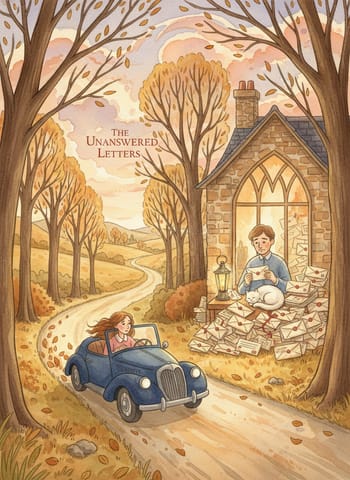
Marguerite had written to her brother every Sunday for eleven months before she let herself notice that he never wrote back.
玛格丽特每个星期天都给弟弟写信,一连写了十一个月,才肯让自己注意到他从来没有回过信。
The letters were not complicated. She told him about the garden, about her knee giving her trouble on the stairs, about a neighbor's dog that had taken to sleeping under her porch. She signed each one the same way, "with love, as always," and dropped it in the mailbox before her coffee got cold. Kojo did not reply, not once. For a long time she told herself that was simply who he had become — a man too busy, or too proud, or too far gone into whatever quiet resentment had opened between them. It had started, she assumed, the year their mother died.
信写得并不复杂。她跟他说起花园,说起她的膝盖爬楼梯时总闹毛病,说起邻居家的狗不知怎么爱上了睡在她的门廊下面。每封信的落款都一样,“永远爱你的姐姐”,她趁咖啡还没凉就把信投进了邮筒。科乔一次都没有回信。很长一段时间里,她对自己说,他就是变成了这样一个人——太忙,或者太好面子,或者早已深陷在姐弟之间悄悄生出的某种怨气里。她猜想,这一切是从母亲去世的那年开始的。
It was the silence itself that finally undid her, not any single letter. Had she known how heavy eleven months of it would feel, she might have stopped after the third or fourth. Instead she kept writing, less because she expected an answer and more because stopping would have meant admitting the distance was permanent.
最终压垮她的,是沉默本身,而不是哪一封信。要是早知道十一个月的沉默有多沉重,她也许写到第三封或第四封就停下了。可她还是接着写,与其说是盼着有回音,不如说是因为一旦停笔,就等于承认这段距离再也无法弥合。
She drove the four hours to his house in October, unannounced, telling herself she only wanted to see that he was well. Kojo opened the door looking older than she remembered, and for a moment neither of them said anything useful.
十月里,她没有打招呼,开了四个小时的车去了他家,对自己说只是想看看他好不好。科乔开门的时候,比她记忆中苍老了许多,有那么一会儿,两个人谁也没说出一句像样的话。
"You could have called," he said finally.
“你可以打个电话的。”他终于开了口。
"I wrote," she said. "Every week. You never wrote back."
“我写信了,”她说,“每个星期都写。你从来没回过。”
He didn't answer right away. Instead he led her to a kitchen drawer, the kind every house has, crowded with rubber bands and dead batteries and a spare key to a door that no longer existed. Underneath all of it, in a bundle held together with a hair tie, were her letters, every one unopened, the envelopes gone soft at the corners from handling. Reading none of them, he had still touched every single one, turning each over the way a person turns over a decision not yet made.
他没有马上回答。他把她领到一个厨房抽屉前,那种每家都有的抽屉,塞满了橡皮筋、用完的旧电池,还有一把早已没有门可开的备用钥匙。在这一切底下,用一根发圈捆成一束的,是她的信,每一封都没拆开,信封的边角被摩挲得发软了。他一封也没读,却把每一封都摸过,一遍遍翻看,就像一个人翻来覆去地想一个还没做出的决定。
"I couldn't open them," he said. "Not because I didn't want to know how you were. Because I was afraid of what it would mean if I read one and you sounded fine without me."
“我没法拆开,”他说,“不是因为我不想知道你过得怎么样。而是因为我怕,万一我读了一封,发现你没有我也过得很好。”
Marguerite sat down at his table without being asked. What surprised her most was not that he had kept the letters, but that he had handled them so often without ever opening one.
玛格丽特没等人请,自己在他的桌边坐了下来。最让她吃惊的,不是他留着这些信,而是他明明摸过这么多遍,却始终没拆开过一封。
"They're not that interesting," she said eventually. "Mostly the garden."
“信里也没什么意思,”过了一会儿,她说,“多半是在讲花园。”
"I know," Kojo said. "I could tell by the weight."
“我知道,”科乔说,“我掂一掂就知道了。”
She almost laughed. Rarely had a joke landed so strangely, half comfort and half accusation. But it was the first thing either of them had said all afternoon that sounded like the two of them, ten years ago, before whatever had gone wrong between them.
她差点笑出声来。很少有哪句玩笑落得这么古怪,一半是安慰,一半是指责。可这是一下午以来,他们两个人说的第一句听上去像他们自己的话,像十年前、像那一切出岔子之前的他们。
Neither opened the letters that day. Marguerite left the bundle on the table when she drove home. It was three weeks before Kojo called to say he had finally read the first one, and did she still have the recipe for the soup their mother used to make.
那天,两个人谁也没有拆信。玛格丽特开车回家时,把那一束信留在了桌上。过了三个星期,科乔才打来电话,说他终于读了第一封,还问她是否还记得母亲从前做的那道汤的做法。
She said she did. She did not ask why it had taken him three weeks to open one envelope out of forty-something. Some arithmetic, she had decided, was not hers to check.
她说记得。她没有问,为什么四十几封信里,拆开一封要花他三个星期。有些账,她已经决定,不是她该去算的。