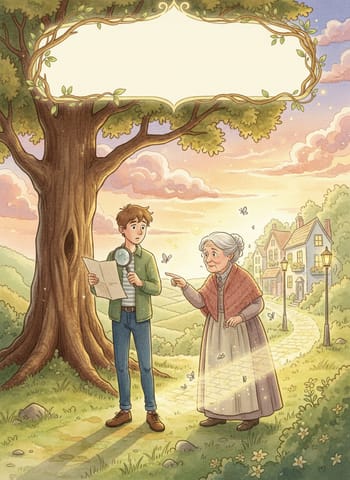
The Street That Isn't There
Cerita bahasa Inggris gratis level C1 untuk pelajar, bisa dibaca online dalam 5 bahasa, dengan pilihan untuk mendengarkannya di aplikasi Storyteller gratis.
A map-data checker finds a lane that exists in the records but not on the ground, and has to decide whether an old woman's memory is enough to keep it.
Itu cuplikannya! Dengarkan cerita lengkapnya di aplikasi Storyteller gratis. Unduh aplikasi
Audio belum tersedia saat ini.
Linus had been checking map data for eleven months before he met a street that failed every test. The aerial images showed a row of lock-up garages and a drainage ditch where the record claimed a lane called Tallow Row. It was one hundred and forty metres long, with seven house numbers and a dead end. No survey had touched it since the file was created, no delivery driver had ever flagged it, and no postcode pointed its way. By the rules of his job it was a ghost, and ghosts were deleted.
Linus sudah sebelas bulan memeriksa data peta ketika ia bertemu sebuah jalan yang gagal di setiap pengujian. Citra udara memperlihatkan deretan garasi sewa dan sebuah parit pembuangan di tempat catatan menyebut ada gang bernama Tallow Row. Panjangnya seratus empat puluh meter, dengan tujuh nomor rumah dan ujung buntu. Tak ada survei yang menyentuhnya sejak berkas itu dibuat, tak ada pengemudi pengantar yang pernah menandainya, dan tak ada kode pos yang menuju ke sana. Menurut aturan pekerjaannya, itu hantu, dan hantu dihapus.
He could have clicked "remove" and moved on to the next of the afternoon's two hundred flags. Had the queue been shorter that Friday, he probably would have done exactly that. Instead, because the name nagged at him and the office was half empty, he took a train out to the district and walked to the place where the lane ought to have begun.
Ia bisa saja mengeklik "hapus" lalu beralih ke bendera berikutnya dari dua ratus yang menanti sore itu. Seandainya antreannya lebih pendek pada Jumat itu, mungkin ia memang akan melakukannya. Tetapi karena nama itu terus mengusiknya dan kantor setengah kosong, ia naik kereta ke distrik itu dan berjalan ke tempat gang itu seharusnya bermula.
There was only a concrete wall, streaked green at the base, and in front of it an old woman on a folding stool with a flask of tea, sitting as if she were on guard. When he explained that he worked for the company that kept the maps, she nodded without surprise.
Yang ada hanya dinding beton, bergaris hijau di bagian dasarnya, dan di depannya seorang perempuan tua duduk di bangku lipat dengan termos teh, duduk seperti sedang berjaga. Ketika Linus menjelaskan bahwa ia bekerja untuk perusahaan yang memelihara peta, perempuan itu mengangguk tanpa terkejut.
"Then you've come about Tallow Row," she said.
"Jadi kamu datang soal Tallow Row," katanya.
Her name was Wilhelmina, and she told the story with the evenness of someone who had rehearsed it for years without an audience. The lane had been cleared in her youth to make way for a road that was never finished. Within a year the neighbours had scattered across the city, and the garages had gone up over whatever remained. What she still did, most mornings, was walk it. Starting at the wall, she counted seven doors, past the cobbler's radio in the window and the third paving stone that always rocked, to the bakery's side entrance where the lane stopped.
Namanya Wilhelmina, dan ia menceritakan kisah itu dengan ketenangan orang yang sudah bertahun-tahun melatihnya tanpa penonton. Gang itu dibersihkan pada masa mudanya untuk memberi jalan bagi sebuah jalan raya yang tak pernah selesai. Dalam setahun para tetangga tersebar ke seluruh kota, dan garasi-garasi dibangun di atas apa pun yang tersisa. Yang masih ia lakukan, hampir setiap pagi, adalah berjalan menyusurinya. Mulai dari dinding itu, ia menghitung tujuh pintu, melewati radio tukang sepatu di jendelanya dan batu paving ketiga yang selalu goyah, hingga pintu samping toko roti tempat gang itu berakhir.
Linus looked down. Beneath the skin of the tarmac he could just make out the grey line of an old kerb, curving where no kerb should. It would seem that the street had existed in every sense except the one his software could verify. Not until that moment had it occurred to him that a map might be less a record of where things are than an argument about which things count.
Linus menunduk. Di bawah kulit aspal ia bisa samar-samar melihat garis abu-abu sebuah trotoar tua, melengkung di tempat yang tak seharusnya ada trotoar. Tampaknya jalan itu telah ada dalam segala arti kecuali yang bisa diverifikasi perangkat lunaknya. Baru saat itulah terpikir olehnya bahwa peta mungkin kurang merupakan catatan tentang di mana segala sesuatu berada, dan lebih merupakan argumen tentang hal-hal mana yang dianggap penting.
"It would take me a quarter of a minute to remove it," he said, more to himself than to her.
"Saya hanya butuh seperempat menit untuk menghapusnya," katanya, lebih kepada dirinya sendiri daripada kepadanya.
"I know." Wilhelmina poured the last of the tea into the flask's cup and held it out to him. "It took them rather longer to build the road, and they never finished that either."
"Aku tahu." Wilhelmina menuangkan sisa teh ke cangkir termos dan mengulurkannya kepadanya. "Mereka butuh waktu jauh lebih lama untuk membangun jalan itu, dan itu pun tak pernah selesai."
On the train back he opened the file and let the cursor rest over "remove" until the screen dimmed. The system would allow him to mark the street as unverified for ninety days, after which the flag would return. That, he decided, was as much as a person in his position could honestly claim. He typed a single line into the notes field, "Visited; absent on the ground; walked daily by a resident", and saved it. Outside, the backs of the houses slid past in the dusk, and he caught himself counting their doors, seven to a row.
Dalam kereta pulang ia membuka berkas itu dan membiarkan kursor berhenti di atas "hapus" sampai layarnya meredup. Sistem mengizinkannya menandai jalan itu sebagai belum terverifikasi selama sembilan puluh hari, setelah itu bendera akan muncul lagi. Itu, putusnya, sebanyak yang bisa dengan jujur diklaim seseorang dalam posisinya. Ia mengetikkan satu baris di kolom catatan, "Dikunjungi; tidak ada di lapangan; dilalui setiap hari oleh seorang warga", lalu menyimpannya. Di luar, bagian belakang rumah-rumah meluncur lewat dalam senja, dan ia mendapati dirinya menghitung pintunya, tujuh dalam satu deret.