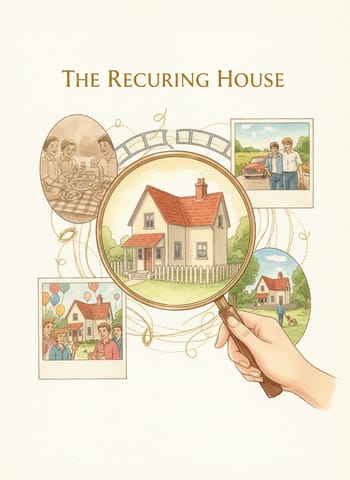
The Recurring House
Cerita bahasa Inggris gratis level C1 untuk pelajar, bisa dibaca online dalam 5 bahasa, dengan pilihan untuk mendengarkannya di aplikasi Storyteller gratis.
A photo restorer keeps finding the same unremarkable house in the background of unrelated clients' photographs across four decades and never fully identifies it.
Itu cuplikannya! Dengarkan cerita lengkapnya di aplikasi Storyteller gratis. Unduh aplikasi
Audio belum tersedia saat ini.
Elise restored other people's photographs for a living, which meant she spent most of her working life looking closely at houses she would never visit and faces she would never meet.
Elise bekerja memulihkan foto-foto milik orang lain, yang berarti ia menghabiskan sebagian besar hidup kerjanya dengan mengamati dari dekat rumah-rumah yang tak akan pernah ia kunjungi dan wajah-wajah yang tak akan pernah ia temui.
The house first caught her attention in a client's water-damaged wedding photograph from the 1970s: a plain two-story building with a crooked shutter on the upper left window. It was visible only at the edge of the frame, barely relevant to the scene it belonged to. She noticed it mainly because the shutter was so obviously broken, hanging at an angle that would have annoyed her if it were her own house. She thought nothing more of it until, six weeks later, restoring an entirely unrelated client's photograph, she found the same crooked shutter again.
Rumah itu pertama kali menarik perhatiannya pada foto pernikahan tahun 1970-an milik seorang klien yang rusak terkena air: bangunan dua lantai yang polos dengan satu daun jendela miring di jendela kiri atas. Rumah itu hanya terlihat di tepi bingkai, nyaris tak berkaitan dengan adegan yang dimilikinya. Ia memperhatikannya terutama karena daun jendela itu jelas-jelas rusak, menggantung pada sudut yang akan membuatnya jengkel seandainya itu rumahnya sendiri. Ia tak memikirkannya lagi sampai, enam minggu kemudian, saat memulihkan foto klien lain yang sama sekali tak berhubungan, ia menemukan daun jendela miring yang sama lagi.
Different family. Different decade, judging by the car parked outside. Same house, same broken shutter, caught this time in the background of somebody's christening photo.
Keluarga berbeda. Dekade berbeda, kalau dilihat dari mobil yang terparkir di depannya. Rumah yang sama, daun jendela rusak yang sama, kali ini tertangkap di latar belakang foto pembaptisan seseorang.
Having spent fifteen years around old photographs, Elise knew coincidence when she saw it, and this did not feel like coincidence. She began keeping a folder, quietly, of every unrelated client photograph in which the house appeared. By the time she had four more examples, spanning what she now guessed was nearly forty years, she had stopped believing in an innocent explanation. Two unrelated houses, she had decided, do not simply look this alike.
Setelah lima belas tahun berkutat dengan foto-foto lama, Elise tahu seperti apa kebetulan itu, dan ini tidak terasa seperti kebetulan. Ia mulai menyimpan sebuah folder, diam-diam, berisi setiap foto klien yang tak berhubungan di mana rumah itu muncul. Ketika ia sudah punya empat contoh lagi, yang kini ia perkirakan mencakup hampir empat puluh tahun, ia berhenti percaya pada penjelasan yang wajar. Dua rumah yang tak berhubungan, pikirnya, tidak mungkin semirip itu begitu saja.
What troubled her was not that the house kept appearing, but that none of her clients seemed to know it was there. She asked, carefully, whenever she returned a restored photograph: did they recognize this building, this street, this shutter? Not once did anybody recognize it. Whatever the house had meant to the families in the foreground, it had meant nothing to them at all. They had been photographing a wedding, a christening, a birthday, and the house had simply happened to be standing behind them.
Yang mengusiknya bukanlah bahwa rumah itu terus muncul, melainkan bahwa tak seorang pun kliennya tampak tahu rumah itu ada di sana. Setiap kali mengembalikan foto yang sudah dipulihkan, ia bertanya dengan hati-hati: apakah mereka mengenali bangunan ini, jalan ini, daun jendela ini? Tak sekali pun ada yang mengenalinya. Apa pun arti rumah itu bagi keluarga-keluarga di latar depan, rumah itu tak berarti apa-apa bagi mereka sama sekali. Mereka sedang memotret pernikahan, pembaptisan, ulang tahun, dan rumah itu kebetulan saja berdiri di belakang mereka.
Elise never worked out whose house it actually was. A search of old city directories turned up three streets with buildings of a similar shape. None of these she could confirm from a corner of a photograph, taken decades ago by someone who hadn't been aiming at it. What she did work out, eventually, was the span of years the house had shown up across: from a photograph dated 1968 to one dated 2011. After that, it never appeared again in anything she restored.
Elise tak pernah berhasil mengetahui rumah siapa sebenarnya itu. Penelusuran buku-buku alamat kota yang lama menghasilkan tiga jalan dengan bangunan berbentuk mirip. Tak satu pun bisa ia pastikan dari sudut sebuah foto yang diambil puluhan tahun lalu oleh seseorang yang tidak mengarahkan kameranya ke sana. Yang akhirnya berhasil ia ketahui hanyalah rentang tahun kemunculan rumah itu: dari foto bertanggal 1968 sampai yang bertanggal 2011. Setelah itu, rumah itu tak pernah muncul lagi di apa pun yang ia pulihkan.
She keeps the folder still, seven photographs now, not because she expects to solve anything, but because there is something in the not-solving that she has come to find restful rather than frustrating. Somewhere, for forty-three years, a house stood quietly at the edge of other people's important days, watching, in its way, everyone but itself.
Ia masih menyimpan folder itu, kini berisi tujuh foto, bukan karena berharap memecahkan sesuatu, melainkan karena ada sesuatu dalam ketidakterpecahan itu yang kini ia anggap menenangkan, bukan menjengkelkan. Di suatu tempat, selama empat puluh tiga tahun, sebuah rumah berdiri diam di tepi hari-hari penting milik orang lain, mengawasi, dengan caranya sendiri, semua orang kecuali dirinya sendiri.