Clever Hans
भाषा सीखने वालों के लिए स्तर A2 की एक मुफ़्त अंग्रेज़ी कहानी, जिसे 7 भाषाओं में ऑनलाइन पढ़ा जा सकता है और मुफ़्त Storyteller ऐप में सुना भी जा सकता है।
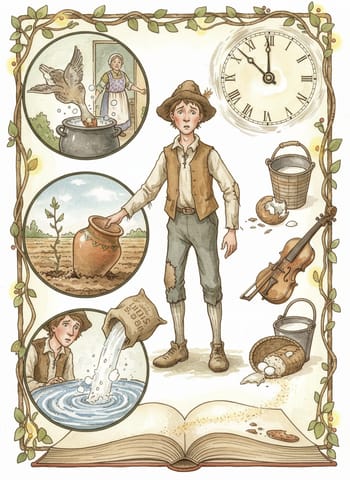
A foolish young man follows his mother's advice so literally, one gift at a time, that he manages to ruin every single one.
झलक पूरी हुई! पूरी कहानी मुफ़्त Storyteller ऐप में सुनें। ऐप पाएँ
अभी ऑडियो उपलब्ध नहीं है।
The mother of Hans said, “Whither away, Hans?” Hans answered, “To Grethel.” “Behave well, Hans.” “Oh, I’ll behave well. Good-bye, mother.” “Good-bye, Hans.” Hans comes to Grethel, “Good day, Grethel.” “Good day, Hans. What dost thou bring that is good?” “I bring nothing, I want to have something given me.” Grethel presents Hans with a needle. Hans says, “Good-bye, Grethel.” “Good-bye, Hans.”
हांस की माँ ने कहा, "कहाँ जा रहे हो, हांस?" हांस ने उत्तर दिया, "ग्रेटल के पास।" "अच्छे से व्यवहार करना, हांस।" "अरे, मैं अच्छे से व्यवहार करूँगा। अलविदा, माँ।" "अलविदा, हांस।" हांस ग्रेटल के पास पहुँचता है, "नमस्ते, ग्रेटल।" "नमस्ते, हांस। क्या अच्छी चीज़ लाए हो?" "मैं कुछ नहीं लाया, मुझे कुछ दिया जाना चाहिए।" ग्रेटल हांस को एक सुई भेंट करती है। हांस कहता है, "अलविदा, ग्रेटल।" "अलविदा, हांस।"
Hans takes the needle, sticks it into a hay-cart, and follows the cart home. “Good evening, mother.” “Good evening, Hans. Where hast thou been?” “With Grethel.” “What didst thou take her?” “Took nothing; had something given me.” “What did Grethel give thee?” “Gave me a needle.” “Where is the needle, Hans?” “Stuck it in the hay-cart.” “That was ill done, Hans. Thou shouldst have stuck the needle in thy sleeve.” “Never mind, I’ll do better next time.”
हांस सुई लेता है, उसे घास की गाड़ी में चुभो देता है, और गाड़ी के पीछे-पीछे घर चला आता है। "शुभ संध्या, माँ।" "शुभ संध्या, हांस। तुम कहाँ थे?" "ग्रेटल के साथ।" "तुमने उसे क्या दिया?" "कुछ नहीं दिया; मुझे कुछ दिया गया।" "ग्रेटल ने तुम्हें क्या दिया?" "मुझे एक सुई दी।" "सुई कहाँ है, हांस?" "उसे घास की गाड़ी में चुभो दिया।" "यह बुरा किया, हांस। तुम्हें सुई अपनी आस्तीन में लगानी चाहिए थी।" "कोई बात नहीं, अगली बार बेहतर करूँगा।"
“Whither away, Hans?” “To Grethel, mother.” “Behave well, Hans.” “Oh, I’ll behave well. Good-bye, mother.” “Good-bye, Hans.”
"कहाँ जा रहे हो, हांस?" "ग्रेटल के पास, माँ।" "अच्छे से व्यवहार करना, हांस।" "अरे, मैं अच्छे से व्यवहार करूँगा। अलविदा, माँ।" "अलविदा, हांस।"
Hans comes to Grethel. “Good day, Grethel.” “Good day, Hans. What dost thou bring that is good?” “I bring nothing; I want to have something given to me.” Grethel presents Hans with a knife. “Good-bye, Grethel.” “Good-bye Hans.”
हांस ग्रेटल के पास पहुँचता है। "नमस्ते, ग्रेटल।" "नमस्ते, हांस। क्या अच्छी चीज़ लाए हो?" "मैं कुछ नहीं लाया; मुझे कुछ दिया जाना चाहिए।" ग्रेटल हांस को एक चाकू भेंट करती है। "अलविदा, ग्रेटल।" "अलविदा, हांस।"
Hans takes the knife, sticks it in his sleeve, and goes home. “Good evening, mother.” “Good evening, Hans. Where hast thou been?” “With Grethel.” “What didst thou take her?” “Took her nothing, she gave me something.” “What did Grethel give thee?” “Gave me a knife.” “Where is the knife, Hans?” “Stuck in my sleeve.” “That’s ill done, Hans, thou shouldst have put the knife in thy pocket.” “Never mind, will do better next time.” “Whither away, Hans?” “To Grethel, mother.” “Behave well, Hans.” “Oh, I’ll behave well. Good-bye, mother.” “Good-bye, Hans.”
हांस चाकू लेता है, उसे अपनी आस्तीन में लगा लेता है, और घर चला जाता है। "शुभ संध्या, माँ।" "शुभ संध्या, हांस। तुम कहाँ थे?" "ग्रेटल के साथ।" "तुमने उसे क्या दिया?" "उसे कुछ नहीं दिया, उसने मुझे कुछ दिया।" "ग्रेटल ने तुम्हें क्या दिया?" "मुझे एक चाकू दिया।" "चाकू कहाँ है, हांस?" "आस्तीन में लगाया हुआ है।" "यह बुरा किया, हांस, तुम्हें चाकू अपनी जेब में रखना चाहिए था।" "कोई बात नहीं, अगली बार बेहतर करूँगा।" "कहाँ जा रहे हो, हांस?" "ग्रेटल के पास, माँ।" "अच्छे से व्यवहार करना, हांस।" "अरे, मैं अच्छे से व्यवहार करूँगा। अलविदा, माँ।" "अलविदा, हांस।"
Hans comes to Grethel. “Good day, Grethel.” “Good day, Hans. What good thing dost thou bring?” “I bring nothing, I want something given me.” Grethel presents Hans with a young goat. “Good-bye, Grethel.” “Good-bye, Hans.” Hans takes the goat, ties its legs, and puts it in his pocket. When he gets home it is suffocated. “Good evening, mother.” “Good evening, Hans. Where hast thou been?” “With Grethel.” “What didst thou take her?” “Took nothing, she gave me something.” “What did Grethel give thee?” “She gave me a goat.” “Where is the goat, Hans?” “Put it in my pocket.” “That was ill done, Hans, thou shouldst have put a rope round the goat’s neck.” “Never mind, will do better next time.”
हांस ग्रेटल के पास पहुँचता है। "नमस्ते, ग्रेटल।" "नमस्ते, हांस। कौन-सी अच्छी चीज़ लाए हो?" "मैं कुछ नहीं लाया, मुझे कुछ दिया जाना चाहिए।" ग्रेटल हांस को एक छोटा बकरी का बच्चा भेंट करती है। "अलविदा, ग्रेटल।" "अलविदा, हांस।" हांस बकरी को लेता है, उसके पैर बाँधता है, और उसे अपनी जेब में रख लेता है। जब वह घर पहुँचता है तब तक उसका दम घुट चुका होता है। "शुभ संध्या, माँ।" "शुभ संध्या, हांस। तुम कहाँ थे?" "ग्रेटल के साथ।" "तुमने उसे क्या दिया?" "कुछ नहीं दिया, उसने मुझे कुछ दिया।" "ग्रेटल ने तुम्हें क्या दिया?" "उसने मुझे एक बकरी दी।" "बकरी कहाँ है, हांस?" "उसे अपनी जेब में रख लिया।" "यह बुरा किया, हांस, तुम्हें बकरी की गर्दन के चारों ओर एक रस्सी बाँधनी चाहिए थी।" "कोई बात नहीं, अगली बार बेहतर करूँगा।"
“Whither away, Hans?” “To Grethel, mother.” “Behave well, Hans.” “Oh, I’ll behave well. Good-bye, mother.” “Good-bye, Hans.” Hans comes to Grethel. “Good day, Grethel.” “Good day, Hans. What good thing dost thou bring?” “I bring nothing, I want something given me.” Grethel presents Hans with a piece of bacon. “Good-bye, Grethel.” “Good-bye, Hans.”
"कहाँ जा रहे हो, हांस?" "ग्रेटल के पास, माँ।" "अच्छे से व्यवहार करना, हांस।" "अरे, मैं अच्छे से व्यवहार करूँगा। अलविदा, माँ।" "अलविदा, हांस।" हांस ग्रेटल के पास पहुँचता है। "नमस्ते, ग्रेटल।" "नमस्ते, हांस। कौन-सी अच्छी चीज़ लाए हो?" "मैं कुछ नहीं लाया, मुझे कुछ दिया जाना चाहिए।" ग्रेटल हांस को सूअर के गोश्त का एक टुकड़ा भेंट करती है। "अलविदा, ग्रेटल।" "अलविदा, हांस।"
Hans takes the bacon, ties it to a rope, and drags it away behind him. The dogs come and devour the bacon. When he gets home, he has the rope in his hand, and there is no longer anything hanging to it.
हांस गोश्त लेता है, उसे एक रस्सी से बाँधता है, और उसे अपने पीछे घसीटते हुए ले जाता है। कुत्ते आकर गोश्त को खा जाते हैं। जब वह घर पहुँचता है, उसके हाथ में रस्सी होती है, पर उससे अब कुछ भी लटका हुआ नहीं होता।
“Good evening, mother.” “Good evening, Hans.” “Where hast thou been?” “With Grethel.” “What didst thou take her?” “I took her nothing, she gave me something.” “What did Grethel give thee?” “Gave me a bit of bacon.” “Where is the bacon, Hans?” “I tied it to a rope, brought it home, dogs took it.” “That was ill done, Hans, thou shouldst have carried the bacon on thy head.” “Never mind, will do better next time.” “Whither away, Hans?” “To Grethel, mother.” “Behave well, Hans.” “I’ll behave well. Good-bye, mother.” “Good-bye, Hans.”
"शुभ संध्या, माँ।" "शुभ संध्या, हांस।" "तुम कहाँ थे?" "ग्रेटल के साथ।" "तुमने उसे क्या दिया?" "मैंने उसे कुछ नहीं दिया, उसने मुझे कुछ दिया।" "ग्रेटल ने तुम्हें क्या दिया?" "मुझे सूअर के गोश्त का एक टुकड़ा दिया।" "गोश्त कहाँ है, हांस?" "मैंने उसे एक रस्सी से बाँधा, घर लाया, कुत्ते ले गए।" "यह बुरा किया, हांस, तुम्हें गोश्त अपने सिर पर ढोकर लाना चाहिए था।" "कोई बात नहीं, अगली बार बेहतर करूँगा।" "कहाँ जा रहे हो, हांस?" "ग्रेटल के पास, माँ।" "अच्छे से व्यवहार करना, हांस।" "मैं अच्छे से व्यवहार करूँगा। अलविदा, माँ।" "अलविदा, हांस।"
Hans comes to Grethel. “Good day, Grethel.” “Good day, Hans.” “What good thing dost thou bring?” “I bring nothing, but would have something given.” Grethel presents Hans with a calf. “Good-bye, Grethel.” “Good-bye, Hans.”
हांस ग्रेटल के पास पहुँचता है। "नमस्ते, ग्रेटल।" "नमस्ते, हांस।" "कौन-सी अच्छी चीज़ लाए हो?" "मैं कुछ नहीं लाया, पर मुझे कुछ दिया जाना चाहिए।" ग्रेटल हांस को एक बछड़ा भेंट करती है। "अलविदा, ग्रेटल।" "अलविदा, हांस।"
Hans takes the calf, puts it on his head, and the calf kicks his face. “Good evening, mother.” “Good evening, Hans. Where hast thou been?” “With Grethel.” “What didst thou take her?” “I took nothing, but had something given me.” “What did Grethel give thee?” “A calf.” “Where hast thou the calf, Hans?” “I set it on my head and it kicked my face.” “That was ill done, Hans, thou shouldst have led the calf, and put it in the stall.” “Never mind, will do better next time.”
हांस बछड़े को लेता है, उसे अपने सिर पर रखता है, और बछड़ा उसके चेहरे पर लात मारता है। "शुभ संध्या, माँ।" "शुभ संध्या, हांस। तुम कहाँ थे?" "ग्रेटल के साथ।" "तुमने उसे क्या दिया?" "मैंने कुछ नहीं दिया, पर मुझे कुछ दिया गया।" "ग्रेटल ने तुम्हें क्या दिया?" "एक बछड़ा।" "बछड़ा कहाँ है, हांस?" "मैंने उसे अपने सिर पर रखा और उसने मेरे चेहरे पर लात मारी।" "यह बुरा किया, हांस, तुम्हें बछड़े को रस्सी से खींचकर ले जाना चाहिए था, और उसे तबेले में रखना चाहिए था।" "कोई बात नहीं, अगली बार बेहतर करूँगा।"
“Whither away, Hans?” “To Grethel, mother.” “Behave well, Hans.” “I’ll behave well. Good-bye, mother.” “Good-bye, Hans.”
"कहाँ जा रहे हो, हांस?" "ग्रेटल के पास, माँ।" "अच्छे से व्यवहार करना, हांस।" "मैं अच्छे से व्यवहार करूँगा। अलविदा, माँ।" "अलविदा, हांस।"
Hans comes to Grethel. “Good day, Grethel.” “Good day, Hans. What good thing dost thou bring?” “I bring nothing, but would have something given.” Grethel says to Hans, “I will go with thee.”
हांस ग्रेटल के पास पहुँचता है। "नमस्ते, ग्रेटल।" "नमस्ते, हांस। कौन-सी अच्छी चीज़ लाए हो?" "मैं कुछ नहीं लाया, पर मुझे कुछ दिया जाना चाहिए।" ग्रेटल हांस से कहती है, "मैं तुम्हारे साथ चलूँगी।"
Hans takes Grethel, ties her to a rope, leads her to the rack and binds her fast. Then Hans goes to his mother. “Good evening, mother.” “Good evening, Hans. Where hast thou been?” “With Grethel.” “What didst thou take her?” “I took her nothing.” “What did Grethel give thee?” “She gave me nothing, she came with me.” “Where hast thou left Grethel?” “I led her by the rope, tied her to the rack, and scattered some grass for her.” “That was ill done, Hans, thou shouldst have cast friendly eyes on her.” “Never mind, will do better.”
हांस ग्रेटल को लेता है, उसे रस्सी से बाँधता है, उसे चारे की टाल तक ले जाता है और उसे कसकर बाँध देता है। फिर हांस अपनी माँ के पास जाता है। "शुभ संध्या, माँ।" "शुभ संध्या, हांस। तुम कहाँ थे?" "ग्रेटल के साथ।" "तुमने उसे क्या दिया?" "मैंने उसे कुछ नहीं दिया।" "ग्रेटल ने तुम्हें क्या दिया?" "उसने मुझे कुछ नहीं दिया, वह मेरे साथ आ गई।" "तुमने ग्रेटल को कहाँ छोड़ा?" "मैं उसे रस्सी से खींचकर लाया, उसे चारे की टाल से बाँध दिया, और उसके लिए कुछ घास बिखेर दी।" "यह बुरा किया, हांस, तुम्हें उस पर प्रेम भरी दृष्टि डालनी चाहिए थी।" "कोई बात नहीं, बेहतर करूँगा।"
Hans went into the stable, gathered up all the calves’ and sheep’s eyes he could find, and tossed them to Grethel as a token of his goodwill. Then Grethel became angry, tore herself loose and ran away, and became the bride of Hans.
हांस अस्तबल में गया, जितनी भी बछड़ों और भेड़ों की आँखें मिलीं, उन्हें इकट्ठा किया, और शुभकामना के प्रतीक के रूप में ग्रेटल को भेंट कीं। तब ग्रेटल क्रोधित हो गई, स्वयं को खोलकर भाग गई, और हांस की दुल्हन बन गई।