The Train Stopped at the Border
Una historia gratuita en inglés de nivel B2 para estudiantes, para leer en línea en 4 idiomas, con opción de escucharla en la app gratuita Storyteller.
A night train breaks down near a border, and two strangers in the same compartment spend the long wait sharing snacks and stories.
¡Ese fue el avance! Escucha la historia completa en la app gratuita Storyteller. Descargar la app
El audio no está disponible en este momento.
The train had been creeping toward the border for most of the night when it stopped altogether, somewhere between two stations that Dalibor couldn't see. The lights flickered once and steadied. A tired voice on the speaker announced a technical fault and promised more news in twenty minutes.
El tren llevaba casi toda la noche arrastrándose hacia la frontera cuando se detuvo por completo, en algún punto entre dos estaciones que Dalibor no alcanzaba a ver. Las luces parpadearon una vez y se estabilizaron. Una voz cansada anunció por el altavoz una falla técnica y prometió más noticias en veinte minutos.
The news did not come in twenty minutes. It did not come in sixty. By then the corridor had filled with passengers leaning against the windows, and Dalibor had given up on his book. He was sharing a compartment with a single stranger, a woman in a green coat who had been asleep since he boarded.
Las noticias no llegaron en veinte minutos. Tampoco en sesenta. Para entonces el pasillo se había llenado de pasajeros apoyados contra las ventanas, y Dalibor había renunciado a su libro. Compartía el compartimento con una sola desconocida, una mujer con un abrigo verde que dormía desde que él había subido.
She woke around two, looked at the dark window and asked what had happened.
Ella despertó hacia las dos, miró la ventana oscura y preguntó qué había pasado.
"A technical fault, they say."
«Una falla técnica, dicen».
"They always say that," she replied. "It's their favorite fault."
«Siempre dicen eso», respondió ella. «Es su falla favorita».
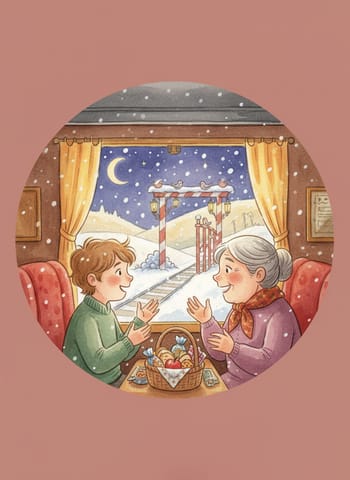
They sat in silence for a while. Then her stomach made a noise that both of them pretended not to hear. Dalibor, who had packed for a journey of six hours and not for a siege, opened his bag. He had a hunk of hard cheese, a packet of rye crackers and an apple that had been rolling around since morning.
Se quedaron un rato en silencio. Entonces el estómago de ella hizo un ruido que ambos fingieron no oír. Dalibor, que había empacado para un viaje de seis horas y no para un asedio, abrió su bolso. Tenía un trozo de queso duro, un paquete de galletas de centeno y una manzana que había estado rodando por ahí desde la mañana.
"I can offer you the cheese," he said. "The apple is a security risk."
«Puedo ofrecerle el queso», dijo. «La manzana es un riesgo de seguridad».
She laughed, and took a small tin of dried apricots from her pocket. "Fair exchange," she said.
Ella se rio y sacó del bolsillo una pequeña lata de orejones de albaricoque. «Intercambio justo», dijo.
Over the next hour, they learned each other's reasons for traveling. He was on his way to meet his newborn nephew, whom the entire family had already described as "very serious." She repaired old clocks, and a small town was paying her to wake up the one in its station tower after thirty years of silence.
Durante la hora siguiente, fueron descubriendo los motivos de sus viajes. Él iba camino a conocer a su sobrino recién nacido, a quien toda la familia ya había descrito como «muy serio». Ella reparaba relojes antiguos, y un pueblito le pagaba por despertar el de la torre de su estación, tras treinta años de silencio.
"What if you can't fix it?" Dalibor asked.
«¿Y si no logra arreglarlo?», preguntó Dalibor.
"Then I will have been paid to be sad in a pleasant place," she said. "There are worse jobs."
«Entonces me habrán pagado por estar triste en un lugar agradable», dijo ella. «Hay trabajos peores».
Outside, a pale line appeared along the horizon. A guard walked past with a flashlight, and somewhere ahead a door slammed. Dalibor checked his watch. The woman checked hers. They were an hour apart.
Afuera apareció una línea pálida en el horizonte. Un guardia pasó con una linterna y, más adelante, se cerró de golpe una puerta. Dalibor miró su reloj. La mujer miró el suyo. Había una hora de diferencia entre ambos.
"Border time," she said. "We have been sitting between two clocks all night, and neither of them wants us. If I were in charge of the border, I would put a clock in the middle, set to nobody's time."
«Hora de frontera», dijo ella. «Nos hemos pasado toda la noche entre dos relojes, y ninguno de los dos nos quiere. Si yo estuviera a cargo de la frontera, pondría un reloj en el medio, con la hora de nadie».
They talked about that for a long while, starting with the clock in the middle. Did a person belong to the place they had left, or to the place they were heading for? She said she had been moving between towns for eleven years and had never stayed long enough to be asked a hard question. He admitted that he had spent the whole journey afraid of holding the baby wrongly.
Hablaron de eso durante largo rato, empezando por el reloj del medio. ¿Pertenecía una persona al lugar que había dejado, o al lugar hacia el que iba? Ella dijo que llevaba once años yendo de pueblo en pueblo y que nunca se había quedado lo bastante como para que le hicieran una pregunta difícil. Él admitió que se había pasado todo el viaje con miedo de sostener mal al bebé.
"You will hold him wrongly, and he will forgive you," she said. "Babies are surprisingly flexible about it."
«Lo va a sostener mal, y él lo va a perdonar», dijo ella. «Los bebés son sorprendentemente flexibles en eso».
By four, the sky had turned the color of weak tea. The apricot tin was empty, the crackers were gone. Dalibor had been laughing for ten minutes at something she had said about customs officers and their stamps.
A las cuatro, el cielo se había vuelto del color del té flojo. La lata de orejones estaba vacía, las galletas se habían acabado. Dalibor llevaba diez minutos riéndose de algo que ella había dicho sobre los aduaneros y sus sellos.
Then the train gave a long groan, as if waking from the same sleep. Something clanked beneath the floor. Dalibor felt it first in his spine and then in his teeth, and the lights of the platform began to slide slowly past the window.
Entonces el tren soltó un largo quejido, como si despertara del mismo sueño. Algo golpeteó bajo el piso. Dalibor lo sintió primero en la columna y luego en los dientes, y las luces del andén empezaron a deslizarse lentamente frente a la ventana.
"We're moving," the woman said. Neither of them reached for a book. She was still halfway through her sentence when the train gathered speed, and Dalibor leaned forward to hear the rest of it.
«Nos estamos moviendo», dijo la mujer. Ninguno de los dos buscó un libro. Ella seguía a media frase cuando el tren cogió velocidad, y Dalibor se inclinó hacia delante para oír el resto.