The Blind Tasting
A free C1-level English story for language learners, readable online in 4 languages, with an option to listen via the free Storyteller app.
When a cheap supermarket wine beats a table of expensive bottles, the organiser of a prestigious tasting sets out to find out who switched it.
That was the preview! Hear the full story in the free Storyteller app. Get the app
Audio isn't available right now.
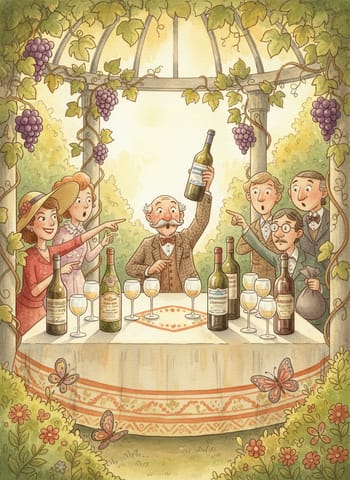
In the eleven years Sunniva had organised the Quillon Wine Circle's annual blind tasting, one tradition had been treated as sacred: the outsider. Each year the committee slipped a single cheap bottle in among the twelve grand ones, decanted and anonymous, so that the ten judges, serious people with sensitive noses and ample opinions, might be gently humbled. The outsider had never placed higher than ninth. This year, to the horror of the committee and the quiet delight of the waiters, it came first.
Sunniva announced the result herself, reading the scores from an envelope while her voice grew steadily smaller. The winning wine, number seven, had been bought that same morning at the supermarket on Fenner Road for roughly the price of a sandwich. Ursula, the senior judge, had once written eleven hundred words on the smell of a wet cellar floor. She had given this wine nineteen points out of twenty and called it "generous, with a quiet confidence." Several judges looked as though they were privately reconsidering their lives.
Sunniva did not believe in miracles, and she believed even less in coincidence. Over the following days she treated the evening as a crime scene, if a rather damp one. Somebody must have switched the bottles; it was the only explanation that spared everyone's pride, hers included. She studied the photographs of the decanters, counting. She interviewed the caterer, who remembered nothing except that the cheese had run out. She even rang the merchant who supplied the real wines, asking in what she hoped was a casual voice whether any of his stock might have been mislabelled. He laughed for so long that she had to hold the phone away from her ear.
What nagged at her most was a small, undignified detail. Before leaving that night, she had poured the last inch of number seven into a jam jar, out of what she now recognised as suspicion. She took the jar to the merchant, who sniffed it, sipped it, grimaced with great politeness, and confirmed that it was exactly what she had paid for. There had been no switch. There had never been one, and the only people left to suspect were the judges.
She cornered Ursula at the end of the week, in the Circle's cloakroom, among the umbrellas.
"Did you think we were fools?" Ursula said, a little hurt. "We were asked to rank what we tasted, and that is what we did. It was the best wine on the table. Not until the label came out did any of us remember we weren't supposed to like it."
"It cost less than the cheese," Sunniva said.
"Then the cheese was overpriced."
Walking home, Sunniva turned that over. It was not the wine that had failed; it was the experiment. For eleven years the Circle had tested its judges for humility, and in the one year they were tested for honesty instead, they had passed with distinction. Had she known the joke would end this way, she would have chosen a different evening for it, or at least a better cheese.
On Sunday she opened the second bottle she had bought, in case of spills, poured a glass, and drank it slowly, alone, in the manner of someone conducting research. Then she took out next year's agenda and, beside the word "Outsider," wrote in pencil: "Not from the supermarket."