The Column Taken Literally
一个面向英语学习者的免费 C1 级英语故事,可用 7 种语言在线阅读,也可以在免费的 Storyteller 应用中收听。
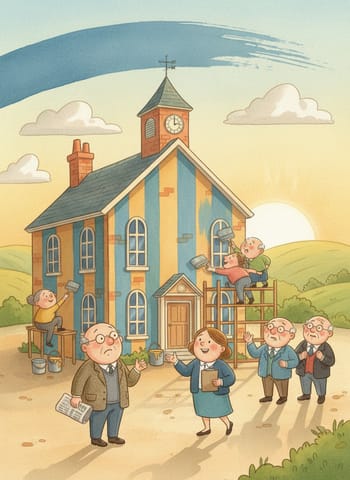
A small-town columnist's joke about painting the town hall in stripes is approved by the council, and he has to decide whether to confess.
试听结束!在免费的 Storyteller 应用中收听完整故事。 下载应用
音频暂时无法播放。
In eleven years of writing the satirical column in the town's Thursday paper, Mehmet had never been quoted by anyone except his mother, who repeated him to her friends with the punctuation wrong. That was why he felt entirely safe on the Wednesday evening he wrote about the town hall.
梅赫梅特在镇上周四出版的报纸上写讽刺专栏,写了十一年,除了他母亲,从来没有人引用过他的话,而母亲向朋友转述时,标点还总是弄错。正因如此,在那个星期三的晚上,他写镇政厅时,感觉万无一失。
The council had spent the autumn commissioning a report on why nobody in town felt cheerful. The report cost more than the library's heating bill for a year, and it concluded that residents wanted "a visible symbol of renewal." With a deadline, a cold coffee and what he considered a modest sense of public duty, Mehmet proposed painting the town hall in wide orange and white stripes. A building that looked like a deckchair, he wrote, would lift anyone's mood, and it would be far cheaper than fixing the roof. He added a drawing of the mayor on a ladder, holding a ribbon and a very small brush.
整个秋天,镇议会都花钱委托人写了一份报告,研究为什么镇上没有人觉得开心。这份报告的费用超过了图书馆全年的取暖费,结论是居民们想要“一个看得见的复兴象征”。面对截稿期限和一杯凉掉的咖啡,怀着他自认为并不过分的一点公共责任感,梅赫梅特建议把镇政厅漆成橙白相间的宽条纹。他写道,一座看起来像躺椅的建筑,能让任何人的心情好起来,而且比修屋顶便宜得多。他还附了一幅漫画:市长爬在梯子上,手里拿着一条彩带和一把很小很小的刷子。
He had been so sure of the tone that it never crossed his mind anyone could miss it. Not until the following Monday did his editor turn her screen toward him without a word.
他对自己的语气那么有把握,从没想过会有人领会不到。直到下一个星期一,他的编辑一言不发地把屏幕转向了他。
The council had met on Sunday night. By five votes to two, it had approved "the Courier columnist's initiative" and set aside a modest sum from the renewal fund. A painter had been booked for the first week of May.
议会星期天晚上开了会。以五票对两票,通过了“《信使报》专栏作家的倡议”,并从复兴基金里划出了一笔不大的款项。一名油漆工已经预约,五月的第一周动工。
"They thanked you," she said. "Look. 'Mr. Mehmet's creative vision.'"
“他们感谢你了,”她说,“你看。‘梅赫梅特先生的创意构想’。”
"It was a joke," he said. "It's called Small Print. It had a drawing of a deckchair."
“那是个玩笑,”他说,“专栏叫《小字条款》。上面还有一幅躺椅的画。”
"They don't read the drawings."
“他们不看画。”
What troubled him in the days that followed was not the stripes but how happy people were. Strangers stopped him outside the bakery. The man who sold newspapers said it was the first idea in years that had made him look up at the building rather than past it. Had Mehmet written the same point about the roof in plain, serious language, he thought, it would have been filed and forgotten for another decade. Dressed as nonsense, it had been passed in a single evening.
接下来的几天里,让他不安的不是那些条纹,而是人们竟那么高兴。陌生人在面包店外拦住他。卖报纸的男人说,这是这些年来头一个让他抬头看那座建筑,而不是从旁边视而不见走过去的主意。他想,如果他用平实、严肃的话把屋顶的事写一遍,这篇东西多半会被归档,再被遗忘十年。披上了胡说八道的外衣,它却一个晚上就通过了。
On Friday the mayor caught him on the pavement and took both his hands in hers. "Do you know," she said, "that in thirty years nobody has suggested anything that made me smile during a budget meeting?"
星期五,市长在人行道上截住了他,双手握住他的两只手。“你知道吗,”她说,“三十年了,在预算会议上,没有人提出过哪怕一个让我笑出来的建议。”
"About the stripes," Mehmet began. "There's something I should—"
“关于那些条纹,”梅赫梅特开口说,“有件事我该——”
"Don't tell me the details. I want to be surprised."
“别告诉我细节。我想留点惊喜。”
That night he drafted a correction. It was a good one, dry and careful, admitting that the column had been satire and regretting any confusion. He read it to his editor over the phone, and she was quiet for so long he thought the line had dropped.
那天夜里,他起草了一份更正声明。写得很好,冷静而谨慎,承认专栏是讽刺,并对造成的误会表示歉意。他在电话里念给编辑听,她沉默了那么久,他还以为线断了。
"Print that," she said finally, "and the stripes happen anyway, only now the whole town knows it was an accident. Or you stay silent, and they happen as a decision. Which would you rather have on the front of your building?"
“登出去的话,”她终于说,“条纹照样会有,只是整个镇子都知道那是个意外。要么你保持沉默,它们就是作为一项决定出现。你更愿意让哪一种出现在你们镇政厅的正面?”
"I'd rather not have anything on it."
“我更愿意什么都别出现在上面。”
"Too late for that."
“这可来不及了。”
He did not answer. Having spent a decade being safely unread, he found he had no practice at being believed, and the sensation was both flattering and faintly sick. If he had known the council read the paper at all, he would have written something duller. If he had written something duller, he thought, the roof would still be leaking and nobody would be smiling at the town hall at all.
他没有回答。安安稳稳地不被人读了十年,他发现自己完全没有被人相信的经验,这种感觉既让人飘飘然,又隐隐让人想吐。要是早知道议会真的会读报纸,他本来会写些更无聊的东西。可要是写了更无聊的东西,他想,屋顶还会漏下去,镇上也没有人会对着镇政厅微笑了。
He folded the correction in three and put it in the inside pocket of his jacket, next to his pen. It was still there in May, on the morning the ladder went up and the first stripe of orange rolled across the old grey stone. A small child at the edge of the crowd asked her father why the building was wearing a deckchair, and the whole square laughed, Mehmet loudest. He put a hand to his pocket. Then he took it away again.
他把那份更正声明折成三折,放进外套内侧的口袋,挨着他的钢笔。到了五月,它还在那里,那天早晨,梯子架了起来,第一道橙色的条纹滚过了老旧的灰色石墙。人群边缘,一个小女孩问爸爸,为什么这座楼穿着一把躺椅,整个广场都笑了,梅赫梅特笑得最响。他把手伸向口袋。然后又把手拿开了。