The Man and His Image
Một truyện tiếng Anh miễn phí trình độ B2 cho người học, đọc trực tuyến bằng 7 ngôn ngữ, có thể nghe qua ứng dụng Storyteller miễn phí.
A man too vain to bear his own reflection flees every mirror he owns, only to discover that nature has just as many ways of showing him the truth.
Hết phần nghe thử! Nghe trọn truyện trong ứng dụng Storyteller miễn phí. Tải app
Hiện chưa thể phát audio.
Once there was a man who loved himself very much, and who permitted himself no rivals in that love. He thought his face and figure the handsomest in all the world. Anything in the shape of a mirror that could show him his own likeness he took care to avoid; for he did not want to be reminded that perhaps he was over-rating his beauty. For this reason he hated looking-glasses and accused them of being false. He made a very great mistake in this respect; but that he did not mind, being quite content to live in the happiness the mistake afforded him.
Ngày xưa có một người đàn ông yêu bản thân mình vô cùng, và không chấp nhận bất kỳ ai sánh được với vẻ đẹp ấy. Anh ta tin rằng khuôn mặt và vóc dáng của mình đẹp nhất thế gian. Bất cứ thứ gì có hình dạng như một tấm gương, có thể cho anh ta thấy hình ảnh của chính mình, anh ta đều cẩn thận tránh xa; vì anh không muốn bị nhắc nhở rằng có lẽ mình đã đánh giá quá cao vẻ đẹp của bản thân. Vì lý do đó, anh ta ghét những tấm gương soi và cho rằng chúng dối trá. Anh đã mắc một sai lầm rất lớn trong chuyện này; nhưng anh chẳng bận tâm, bởi anh hoàn toàn hài lòng sống trong niềm hạnh phúc mà sai lầm ấy mang lại.
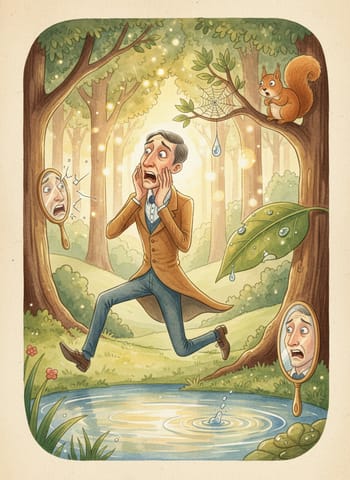
To cure him of so grievous an error, officious Fate managed matters in such a way that wherever he turned his eyes they would fall on one of those mute little counsellors that ladies carry and appeal to when they are anxious about their appearance. He found mirrors in the houses; mirrors in the shops; mirrors in the pockets of gallants; mirrors even as ornaments on waist-belts of ladies.
Để chữa cho anh ta khỏi sai lầm tai hại ấy, Số Phận đa sự đã sắp đặt mọi việc sao cho dù anh quay mắt nhìn đi đâu, anh cũng bắt gặp một trong những cố vấn nhỏ bé, câm lặng mà các quý bà thường mang theo và hỏi ý kiến khi họ lo lắng về diện mạo của mình. Anh thấy gương trong các ngôi nhà; gương trong các cửa hiệu; gương trong túi áo của những chàng trai lịch lãm; thậm chí gương còn được dùng làm đồ trang sức trên thắt lưng của các quý bà.
What was he to do—this poor Narcissus? He thought to avoid all such things by going far away from haunts of mankind, where he should never have to face a mirror again. But in the woods to which he retreated a clear rivulet ran. Into this he happened to look and—saw himself again. Angrily he told himself that his eyes had been deluded by an idle fancy. Henceforth he would keep away from the water! This he tried his utmost to do; but who can resist the beauty of a woodland stream? There he was and remained, always with that which he had determined to shun.
Chàng Narcissus tội nghiệp này biết làm sao đây? Anh nghĩ cách tránh né tất cả những thứ ấy bằng cách đi thật xa khỏi nơi con người sinh sống, nơi anh sẽ không bao giờ phải đối diện với một tấm gương nữa. Nhưng trong khu rừng mà anh lui về ẩn náu lại có một dòng suối trong veo chảy qua. Anh tình cờ nhìn xuống đó và—lại thấy chính mình. Anh giận dữ tự nhủ rằng đôi mắt mình đã bị một ảo tưởng vu vơ đánh lừa. Từ nay anh sẽ tránh xa mặt nước! Anh cố hết sức để làm điều đó; nhưng ai có thể cưỡng lại được vẻ đẹp của một dòng suối rừng? Thế là anh vẫn ở đó, và mãi mãi ở đó, luôn cùng với thứ mà anh đã quyết tâm lẩn tránh.
My meaning is easily seen. It applies to everybody; for everybody takes some joy in harbouring this very error. The man in love with himself stands for the soul of each one of us. All the mirrors wherein he saw himself reflected stand for the faults of other people, in which we really see our own faults though we hate to recognise them as such. As for the brook, that, as every one knows, stands for the book of maxims which the Duke de la Rochefoucauld wrote.
Ý nghĩa của tôi thật dễ thấy. Nó áp dụng cho tất cả mọi người; vì ai cũng ít nhiều vui thích khi nuôi giữ chính sai lầm này. Người đàn ông yêu bản thân mình tượng trưng cho tâm hồn của mỗi chúng ta. Tất cả những tấm gương mà anh ta nhìn thấy hình ảnh mình phản chiếu tượng trưng cho lỗi lầm của người khác, mà thực ra qua đó chúng ta nhìn thấy chính lỗi lầm của mình dù ta ghét phải thừa nhận điều đó. Còn dòng suối, như ai cũng biết, tượng trưng cho cuốn sách châm ngôn mà Công tước de la Rochefoucauld đã viết.