The Dented Cup at Booth Four
Uma história gratuita em inglês de nível B2 para estudantes, para ler online em 7 idiomas, com opção de ouvir no app gratuito Storyteller.
A bridge toll collector dents the booth's old trophy the night before an inspection, and a maintenance man tries two very different ways to repair it.
Essa foi a prévia! Ouça a história completa no app gratuito Storyteller. Baixar o app
O áudio não está disponível no momento.
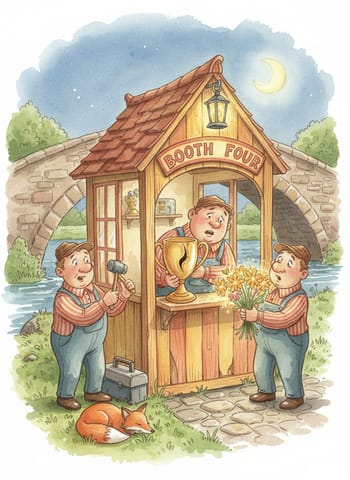
Sade had worked the late shift at Booth Four for fourteen years, and in all that time the trophy had never left its shelf. It was a squat silver cup, given to the bridge crew for ten years without a single counting error. Nobody talked about who had earned it. Everybody remembered who was responsible for it, and that person was Sade.
Sade trabalhava no turno da noite da Cabine Quatro havia catorze anos, e em todo esse tempo o troféu nunca tinha saído da prateleira. Era uma taça de prata, baixa e arredondada, dada à equipe da ponte por dez anos sem um único erro de contagem. Ninguém falava de quem a havia conquistado. Todos lembravam quem era responsável por ela, e essa pessoa era Sade.
On the last night of the month she took it down to polish it before the inspector's visit. The cloth slipped. The cup rolled off the counter, struck the corner of the coin tray, and landed on the floor with a sound like a cracked bell.
Na última noite do mês, ela a tirou da prateleira para polir antes da visita do inspetor. O pano escorregou. A taça rolou do balcão, bateu na quina da bandeja de moedas e caiu no chão com um som de sino rachado.
She picked it up slowly. Near the base, the metal had folded inward in a shallow dent about the size of a thumb. Under the booth's yellow lamp, it looked enormous.
Ela a pegou devagar. Perto da base, o metal tinha se dobrado para dentro, formando uma depressão rasa do tamanho de um polegar. Sob a lâmpada amarela da cabine, parecia enorme.
"It's only a cup," she said aloud, and she did not believe it.
"É só uma taça", disse ela em voz alta, e não acreditou nisso.
The bridge was quiet at that hour. A car arrived every few minutes, its headlights sliding across the glass, and each driver held out a hand full of coins. Sade took the coins and gave back the change. Between cars, she turned the trophy over and over, searching for an angle from which the dent disappeared.
A ponte estava silenciosa àquela hora. Um carro chegava a cada poucos minutos, os faróis deslizando pelo vidro, e cada motorista estendia a mão cheia de moedas. Sade pegava as moedas e devolvia o troco. Entre um carro e outro, virava o troféu várias vezes, procurando um ângulo em que a marca desaparecesse.
There was none.
Não havia nenhum.
Gil came at midnight to replace the lamp inside the ticket machine. He was the maintenance man, a broad, unhurried person who treated every problem as though it had all the time in the world. He glanced at the cup in her hands and then at her face.
Gil chegou à meia-noite para trocar a lâmpada dentro da máquina de bilhetes. Era o homem da manutenção, uma pessoa corpulenta e calma que tratava cada problema como se ele tivesse todo o tempo do mundo. Ele olhou para a taça nas mãos dela e depois para o rosto dela.
"You've been holding that for an hour," he said.
"Você está segurando isso há uma hora", disse ele.
"I dropped it," Sade said. "The inspector comes at eight."
"Eu deixei cair", disse Sade. "O inspetor vem às oito."
"And the inspector has never dropped anything in his life, I suppose."
"E o inspetor nunca deixou nada cair na vida, imagino."
"That is not the point, Gil."
"Não é esse o ponto, Gil."
He held out his hand, and she gave him the cup with a reluctance that surprised her. He tilted it under the light and frowned the way he did at a stubborn bolt.
Ele estendeu a mão, e ela lhe entregou a taça com uma relutância que a surpreendeu. Ele a inclinou sob a luz e franziu a testa, do jeito que fazia diante de um parafuso teimoso.
"Thin metal," he said. "It should come out easily."
"Metal fino", disse ele. "Deve sair fácil."
His first attempt was simple. He found a wooden spoon in the lunch drawer. He slid the handle inside the cup and pushed outward against the dent. Nothing moved. He pushed harder. The silver gave a small, unhappy creak, and a hairline crack ran from the dent toward the rim.
A primeira tentativa dele foi simples. Encontrou uma colher de pau na gaveta do lanche. Enfiou o cabo dentro da taça e empurrou para fora contra a marca. Nada se mexeu. Ele empurrou com mais força. A prata deu um rangido pequeno e infeliz, e uma rachadura fina correu da marca em direção à borda.
Both of them stared at it.
Os dois ficaram olhando para ela.
"That was my fault," Gil said.
"A culpa foi minha", disse Gil.
"It was mine," said Sade. "I should have put it in a drawer years ago."
"Foi minha", disse Sade. "Eu devia ter guardado isso numa gaveta anos atrás."
"Years ago it would not have mattered." He set the cup on the counter with great care, as if it might break from being looked at. "Pushing from one point makes the metal stretch. We need something that pushes evenly, from every side at once."
"Anos atrás não teria importado." Ele pousou a taça sobre o balcão com muito cuidado, como se ela pudesse quebrar só de ser olhada. "Empurrar de um ponto só faz o metal esticar. Precisamos de algo que empurre por igual, de todos os lados ao mesmo tempo."
"Like what?"
"Tipo o quê?"
Gil did not answer. He walked to the small freezer in the corner, which the crew used for bottles of water, and opened the door. A moment later he was filling the cup from the tap, spilling a little across the counter, concentrating hard.
Gil não respondeu. Caminhou até o pequeno freezer no canto, que a equipe usava para garrafas de água, e abriu a porta. Um instante depois estava enchendo a taça na torneira, derramando um pouco no balcão, concentrado.
"Water gets bigger when it freezes," he said. "If the ice has nowhere else to go, it pushes on every wall of the cup. That might lift the dent without damaging anything more."
"A água aumenta de tamanho quando congela", disse ele. "Se o gelo não tiver para onde ir, ele empurra todas as paredes da taça. Isso pode levantar a marca sem estragar mais nada."
"Might," said Sade.
"Pode", disse Sade.
"Might," he agreed. "The crack is already there, so it cannot get much worse."
"Pode", concordou ele. "A rachadura já existe, então não tem como piorar muito."
"It could get a lot worse. It could split in half."
"Pode piorar bastante. Ela pode partir ao meio."
"Then we will have a very honest trophy, in two pieces." He smiled. "Do you have a better idea?"
"Então teremos um troféu muito honesto, em dois pedaços." Ele sorriu. "Você tem uma ideia melhor?"
She did not. That was the uncomfortable truth of the night: she had spent an hour looking at the dent and not one minute thinking about it. Her mind had been busy with the inspector's face and with what he would write in his report. Fourteen careful years could be summed up by a single careless minute.
Ela não tinha. Essa era a verdade incômoda da noite: ela havia passado uma hora olhando para a marca e nem um minuto pensando nela. A mente dela estivera ocupada com o rosto do inspetor e com o que ele escreveria no relatório. Catorze anos de cuidado podiam ser resumidos num único minuto de descuido.
So she carried the cup to the freezer herself. Gil closed the door, and for a moment they both stood with their hands flat against it, like two people sealing a promise.
Então ela mesma levou a taça até o freezer. Gil fechou a porta, e por um momento os dois ficaram com as mãos espalmadas contra ela, como duas pessoas selando uma promessa.
The hours were long. Cars passed, and she counted coins. A truck carrying cabbages needed change for a large banknote. A taxi driver sang the whole time he waited. A young couple asked whether the bridge had always been there. Sade had wondered the same thing on many nights, and she told them it was older than the city's name for the river.
As horas foram longas. Os carros passavam, e ela contava moedas. Um caminhão carregado de repolhos precisou de troco para uma nota grande. Um motorista de táxi cantou o tempo todo em que esperou. Um jovem casal perguntou se a ponte sempre tinha estado ali. Sade havia se perguntado a mesma coisa em muitas noites, e disse a eles que era mais antiga que o nome que a cidade dava ao rio.
Meanwhile Gil finished the lamp, then sat on an upturned crate beside her stool and talked. He said the trophy had never really belonged to the crew. A man who had since moved to the north gate had won it by luck, during a year when the machines happened to work. Nobody had checked the figures on the day it was awarded. They had simply believed the register.
Enquanto isso, Gil terminou a lâmpada, depois sentou numa caixa virada ao lado do banquinho dela e ficou conversando. Disse que o troféu nunca tinha pertencido de verdade à equipe. Um homem que depois se mudou para o portão norte o ganhara por sorte, num ano em que as máquinas por acaso funcionaram. Ninguém conferira os números no dia da premiação. Eles simplesmente acreditaram no registro.
Sade laughed for the first time that night.
Sade riu pela primeira vez naquela noite.
"Then it is a trophy for being believed," she said.
"Então é um troféu por ter sido acreditado", disse ela.
"It is a trophy for turning up," said Gil. "You have turned up for fourteen years."
"É um troféu por aparecer", disse Gil. "Você aparece há catorze anos."
"That is not the same as being careful."
"Isso não é o mesmo que ser cuidadosa."
"No. But it is not nothing, either."
"Não. Mas também não é pouca coisa."
She thought about that for a long while. She had always imagined that the cup was a kind of promise, and that a dent was a broken one. Now it seemed more likely that the cup had only ever been a cup. The promise was the thing she did every night, with or without a shelf to put it on.
Ela pensou nisso por um bom tempo. Sempre imaginara que a taça era uma espécie de promessa, e que uma marca era uma promessa quebrada. Agora parecia mais provável que a taça sempre tivesse sido apenas uma taça. A promessa era a coisa que ela fazia todas as noites, com ou sem uma prateleira para guardá-la.
At two o'clock, a sharp noise came from the freezer, like a knuckle rapping on glass. Sade looked at Gil. Gil looked at the freezer. Neither of them moved, as if the sound might be frightened away.
Às duas da manhã, veio um estalo seco do freezer, como uma batida de nó de dedo no vidro. Sade olhou para Gil. Gil olhou para o freezer. Nenhum dos dois se mexeu, como se o som pudesse ser espantado.
"That was either good or very bad," he whispered.
"Isso foi muito bom ou muito ruim", sussurrou ele.
"Do not open it," said Sade. "Not yet. Let it finish."
"Não abra", disse Sade. "Ainda não. Deixe terminar."
They waited until the sky behind the bridge towers began to turn the colour of dishwater. At last she opened the door herself and lifted out the cup, which was cold enough to sting her fingers. A white plug of ice stood in the middle. She tipped it into the sink and held the silver under the lamp.
Esperaram até o céu atrás das torres da ponte começar a ficar da cor de água de lavar louça. Por fim, ela mesma abriu a porta e tirou a taça, que estava fria o bastante para queimar seus dedos. Um bloco branco de gelo se erguia no meio. Ela o despejou na pia e segurou a prata sob a lâmpada.
The dent was gone.
A marca tinha sumido.
A thin crack remained, running from the base toward the rim. It was so fine that she had to tilt the cup to find it. A little polish would hide it from anyone who was not looking. She would know it was there. She decided that this was perfectly acceptable.
Restava uma rachadura fina, indo da base em direção à borda. Era tão fina que ela precisava inclinar a taça para encontrá-la. Um pouco de polimento a esconderia de qualquer um que não estivesse procurando. Ela saberia que estava lá. Decidiu que isso era perfeitamente aceitável.
"If you had told me yesterday that a bucket of ice could do this," she said, "I would have laughed at you."
"Se você tivesse me dito ontem que um balde de gelo podia fazer isso", disse ela, "eu teria rido de você."
"Water," said Gil. "A cupful of water."
"Água", disse Gil. "Uma taça de água."
"A cupful of water, then."
"Uma taça de água, então."
She put the trophy back on its shelf, turned a little so the crack faced the wall, and stepped back to look. It was an ordinary cup on an ordinary shelf. The light from the lamp slid over it the way it always had. Outside, the first car of the morning rolled toward the booth, and its driver was already reaching for the coins.
Ela colocou o troféu de volta na prateleira, virado um pouco para que a rachadura ficasse de frente para a parede, e recuou para olhar. Era uma taça comum numa prateleira comum. A luz da lâmpada deslizava por ela como sempre havia deslizado. Lá fora, o primeiro carro da manhã rolou em direção à cabine, e o motorista já estava procurando as moedas.
"Go home, Gil," she said. "You have been awake all night."
"Vá para casa, Gil", disse ela. "Você ficou acordado a noite toda."
"So have you."
"Você também."
"Yes, but I have a booth to run."
"Sim, mas eu tenho uma cabine para tocar."
He smiled, collected his tools, and left. She slid the window open, took the coins, and gave back the change. When the car had gone, she reached over and flicked the rim of the cup with a fingernail.
Ele sorriu, juntou as ferramentas e foi embora. Ela abriu a janela, pegou as moedas e devolveu o troco. Quando o carro se foi, ela esticou o braço e deu um piparote na borda da taça com a unha.
It answered, clear and bright, and the note hung in the quiet booth until the next car pulled up to the window.
A taça respondeu, clara e brilhante, e a nota ficou suspensa na cabine silenciosa até o próximo carro parar junto à janela.