The Dented Cup at Booth Four
Una historia gratuita en inglés de nivel B2 para estudiantes, para leer en línea en 7 idiomas, con opción de escucharla en la app gratuita Storyteller.
A bridge toll collector dents the booth's old trophy the night before an inspection, and a maintenance man tries two very different ways to repair it.
¡Ese fue el avance! Escucha la historia completa en la app gratuita Storyteller. Descargar la app
El audio no está disponible en este momento.
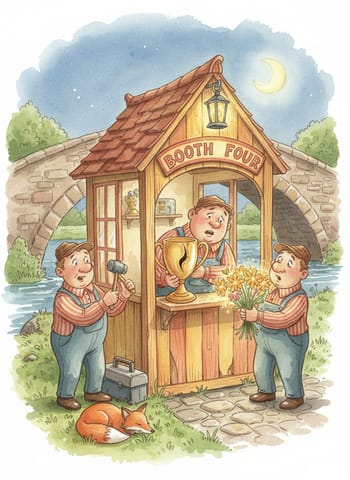
Sade had worked the late shift at Booth Four for fourteen years, and in all that time the trophy had never left its shelf. It was a squat silver cup, given to the bridge crew for ten years without a single counting error. Nobody talked about who had earned it. Everybody remembered who was responsible for it, and that person was Sade.
Sade llevaba catorce años en el turno de noche de la Cabina Cuatro, y en todo ese tiempo el trofeo nunca había salido de su estante. Era una copa de plata, achaparrada, entregada al equipo del puente por diez años sin un solo error de conteo. Nadie hablaba de quién la había merecido. Todos recordaban quién era responsable de ella, y esa persona era Sade.
On the last night of the month she took it down to polish it before the inspector's visit. The cloth slipped. The cup rolled off the counter, struck the corner of the coin tray, and landed on the floor with a sound like a cracked bell.
La última noche del mes la bajó para pulirla antes de la visita del inspector. El paño resbaló. La copa rodó del mostrador, golpeó la esquina de la bandeja de monedas y cayó al suelo con un sonido como el de una campana rajada.
She picked it up slowly. Near the base, the metal had folded inward in a shallow dent about the size of a thumb. Under the booth's yellow lamp, it looked enormous.
La recogió despacio. Cerca de la base, el metal se había plegado hacia adentro en una abolladura poco profunda del tamaño de un pulgar. Bajo la lámpara amarilla de la cabina, parecía enorme.
"It's only a cup," she said aloud, and she did not believe it.
«Es solo una copa», dijo en voz alta, y no lo creyó.
The bridge was quiet at that hour. A car arrived every few minutes, its headlights sliding across the glass, and each driver held out a hand full of coins. Sade took the coins and gave back the change. Between cars, she turned the trophy over and over, searching for an angle from which the dent disappeared.
El puente estaba tranquilo a esa hora. Un auto llegaba cada pocos minutos, con los faros deslizándose por el vidrio, y cada conductor extendía una mano llena de monedas. Sade recibía las monedas y devolvía el cambio. Entre auto y auto, daba vueltas y vueltas al trofeo, buscando un ángulo desde el que la abolladura desapareciera.
There was none.
No había ninguno.
Gil came at midnight to replace the lamp inside the ticket machine. He was the maintenance man, a broad, unhurried person who treated every problem as though it had all the time in the world. He glanced at the cup in her hands and then at her face.
Gil llegó a medianoche para cambiar la lámpara de la máquina de boletos. Era el encargado de mantenimiento, una persona robusta y sin prisa que trataba cada problema como si tuviera todo el tiempo del mundo. Miró de reojo la copa en sus manos y luego su cara.
"You've been holding that for an hour," he said.
«Llevas una hora sosteniendo eso», dijo.
"I dropped it," Sade said. "The inspector comes at eight."
«Se me cayó», dijo Sade. «El inspector viene a las ocho».
"And the inspector has never dropped anything in his life, I suppose."
«Y el inspector nunca ha dejado caer nada en su vida, supongo».
"That is not the point, Gil."
«Ese no es el punto, Gil».
He held out his hand, and she gave him the cup with a reluctance that surprised her. He tilted it under the light and frowned the way he did at a stubborn bolt.
Él extendió la mano, y ella le dio la copa con una reticencia que la sorprendió. La inclinó bajo la luz y frunció el ceño como hacía con un perno terco.
"Thin metal," he said. "It should come out easily."
«Metal delgado», dijo. «Debería salir fácilmente».
His first attempt was simple. He found a wooden spoon in the lunch drawer. He slid the handle inside the cup and pushed outward against the dent. Nothing moved. He pushed harder. The silver gave a small, unhappy creak, and a hairline crack ran from the dent toward the rim.
Su primer intento fue sencillo. Encontró una cuchara de madera en el cajón del almuerzo. Deslizó el mango dentro de la copa y empujó hacia afuera contra la abolladura. Nada se movió. Empujó más fuerte. La plata soltó un pequeño crujido de disgusto, y una grieta fina corrió desde la abolladura hacia el borde.
Both of them stared at it.
Los dos la miraron fijamente.
"That was my fault," Gil said.
«Eso fue culpa mía», dijo Gil.
"It was mine," said Sade. "I should have put it in a drawer years ago."
«Fue mía», dijo Sade. «Debí guardarla en un cajón hace años».
"Years ago it would not have mattered." He set the cup on the counter with great care, as if it might break from being looked at. "Pushing from one point makes the metal stretch. We need something that pushes evenly, from every side at once."
«Hace años no habría importado». Dejó la copa sobre el mostrador con muchísimo cuidado, como si pudiera romperse de tanto mirarla. «Empujar desde un solo punto hace que el metal se estire. Necesitamos algo que empuje parejo, desde todos los lados a la vez».
"Like what?"
«¿Como qué?».
Gil did not answer. He walked to the small freezer in the corner, which the crew used for bottles of water, and opened the door. A moment later he was filling the cup from the tap, spilling a little across the counter, concentrating hard.
Gil no respondió. Caminó hasta el pequeño congelador del rincón, que el equipo usaba para botellas de agua, y abrió la puerta. Un momento después estaba llenando la copa en el grifo, derramando un poco sobre el mostrador, muy concentrado.
"Water gets bigger when it freezes," he said. "If the ice has nowhere else to go, it pushes on every wall of the cup. That might lift the dent without damaging anything more."
«El agua se expande cuando se congela», dijo. «Si el hielo no tiene adónde ir, empuja contra todas las paredes de la copa. Eso podría levantar la abolladura sin dañar nada más».
"Might," said Sade.
«Podría», dijo Sade.
"Might," he agreed. "The crack is already there, so it cannot get much worse."
«Podría», concordó él. «La grieta ya está ahí, así que no puede empeorar mucho».
"It could get a lot worse. It could split in half."
«Podría empeorar bastante. Podría partirse en dos».
"Then we will have a very honest trophy, in two pieces." He smiled. "Do you have a better idea?"
«Entonces tendremos un trofeo muy honesto, en dos pedazos». Sonrió. «¿Tienes una idea mejor?».
She did not. That was the uncomfortable truth of the night: she had spent an hour looking at the dent and not one minute thinking about it. Her mind had been busy with the inspector's face and with what he would write in his report. Fourteen careful years could be summed up by a single careless minute.
No la tenía. Esa era la incómoda verdad de la noche: había pasado una hora mirando la abolladura y ni un minuto pensando en ella. Su mente había estado ocupada con la cara del inspector y con lo que escribiría en su informe. Catorce años de cuidado podían resumirse en un solo minuto de descuido.
So she carried the cup to the freezer herself. Gil closed the door, and for a moment they both stood with their hands flat against it, like two people sealing a promise.
Así que ella misma llevó la copa al congelador. Gil cerró la puerta, y por un momento los dos se quedaron con las manos planas contra ella, como dos personas sellando una promesa.
The hours were long. Cars passed, and she counted coins. A truck carrying cabbages needed change for a large banknote. A taxi driver sang the whole time he waited. A young couple asked whether the bridge had always been there. Sade had wondered the same thing on many nights, and she told them it was older than the city's name for the river.
Las horas fueron largas. Pasaban autos, y ella contaba monedas. Un camión con repollos necesitó cambio para un billete grande. Un taxista cantó todo el tiempo que esperó. Una joven pareja preguntó si el puente siempre había estado ahí. Sade se lo había preguntado muchas noches, y les dijo que era más viejo que el nombre que la ciudad le daba al río.
Meanwhile Gil finished the lamp, then sat on an upturned crate beside her stool and talked. He said the trophy had never really belonged to the crew. A man who had since moved to the north gate had won it by luck, during a year when the machines happened to work. Nobody had checked the figures on the day it was awarded. They had simply believed the register.
Mientras tanto Gil terminó la lámpara, y luego se sentó en un cajón volteado junto a su taburete y conversó. Dijo que el trofeo nunca había pertenecido realmente al equipo. Un hombre que desde entonces se había mudado a la puerta norte lo había ganado de pura suerte, durante un año en que las máquinas funcionaron por casualidad. Nadie había verificado las cifras el día que se concedió. Simplemente habían creído en el registro.
Sade laughed for the first time that night.
Sade rio por primera vez esa noche.
"Then it is a trophy for being believed," she said.
«Entonces es un trofeo por ser creído», dijo.
"It is a trophy for turning up," said Gil. "You have turned up for fourteen years."
«Es un trofeo por presentarse», dijo Gil. «Tú te has presentado durante catorce años».
"That is not the same as being careful."
«Eso no es lo mismo que ser cuidadosa».
"No. But it is not nothing, either."
«No. Pero tampoco es nada».
She thought about that for a long while. She had always imagined that the cup was a kind of promise, and that a dent was a broken one. Now it seemed more likely that the cup had only ever been a cup. The promise was the thing she did every night, with or without a shelf to put it on.
Lo pensó durante un largo rato. Siempre había imaginado que la copa era una especie de promesa, y que una abolladura era una promesa rota. Ahora parecía más probable que la copa nunca hubiera sido más que una copa. La promesa era lo que ella hacía cada noche, con o sin un estante donde ponerla.
At two o'clock, a sharp noise came from the freezer, like a knuckle rapping on glass. Sade looked at Gil. Gil looked at the freezer. Neither of them moved, as if the sound might be frightened away.
A las dos de la madrugada, un ruido seco salió del congelador, como un nudillo golpeando un cristal. Sade miró a Gil. Gil miró al congelador. Ninguno se movió, como si el sonido pudiera asustarse y huir.
"That was either good or very bad," he whispered.
«Eso fue o muy bueno o muy malo», susurró él.
"Do not open it," said Sade. "Not yet. Let it finish."
«No lo abras», dijo Sade. «Todavía no. Deja que termine».
They waited until the sky behind the bridge towers began to turn the colour of dishwater. At last she opened the door herself and lifted out the cup, which was cold enough to sting her fingers. A white plug of ice stood in the middle. She tipped it into the sink and held the silver under the lamp.
Esperaron hasta que el cielo detrás de las torres del puente empezó a volverse del color del agua de lavar platos. Por fin ella misma abrió la puerta y sacó la copa, tan fría que le picaron los dedos. Un tapón blanco de hielo se alzaba en el medio. Lo volcó en el fregadero y sostuvo la plata bajo la lámpara.
The dent was gone.
La abolladura había desaparecido.
A thin crack remained, running from the base toward the rim. It was so fine that she had to tilt the cup to find it. A little polish would hide it from anyone who was not looking. She would know it was there. She decided that this was perfectly acceptable.
Quedaba una grieta delgada, que iba de la base hacia el borde. Era tan fina que tuvo que inclinar la copa para encontrarla. Un poco de pulido la ocultaría de cualquiera que no la estuviera buscando. Ella sabría que estaba ahí. Decidió que eso era perfectamente aceptable.
"If you had told me yesterday that a bucket of ice could do this," she said, "I would have laughed at you."
«Si me hubieras dicho ayer que un balde de hielo podía hacer esto», dijo, «me habría reído de ti».
"Water," said Gil. "A cupful of water."
«Agua», dijo Gil. «Una copa de agua».
"A cupful of water, then."
«Una copa de agua, entonces».
She put the trophy back on its shelf, turned a little so the crack faced the wall, and stepped back to look. It was an ordinary cup on an ordinary shelf. The light from the lamp slid over it the way it always had. Outside, the first car of the morning rolled toward the booth, and its driver was already reaching for the coins.
Puso el trofeo de vuelta en su estante, girado un poco para que la grieta mirara a la pared, y retrocedió para mirarlo. Era una copa común en un estante común. La luz de la lámpara se deslizaba sobre ella como siempre. Afuera, el primer auto de la mañana rodaba hacia la cabina, y su conductor ya buscaba las monedas.
"Go home, Gil," she said. "You have been awake all night."
«Vete a casa, Gil», dijo. «Has estado despierto toda la noche».
"So have you."
«Tú también».
"Yes, but I have a booth to run."
«Sí, pero yo tengo una cabina que atender».
He smiled, collected his tools, and left. She slid the window open, took the coins, and gave back the change. When the car had gone, she reached over and flicked the rim of the cup with a fingernail.
Él sonrió, recogió sus herramientas y se fue. Ella abrió la ventanilla, recibió las monedas y devolvió el cambio. Cuando el auto se fue, se estiró y golpeó el borde de la copa con la uña.
It answered, clear and bright, and the note hung in the quiet booth until the next car pulled up to the window.
Respondió, clara y brillante, y la nota quedó suspendida en la cabina silenciosa hasta que el siguiente auto se detuvo junto a la ventanilla.