The Model (variant of Le Modèle)
A free B2-level English story for language learners, readable online in 7 languages, with an option to listen via the free Storyteller app.
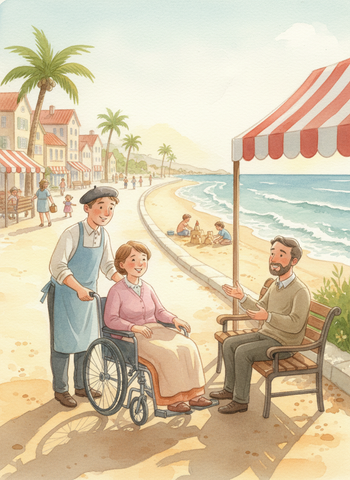
At a seaside resort, a painter silently wheels his crippled wife along the promenade while a friend on a nearby bench tells the reckless act that bound the two together forever.
Curving like a crescent moon, the little town of Etretat, with its white cliffs, its white, shingly beach and its blue sea, lay in the sunlight at high noon one July day. At either extremity of this crescent its two “gates,” the smaller to the right, the larger one at the left, stretched forth—one a dwarf and the other a colossal limb—into the water, and the bell tower, almost as tall as the cliff, wide below, narrowing at the top, raised its pointed summit to the sky.
अर्धचंद्र के आकार में मुड़ता हुआ, एटरेता का छोटा-सा शहर, अपनी सफेद चट्टानों, अपने सफेद, कंकड़ीले समुद्र-तट और अपने नीले समुद्र के साथ, जुलाई के एक दिन दोपहर के सूरज की रोशनी में पड़ा था। इस अर्धचंद्र के दोनों छोरों पर इसके दो “द्वार,” दाईं ओर छोटा और बाईं ओर बड़ा, फैले हुए थे—एक बौना और दूसरा एक विशालकाय अंग—पानी में, और घंटाघर, लगभग चट्टान जितना ऊँचा, नीचे चौड़ा, ऊपर की ओर संकरा होता हुआ, अपने नुकीले शिखर को आकाश की ओर उठाता था।
On the sands beside the water a crowd was seated watching the bathers. On the terrace of, the Casino another crowd, seated or walking, displayed beneath the brilliant sky a perfect flower patch of bright costumes, with red and blue parasols embroidered with large flowers in silk.
पानी के किनारे रेत पर एक भीड़ नहाने वालों को देखते हुए बैठी थी। कासीनो की छत पर एक और भीड़, बैठी या टहलती हुई, चमकते आकाश के नीचे चमकीले परिधानों का एक सम्पूर्ण फूलों जैसा दृश्य प्रस्तुत कर रही थी, जिसमें रेशम में बड़े फूलों से कढ़ाई किए हुए लाल और नीले छाते थे।
On the walk at the end of the terrace, other persons, the restful, quiet ones, were walking slowly, far from the dressy throng.
छत के अंत में टहलने के रास्ते पर, कुछ और लोग, वे शांत, चुपचाप रहने वाले, धीरे-धीरे टहल रहे थे, सजी-धजी भीड़ से दूर।
A young man, well known and celebrated as a painter, Jean Sumner, was walking with a dejected air beside a wheeled chair in which sat a young woman, his wife. A manservant was gently pushing the chair, and the crippled woman was gazing sadly at the brightness of the sky, the gladness of the day, and the happiness of others.
एक युवक, एक चित्रकार के रूप में प्रसिद्ध और सम्मानित, ज्याँ सम्नर, उदास भाव से एक पहियों वाली कुर्सी के पास चल रहा था जिसमें एक युवती बैठी थी, उसकी पत्नी। एक नौकर धीरे से कुर्सी को धकेल रहा था, और अपंग स्त्री उदासी से आकाश की चमक, दिन की प्रसन्नता, और दूसरों की खुशी को देख रही थी।
They did not speak. They did not look at each other.
वे बात नहीं कर रहे थे। वे एक-दूसरे की ओर नहीं देख रहे थे।
“Let us stop a while,” said the young woman.
“चलो थोड़ी देर रुक जाएँ,” युवती ने कहा।
They stopped, and the painter sat down on a camp stool that the servant handed him.
वे रुक गए, और चित्रकार उस कैम्प स्टूल पर बैठ गया जो नौकर ने उसे थमाया था।
Those who were passing behind the silent and motionless couple looked at them compassionately. A whole legend of devotion was attached to them. He had married her in spite of her infirmity, touched by her affection for him, it was said.
जो लोग उस मौन और निश्चल जोड़े के पीछे से गुज़र रहे थे वे उन्हें सहानुभूति से देखते थे। उनके साथ भक्ति की एक पूरी किंवदंती जुड़ी हुई थी। कहा जाता था कि उसने उससे उसकी विकलांगता के बावजूद विवाह किया था, उसके प्रति उसके स्नेह से प्रभावित होकर।
Not far from there, two young men were chatting, seated on a bench and looking out into the horizon.
वहाँ से ज़्यादा दूर नहीं, दो युवक एक बेंच पर बैठे बातचीत कर रहे थे और क्षितिज की ओर देख रहे थे।
“No, it is not true; I tell you that I am well acquainted with Jean Sumner.”
“नहीं, यह सच नहीं है; मैं तुम्हें बताता हूँ कि मैं ज्याँ सम्नर को अच्छी तरह जानता हूँ।”
“But then, why did he marry her? For she was a cripple when she married, was she not?”
“पर फिर, उसने उससे विवाह क्यों किया? क्योंकि जब उसने विवाह किया था तब वह अपंग थी न?”
“Just so. He married her—he married her—just as every one marries, parbleu! because he was an idiot!”
“बिल्कुल सही। उसने उससे विवाह किया—उसने उससे विवाह किया—जैसे हर कोई विवाह करता है, परब्ल्यू! क्योंकि वह मूर्ख था!”
“But why?”
“पर क्यों?”
“But why—but why, my friend? There is no why. People do stupid things just because they do stupid things. And, besides, you know very well that painters make a specialty of foolish marriages. They almost always marry models, former sweethearts, in fact, women of doubtful reputation, frequently. Why do they do this? Who can say? One would suppose that constant association with the general run of models would disgust them forever with that class of women. Not at all. After having posed them they marry them. Read that little book, so true, so cruel and so beautiful, by Alphonse Daudet: 'Artists' Wives.'
“पर क्यों—पर क्यों, मेरे दोस्त? कोई क्यों नहीं है। लोग मूर्खतापूर्ण काम इसलिए करते हैं क्योंकि वे मूर्खतापूर्ण काम करते हैं। और, इसके अलावा, तुम अच्छी तरह जानते हो कि चित्रकार मूर्खतापूर्ण विवाहों में विशेषज्ञ होते हैं। वे लगभग हमेशा मॉडलों से विवाह करते हैं, दरअसल पूर्व प्रेमिकाओं से, अक्सर संदिग्ध प्रतिष्ठा वाली महिलाओं से। वे ऐसा क्यों करते हैं? कौन कह सकता है? कोई सोचेगा कि सामान्य मॉडलों के साथ निरंतर संगति उन्हें उस वर्ग की महिलाओं से हमेशा के लिए घृणा दिला देगी। बिल्कुल नहीं। उन्हें पोज़ करवाने के बाद वे उनसे विवाह कर लेते हैं। अल्फोंस दोदे की वह छोटी सी किताब पढ़ो, इतनी सच्ची, इतनी क्रूर और इतनी सुंदर: 'कलाकारों की पत्नियाँ।'
“In the case of the couple you see over there the accident occurred in a special and terrible manner. The little woman played a frightful comedy, or, rather, tragedy. She risked all to win all. Was she sincere? Did she love Jean? Shall we ever know? Who is able to determine precisely how much is put on and how much is real in the actions of a woman? They are always sincere in an eternal mobility of impressions. They are furious, criminal, devoted, admirable and base in obedience to intangible emotions.
“जिस जोड़े को तुम वहाँ देखते हो उसके मामले में यह दुर्घटना एक विशेष और भयानक तरीके से हुई। उस छोटी स्त्री ने एक भयावह प्रहसन खेला, या यूँ कहें, एक त्रासदी। उसने सब कुछ जीतने के लिए सब कुछ दांव पर लगा दिया। क्या वह ईमानदार थी? क्या वह ज्याँ से प्रेम करती थी? क्या हम कभी जान पाएँगे? कौन ठीक-ठीक तय कर सकता है कि किसी स्त्री के कार्यों में कितना बनावटी है और कितना वास्तविक? वे प्रभावों की एक शाश्वत चंचलता में हमेशा ईमानदार होती हैं। वे अस्पष्ट भावनाओं के आदेश पर उग्र, अपराधी, समर्पित, प्रशंसनीय और नीच होती हैं।
“They tell lies incessantly without intention, without knowing or understanding why, and in spite of it all are absolutely frank in their feelings and sentiments, which they display by violent, unexpected, incomprehensible, foolish resolutions which overthrow our arguments, our customary poise and all our selfish plans. The unforeseenness and suddenness of their determinations will always render them undecipherable enigmas as far as we are concerned. We continually ask ourselves:
“वे बिना किसी इरादे के, बिना जाने या समझे कि क्यों, लगातार झूठ बोलती हैं, और इस सबके बावजूद अपनी भावनाओं और संवेदनाओं में पूरी तरह स्पष्टवादी होती हैं, जिन्हें वे हिंसक, अप्रत्याशित, समझ से परे, मूर्खतापूर्ण संकल्पों के द्वारा प्रदर्शित करती हैं जो हमारे तर्कों, हमारे अभ्यस्त संयम और हमारी सारी स्वार्थी योजनाओं को उलट देते हैं। उनके निर्णयों की अप्रत्याशितता और अचानकता उन्हें हमेशा हमारे लिए अनबूझी पहेलियाँ बना देगी। हम लगातार खुद से पूछते रहते हैं:
“'Are they sincere? Are they pretending?'
“'क्या वे ईमानदार हैं? क्या वे दिखावा कर रही हैं?'
“But, my friend, they are sincere and insincere at one and the same time, because it is their nature to be extremists in both and to be neither one nor the other.
“पर, मेरे दोस्त, वे एक ही समय में ईमानदार और बेईमान दोनों होती हैं, क्योंकि यह उनकी प्रकृति है कि दोनों में चरम पर हों और साथ ही न तो एक हों न दूसरी।
“See the methods that even the best of them employ to get what they desire. They are complex and simple, these methods. So complex that we can never guess at them beforehand, and so simple that after having been victimized we cannot help being astonished and exclaiming: 'What! Did she make a fool of me so easily as that?'
“उन तरीकों को देखो जो उनमें से सबसे अच्छी भी वह पाने के लिए अपनाती हैं जो वे चाहती हैं। ये तरीके जटिल भी होते हैं और सरल भी। इतने जटिल कि हम कभी पहले से उनका अंदाज़ा नहीं लगा सकते, और इतने सरल कि शिकार बन जाने के बाद हम चकित होने और यह कहने से खुद को रोक नहीं पाते: 'क्या! उसने मुझे इतनी आसानी से मूर्ख बना दिया?'
“And they always succeed, old man, especially when it is a question of getting married.
“और वे हमेशा सफल होती हैं, दोस्त, खासकर जब बात विवाह की हो।
“But this is Sumner's story:
“पर यह है सम्नर की कहानी:
“The little woman was a model, of course. She posed for him. She was pretty, very stylish-looking, and had a divine figure, it seems. He fancied that he loved her with his whole soul. That is another strange thing. As soon as one likes a woman one sincerely believes that they could not get along without her for the rest of their life.
“वह छोटी स्त्री स्वाभाविक रूप से एक मॉडल थी। वह उसके लिए पोज़ देती थी। वह सुंदर थी, बहुत फैशनेबल दिखने वाली, और उसका एक दिव्य कद-काठी थी, ऐसा लगता है। उसने सोचा कि वह उसे अपनी पूरी आत्मा से प्रेम करता है। यह एक और अजीब बात है। जैसे ही कोई किसी स्त्री को पसंद करने लगता है वह ईमानदारी से यह मानने लगता है कि वे बाकी की ज़िंदगी उसके बिना नहीं बिता सकते।
“One knows that one has felt the same way before and that disgust invariably succeeded gratification; that in order to pass one's existence side by side with another there must be not a brutal, physical passion which soon dies out, but a sympathy of soul, temperament and temper. One should know how to determine in the enchantment to which one is subjected whether it proceeds from the physical, from a certain sensuous intoxication, or from a deep spiritual charm.
“कोई जानता है कि उसने पहले भी यही महसूस किया है और यह कि तृप्ति के बाद हमेशा विरक्ति आती है; कि किसी के साथ अपना जीवन बिताने के लिए एक क्रूर, शारीरिक जुनून नहीं होना चाहिए जो जल्दी ही समाप्त हो जाता है, बल्कि आत्मा, स्वभाव और मिज़ाज का एक तालमेल होना चाहिए। किसी को यह जान लेना चाहिए कि जिस मोहजाल के अधीन वह है उसमें यह निर्धारित करना चाहिए कि वह शारीरिक से, एक निश्चित इंद्रिय-नशे से, या एक गहरे आध्यात्मिक आकर्षण से उपजता है।
“Well, he believed himself in love; he made her no end of promises of fidelity, and was devoted to her.
“खैर, उसने विश्वास कर लिया कि वह प्रेम में है; उसने उससे वफादारी के अनगिनत वादे किए, और उसके प्रति समर्पित रहा।
“She was really attractive, gifted with that fashionable flippancy that little Parisians so readily affect. She chattered, babbled, made foolish remarks that sounded witty from the manner in which they were uttered. She used graceful gesture's which were calculated to attract a painter's eye. When she raised her arms, when she bent over, when she got into a carriage, when she held out her hand to you, her gestures were perfect and appropriate.
“वह वाकई आकर्षक थी, उस फैशनेबल चंचलता से युक्त जो छोटी पेरिसवासियाँ इतनी सहजता से अपनाती हैं। वह बातें करती थी, बड़बड़ाती थी, ऐसी मूर्खतापूर्ण टिप्पणियाँ करती थी जो उनके कहे जाने के ढंग से बुद्धिमानीपूर्ण लगती थीं। वह ऐसे शालीन इशारों का इस्तेमाल करती थी जो एक चित्रकार की आँख को आकर्षित करने के लिए गणना किए गए थे। जब वह अपनी बाहें उठाती, जब वह झुकती, जब वह गाड़ी में बैठती, जब वह अपना हाथ तुम्हारी ओर बढ़ाती, उसके इशारे संपूर्ण और उचित होते थे।
“For three months Jean never noticed that, in reality, she was like all other models.
“तीन महीने तक ज्याँ ने कभी यह नहीं देखा कि, वास्तव में, वह बाकी सभी मॉडलों की तरह ही थी।
“He rented a little house for her for the summer at Andresy.
“उसने आँद्रेसी में उसके लिए गर्मियों के लिए एक छोटा घर किराए पर लिया।
“I was there one evening when for the first time doubts came into my friend's mind.
“मैं वहाँ एक शाम को था जब पहली बार मेरे दोस्त के मन में संदेह आया।
“As it was a beautiful evening we thought we would take a stroll along the bank of the river. The moon poured a flood of light on the trembling water, scattering yellow gleams along its ripples in the currents and all along the course of the wide, slow river.
“चूँकि यह एक सुंदर शाम थी हमने सोचा कि हम नदी के किनारे टहलेंगे। चाँद कांपते पानी पर रोशनी की एक बाढ़ उड़ेल रहा था, अपनी लहरों के धाराओं में और चौड़ी, धीमी नदी के पूरे मार्ग में पीली किरणें बिखेरते हुए।
“We strolled along the bank, a little enthused by that vague exaltation that these dreamy evenings produce in us. We would have liked to undertake some wonderful task, to love some unknown, deliciously poetic being. We felt ourselves vibrating with raptures, longings, strange aspirations. And we were silent, our beings pervaded by the serene and living coolness of the beautiful night, the coolness of the moonlight, which seemed to penetrate one's body, permeate it, soothe one's spirit, fill it with fragrance and steep it in happiness.
“हम किनारे-किनारे टहलते रहे, इन स्वप्निल शामों के हमारे भीतर उत्पन्न उस अस्पष्ट उत्तेजना से थोड़े उत्साहित होकर। हमें कोई अद्भुत कार्य करने का, किसी अज्ञात, स्वादिष्ट रूप से काव्यात्मक प्राणी से प्रेम करने का मन होता। हम अपने भीतर आनंद, लालसाओं, अजीब आकांक्षाओं से गूंजते हुए महसूस कर रहे थे। और हम चुप थे, हमारा अस्तित्व सुंदर रात की शांत और जीवंत ठंडक से व्याप्त था, चाँदनी की ठंडक, जो किसी के शरीर में प्रवेश करती हुई, उसमें व्याप्त होती हुई, आत्मा को सुकून देती हुई, उसे सुगंध से भर देती हुई और उसे खुशी में डुबो देती हुई प्रतीत होती थी।
“Suddenly Josephine (that is her name) uttered an exclamation:
“अचानक जोसेफीन (यही उसका नाम है) एक विस्मयादिबोधक बोली:
“'Oh, did you see the big fish that jumped, over there?'
“'अरे, तुमने वह बड़ी मछली देखी जो उछली, वहाँ?'
“He replied without looking, without thinking:
“उसने बिना देखे, बिना सोचे उत्तर दिया:
“'Yes, dear.'
“'हाँ, प्रिय।'
“She was angry.
“वह नाराज़ हो गई।
“'No, you did not see it, for your back was turned.'
“'नहीं, तुमने नहीं देखा, क्योंकि तुम्हारी पीठ मुड़ी हुई थी।'
“He smiled.
“वह मुस्कुराया।
“'Yes, that's true. It is so delightful that I am not thinking of anything.'
“'हाँ, यह सच है। यह इतना आनंददायक है कि मैं किसी चीज़ के बारे में सोच ही नहीं रहा।'
“She was silent, but at the end of a minute she felt as if she must say something and asked:
“वह चुप रही, पर एक मिनट के अंत में उसे लगा कि उसे कुछ कहना चाहिए और उसने पूछा:
“'Are you going to Paris to-morrow?'
“'क्या तुम कल पेरिस जा रहे हो?'
“'I do not know,' he replied.
“'मुझे नहीं पता,' उसने उत्तर दिया।
“She was annoyed again.
“वह फिर से नाराज़ हो गई।
“'Do you think it is very amusing to walk along without speaking? People talk when they are not stupid.'
“'क्या तुम्हें लगता है कि बिना बोले चलना बहुत मज़ेदार है? लोग तभी बात करते हैं जब वे मूर्ख नहीं होते।'
“He did not reply. Then, feeling with her woman's instinct that she was going to make him angry, she began to sing a popular air that had harassed our ears and our minds for two years:
“उसने उत्तर नहीं दिया। फिर, अपनी स्त्री-सुलभ अंतर्ज्ञान से महसूस करते हुए कि वह उसे नाराज़ कर देगी, वह वह लोकप्रिय गीत गाने लगी जिसने दो वर्षों तक हमारे कानों और दिमागों को परेशान किया था:
“'Je regardais en fair.'
“'जे रगार्दे आँ फेर।'
“He murmured:
“उसने बुदबुदाया:
“'Please keep quiet.'
“'कृपया चुप रहो।'
“She replied angrily:
“उसने गुस्से से उत्तर दिया:
“'Why do you wish me to keep quiet?'
“'तुम मुझसे चुप रहने के लिए क्यों कहते हो?'
“'You spoil the landscape for us!' he said.
“'तुम हमारे लिए दृश्य बिगाड़ रही हो!' उसने कहा।
“Then followed a scene, a hateful, idiotic scene, with unexpected reproaches, unsuitable recriminations, then tears. Nothing was left unsaid. They went back to the house. He had allowed her to talk without replying, enervated by the beauty of the scene and dumfounded by this storm of abuse.
“फिर एक दृश्य उत्पन्न हुआ, एक घृणित, मूर्खतापूर्ण दृश्य, अप्रत्याशित आरोपों, अनुचित उलाहनों के साथ, फिर आँसू। कुछ भी अनकहा नहीं रहा। वे घर वापस लौट गए। उसने उसे बिना उत्तर दिए बोलने दिया था, दृश्य की सुंदरता से शिथिल होकर और इस दुर्व्यवहार के तूफान से स्तब्ध होकर।
“Three months later he strove wildly to free himself from those invincible and invisible bonds with which such a friendship chains our lives. She kept him under her influence, tyrannizing over him, making his life a burden to him. They quarreled continually, vituperating and finally fighting each other.
“तीन महीने बाद उसने उन अजेय और अदृश्य बंधनों से खुद को मुक्त करने की भरसक कोशिश की जिनसे ऐसी मित्रता हमारे जीवन को जकड़ लेती है। वह उसे अपने प्रभाव में रखती थी, उस पर अत्याचार करती थी, उसके जीवन को उसके लिए बोझ बना देती थी। वे लगातार झगड़ते थे, एक-दूसरे को कोसते और अंततः एक-दूसरे से लड़ते थे।
“He wanted to break with her at any cost. He sold all his canvases, borrowed money from his friends, realizing twenty thousand francs (he was not well known then), and left them for her one morning with a note of farewell.
“वह किसी भी कीमत पर उससे नाता तोड़ना चाहता था। उसने अपने सारे कैनवस बेच दिए, अपने दोस्तों से पैसे उधार लिए, बीस हज़ार फ़्रैंक जुटाए (उस समय वह ज़्यादा प्रसिद्ध नहीं था), और एक सुबह उन्हें उसके लिए विदाई के एक पत्र के साथ छोड़ गया।
“He came and took refuge with me.
“वह आकर मेरे यहाँ शरण ली।
“About three o'clock that afternoon there was a ring at the bell. I went to the door. A woman sprang toward me, pushed me aside, came in and went into my atelier. It was she!
“उस दोपहर लगभग तीन बजे घंटी बजी। मैं दरवाज़े पर गया। एक स्त्री मेरी ओर उछली, मुझे धकेलकर एक ओर किया, अंदर आई और मेरे स्टूडियो में चली गई। वह वही थी!
“He had risen when he saw her coming.'
“उसने उसे आते देखकर उठ खड़ा हुआ था।
“She threw the envelope containing the banknotes at his feet with a truly noble gesture and said in a quick tone:
“उसने उस लिफाफे को जिसमें बैंकनोट थे उसके पैरों पर सच में एक भव्य भाव के साथ फेंक दिया और तेज़ स्वर में कहा:
“'There's your money. I don't want it!'
“'यह लो अपना पैसा। मुझे यह नहीं चाहिए!'
“She was very pale, trembling and ready undoubtedly to commit any folly. As for him, I saw him grow pale also, pale with rage and exasperation, ready also perhaps to commit any violence.
“वह बहुत पीली थी, काँप रही थी और निस्संदेह कोई भी मूर्खता करने को तैयार थी। जहाँ तक उसकी बात है, मैंने देखा कि वह भी पीला पड़ रहा था, क्रोध और चिड़चिड़ाहट से पीला, शायद वह भी कोई हिंसा करने को तैयार था।
“He asked:
“उसने पूछा:
“'What do you want?'
“'तुम क्या चाहती हो?'
“She replied:
“उसने उत्तर दिया:
“'I do not choose to be treated like a common woman. You implored me to accept you. I asked you for nothing. Keep me with you!'
“'मैं एक साधारण स्त्री की तरह व्यवहार किया जाना नहीं चाहती। तुमने मुझसे विनती की थी कि मैं तुम्हें स्वीकार करूँ। मैंने तुमसे कुछ नहीं माँगा। मुझे अपने साथ रखो!'
“He stamped his foot.
“उसने अपना पैर पटका।
“'No, that's a little too much! If you think you are going—'
“'नहीं, यह थोड़ा ज़्यादा है! अगर तुम सोचती हो कि तुम जा रही हो—'
“I had seized his arm.
“मैंने उसकी बांह पकड़ ली थी।
“'Keep still, Jean… Let me settle it.'
“'चुप रहो, ज्याँ… मुझे इसे सुलझाने दो।'
“I went toward her and quietly, little by little, I began to reason with her, exhausting all the arguments that are used under similar circumstances. She listened to me, motionless, with a fixed gaze, obstinate and silent.
“मैं उसकी ओर गया और शांति से, धीरे-धीरे, मैंने उससे तर्क करना शुरू किया, ऐसी परिस्थितियों में इस्तेमाल किए जाने वाले सारे तर्क समाप्त करते हुए। उसने मेरी बात सुनी, निश्चल, एक स्थिर दृष्टि के साथ, ज़िद्दी और चुप।
“Finally, not knowing what more to say, and seeing that there would be a scene, I thought of a last resort and said:
“अंततः, यह न जानते हुए कि और क्या कहूँ, और यह देखते हुए कि एक दृश्य बन जाएगा, मुझे एक अंतिम उपाय सूझा और मैंने कहा:
“'He loves you still, my dear, but his family want him to marry some one, and you understand—'
“'वह अब भी तुमसे प्रेम करता है, मेरी प्रिय, पर उसका परिवार चाहता है कि वह किसी और से विवाह करे, और तुम समझती हो—'
“She gave a start and exclaimed:
“वह चौंक गई और चिल्लाई:
“'Ah! Ah! Now I understand:
“'आह! आह! अब मैं समझी:
“And turning toward him, she said:
“और उसकी ओर मुड़कर, उसने कहा:
“'You are—you are going to get married?'
“'तुम—तुम विवाह करने वाले हो?'
“He replied decidedly, 'Yes.'
“उसने दृढ़ता से उत्तर दिया, 'हाँ।'
“She took a step forward.
“उसने एक कदम आगे बढ़ाया।
“'If you marry, I will kill myself! Do you hear?'
“'अगर तुम विवाह करते हो, तो मैं खुद को मार डालूँगी! सुन रहे हो?'
“He shrugged his shoulders and replied:
“उसने अपने कंधे उचकाए और उत्तर दिया:
“'Well, then kill yourself!'
“'ठीक है, तो खुद को मार डालो!'
“She stammered out, almost choking with her violent emotion:
“वह हकलाकर बोली, अपनी हिंसक भावना से लगभग दम घुटते हुए:
“'What do you say? What do you say? What do you say? Say it again!'
“'तुम क्या कहते हो? तुम क्या कहते हो? तुम क्या कहते हो? फिर से कहो!'
“He repeated:
“उसने दोहराया:
“'Well, then kill yourself if you like!'
“'ठीक है, तो अगर तुम चाहो तो खुद को मार डालो!'
“With her face almost livid, she replied:
“अपने चेहरे को लगभग नीला पड़ते हुए, उसने उत्तर दिया:
“'Do not dare me! I will throw myself from the window!'
“'मुझे चुनौती मत दो! मैं खुद को खिड़की से फेंक दूँगी!'
“He began to laugh, walked toward the window, opened it, and bowing with the gesture of one who desires to let some one else precede him, he said:
“वह हँसने लगा, खिड़की की ओर चला, उसे खोला, और उस भाव से झुकते हुए जो कोई किसी और को अपने से पहले जाने देना चाहता है, उसने कहा:
“'This is the way. After you!'
“'यह रहा रास्ता। तुम्हारे बाद!'
“She looked at him for a second with terrible, wild, staring eyes. Then, taking a run as if she were going to jump a hedge in the country, she rushed past me and past him, jumped over the sill and disappeared.
“उसने उसे एक क्षण के लिए भयानक, जंगली, स्थिर आँखों से देखा। फिर, ऐसे दौड़ लगाते हुए जैसे वह ग्रामीण इलाके में किसी बाड़ को फांदने जा रही हो, वह मेरे और उसके पास से दौड़ते हुए निकल गई, चौखट पर से कूद गई और गायब हो गई।
“I shall never forget the impression made on me by that open window after I had seen that body pass through it to fall to the ground. It appeared to me in a second to be as large as the heavens and as hollow as space. And I drew back instinctively, not daring to look at it, as though I feared I might fall out myself.
“मैं उस खुली खिड़की से मुझ पर पड़े उस प्रभाव को कभी नहीं भूलूँगा, उस शरीर को उसमें से गुज़रकर ज़मीन पर गिरते देखने के बाद। यह मुझे एक क्षण में आकाश जितना विशाल और अंतरिक्ष जितना खोखला प्रतीत हुआ। और मैं सहज ही पीछे हट गया, उसे देखने का साहस न करते हुए, मानो मुझे डर हो कि मैं खुद ही गिर जाऊँगा।
“Jean, dumfounded, stood motionless.
“ज्याँ, स्तब्ध, निश्चल खड़ा रहा।
“They brought the poor girl in with both legs broken. She will never walk again.
“वे बेचारी लड़की को दोनों पैर टूटे हुए अंदर लाए। वह फिर कभी नहीं चल पाएगी।
“Jean, wild with remorse and also possibly touched with gratitude, made up his mind to marry her.
“ज्याँ, पछतावे से व्याकुल और शायद कृतज्ञता से भी छू गया, उसने उससे विवाह करने का निश्चय कर लिया।
“There you have it, old man.”
“यह रही तुम्हें कहानी, दोस्त।”
It was growing dusk. The young woman felt chilly and wanted to go home, and the servant wheeled the invalid chair in the direction of the village. The painter walked beside his wife, neither of them having exchanged a word for an hour.
शाम ढल रही थी। युवती को ठंड महसूस हुई और वह घर जाना चाहती थी, और नौकर ने उस अपंग-कुर्सी को गाँव की दिशा में धकेलना शुरू किया। चित्रकार अपनी पत्नी के साथ चला, दोनों में से किसी ने भी एक घंटे से कोई शब्द नहीं कहा था।
This story appeared in Le Gaulois, December 17, 1883.
This story appeared in Le Gaulois, December 17, 1883.
