The Two Mules
Una historia gratuita en inglés de nivel B2 para estudiantes, para leer en línea en 7 idiomas, con opción de escucharla en la app gratuita Storyteller.
A proud mule hauling the tax silver looks down on his humble companion carrying only oats — until robbers appear on the road and only one mule's burden becomes a curse.
¡Ese fue el avance! Escucha la historia completa en la app gratuita Storyteller. Descargar la app
El audio no está disponible en este momento.
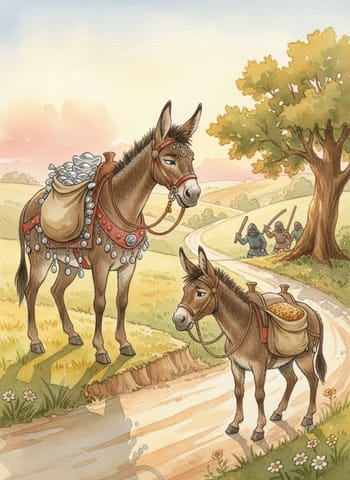
There were two heavily-laden mules making a journey together. One was carrying oats and the other bore a parcel of silver money collected from the people as a tax upon salt. This, we learn, was a tax which produced much money for the government, but it bore very hard upon the people, who revolted many times against it.
Había dos mulas muy cargadas que viajaban juntas. Una llevaba avena y la otra portaba un paquete de monedas de plata recaudadas del pueblo como impuesto sobre la sal. Este impuesto, según sabemos, producía mucho dinero para el gobierno, pero pesaba mucho sobre el pueblo, que se rebeló contra él en muchas ocasiones.
The mule that carried the silver was very proud of his burden, and would not have been relieved of it if he could. As he stepped out he took care that the bells upon his harness should jingle well as became a mule of so much importance.
La mula que llevaba la plata estaba muy orgullosa de su carga, y no habría querido que se la aliviaran aunque hubiera podido. Al caminar, se cuidaba de que las campanillas de sus arreos tintinearan bien, como correspondía a una mula de tanta importancia.
Suddenly a band of robbers burst into the road, pounced upon the treasure mule, seized it by the bridle, and stopped it short. Struggling to defend itself the unhappy creature groaned and sighed as it cried: "Is this then the fate that has been in store for me: that I must fall and perish whilst my fellow traveller escapes free from danger?"
De repente, una banda de ladrones irrumpió en el camino, se abalanzó sobre la mula del tesoro, la agarró por la brida y la detuvo en seco. Luchando por defenderse, la infeliz criatura gimió y suspiró mientras exclamaba: «¿Es este entonces el destino que me estaba reservado: que deba caer y perecer mientras mi compañera de viaje escapa libre de peligro?».
"My friend," exclaimed the mule that carried only the oats, and whom the robbers had not troubled about, "it is not always good to have exalted work to do. Had you been like me, a mere slave to a miller, you would not have been in such a bad way now!"
«Amiga mía», exclamó la mula que solo llevaba avena, y a la que los ladrones no se habían molestado en tocar, «no siempre es bueno tener un trabajo elevado que hacer. Si hubieras sido como yo, una simple esclava de un molinero, ¡no estarías ahora en tan mal trance!».