The Tell-Tale Heart
A free C1-level English story for language learners, readable online in 7 languages, with an option to listen via the free Storyteller app.
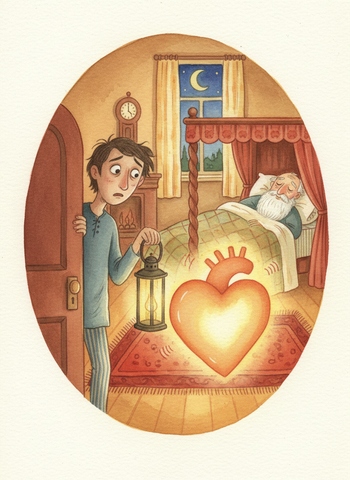
A murderer swears he isn't mad, describing in chilling detail how he stalked an old man in the night — and what finally gives him away.
True!—nervous—very, very dreadfully nervous I had been and am; but why will you say that I am mad? The disease had sharpened my senses—not destroyed—not dulled them. Above all was the sense of hearing acute. I heard all things in the heaven and in the earth. I heard many things in hell. How, then, am I mad? Hearken! and observe how healthily—how calmly I can tell you the whole story.
¡Es cierto!—nervioso—muy, muy terriblemente nervioso he estado y estoy; pero ¿por qué dirán que estoy loco? La enfermedad había agudizado mis sentidos—no los había destruido—no los había embotado. Sobre todo el sentido del oído era agudo. Oía todas las cosas en el cielo y en la tierra. Oía muchas cosas en el infierno. ¿Cómo, entonces, puedo estar loco? ¡Escuchad! y observad con qué salud—con qué calma puedo contaros toda la historia.
It is impossible to say how first the idea entered my brain; but once conceived, it haunted me day and night. Object there was none. Passion there was none. I loved the old man. He had never wronged me. He had never given me insult. For his gold I had no desire. I think it was his eye! yes, it was this! He had the eye of a vulture—a pale blue eye, with a film over it. Whenever it fell upon me, my blood ran cold; and so by degrees—very gradually—I made up my mind to take the life of the old man, and thus rid myself of the eye forever.
Es imposible decir cómo entró por primera vez la idea en mi cerebro; pero una vez concebida, me perseguía día y noche. Objeto no había ninguno. Pasión no había ninguna. Yo amaba al anciano. Él nunca me había hecho mal. Nunca me había insultado. Por su oro no sentía deseo alguno. ¡Creo que era su ojo! ¡Sí, era eso! Tenía el ojo de un buitre—un ojo azul pálido, con una película sobre él. Cada vez que caía sobre mí, la sangre se me helaba; y así, poco a poco—muy gradualmente—me decidí a quitarle la vida al anciano, y así librarme de aquel ojo para siempre.
Now this is the point. You fancy me mad. Madmen know nothing. But you should have seen me. You should have seen how wisely I proceeded—with what caution—with what foresight—with what dissimulation I went to work! I was never kinder to the old man than during the whole week before I killed him. And every night, about midnight, I turned the latch of his door and opened it—oh, so gently! And then, when I had made an opening sufficient for my head, I put in a dark lantern, all closed, closed, that no light shone out, and then I thrust in my head. Oh, you would have laughed to see how cunningly I thrust it in! I moved it slowly—very, very slowly, so that I might not disturb the old man’s sleep. It took me an hour to place my whole head within the opening so far that I could see him as he lay upon his bed. Ha!—would a madman have been so wise as this? And then, when my head was well in the room, I undid the lantern cautiously—oh, so cautiously—cautiously (for the hinges creaked)—I undid it just so much that a single thin ray fell upon the vulture eye. And this I did for seven long nights—every night just at midnight—but I found the eye always closed; and so it was impossible to do the work; for it was not the old man who vexed me, but his Evil Eye. And every morning, when the day broke, I went boldly into the chamber, and spoke courageously to him, calling him by name in a hearty tone, and inquiring how he has passed the night. So you see he would have been a very profound old man, indeed, to suspect that every night, just at twelve, I looked in upon him while he slept.
Ahora bien, este es el punto. Vosotros me imagináis loco. Los locos no saben nada. Pero deberíais haberme visto. Deberíais haber visto con qué sabiduría procedí—con qué cautela—con qué previsión—con qué disimulo me puse a la obra. Nunca fui más amable con el anciano que durante toda la semana antes de matarlo. Y cada noche, hacia la medianoche, giraba el picaporte de su puerta y la abría—¡oh, con qué suavidad! Y luego, cuando había hecho una abertura suficiente para mi cabeza, introducía una linterna sorda, toda cerrada, cerrada, para que ninguna luz se filtrara, y entonces asomaba la cabeza. Oh, os habríais reído de ver con qué astucia la introducía. La movía despacio—muy, muy despacio, para no perturbar el sueño del anciano. Me llevaba una hora colocar toda mi cabeza dentro de la abertura lo suficiente como para verlo tendido en su cama. ¡Ja!—¿habría sido un loco tan sabio como esto? Y entonces, cuando mi cabeza estaba bien dentro de la habitación, abría la linterna con cautela—oh, con qué cautela—con cautela (pues las bisagras crujían)—la abría solo lo suficiente para que un único y delgado rayo cayera sobre el ojo de buitre. Y esto lo hice durante siete largas noches—cada noche justo a medianoche—pero encontraba el ojo siempre cerrado; y así era imposible hacer el trabajo; pues no era el anciano quien me atormentaba, sino su Ojo Maligno. Y cada mañana, al romper el día, entraba con audacia en la alcoba, y le hablaba con valentía, llamándolo por su nombre en tono cordial, y preguntándole cómo había pasado la noche. Así que veréis que habría sido en verdad un anciano muy perspicaz para sospechar que cada noche, justo a las doce, yo lo observaba mientras dormía.
Upon the eighth night I was more than usually cautious in opening the door. A watch’s minute hand moves more quickly than did mine. Never before that night had I felt the extent of my own powers—of my sagacity. I could scarcely contain my feelings of triumph. To think that there I was, opening the door, little by little, and he not even to dream of my secret deeds or thoughts. I fairly chuckled at the idea; and perhaps he heard me; for he moved on the bed suddenly, as if startled. Now you may think that I drew back—but no. His room was as black as pitch with the thick darkness, (for the shutters were close fastened, through fear of robbers,) and so I knew that he could not see the opening of the door, and I kept pushing it on steadily, steadily.
En la octava noche fui más cauteloso que de costumbre al abrir la puerta. El minutero de un reloj se mueve más deprisa de lo que se movía el mío. Nunca antes de aquella noche había sentido la extensión de mis propias facultades—de mi sagacidad. Apenas podía contener mis sentimientos de triunfo. Pensar que allí estaba yo, abriendo la puerta, poco a poco, y él ni siquiera soñando con mis actos o pensamientos secretos. Casi me reí entre dientes de solo pensarlo; y quizás me oyó; pues se movió de pronto en la cama, como sobresaltado. Ahora podríais pensar que retrocedí—pero no. Su habitación estaba negra como la pez por la espesa oscuridad (pues los postigos estaban bien cerrados, por miedo a los ladrones), y así supe que él no podía ver la abertura de la puerta, y seguí empujándola con firmeza, con firmeza.
I had my head in, and was about to open the lantern, when my thumb slipped upon the tin fastening, and the old man sprang up in bed, crying out—“Who’s there?”
Tenía la cabeza dentro, y estaba a punto de abrir la linterna, cuando mi pulgar resbaló sobre el cierre de hojalata, y el anciano se incorporó de golpe en la cama, gritando—«¿Quién anda ahí?»
I kept quite still and said nothing. For a whole hour I did not move a muscle, and in the meantime I did not hear him lie down. He was still sitting up in the bed listening;—just as I have done, night after night, hearkening to the death watches in the wall.
Me quedé muy quieto y no dije nada. Durante toda una hora no moví un solo músculo, y mientras tanto no lo oí volver a acostarse. Seguía sentado en la cama, escuchando—tal como yo he hecho, noche tras noche, escuchando a las carcomas de la muerte en la pared.
Presently I heard a slight groan, and I knew it was the groan of mortal terror. It was not a groan of pain or of grief—oh, no!—it was the low stifled sound that arises from the bottom of the soul when overcharged with awe. I knew the sound well. Many a night, just at midnight, when all the world slept, it has welled up from my own bosom, deepening, with its dreadful echo, the terrors that distracted me. I say I knew it well. I knew what the old man felt, and pitied him, although I chuckled at heart. I knew that he had been lying awake ever since the first slight noise, when he had turned in the bed. His fears had been ever since growing upon him. He had been trying to fancy them causeless, but could not. He had been saying to himself—“It is nothing but the wind in the chimney—it is only a mouse crossing the floor,” or “It is merely a cricket which has made a single chirp.” Yes, he had been trying to comfort himself with these suppositions: but he had found all in vain. All in vain; because Death, in approaching him had stalked with his black shadow before him, and enveloped the victim. And it was the mournful influence of the unperceived shadow that caused him to feel—although he neither saw nor heard—to feel the presence of my head within the room.
Al poco rato oí un ligero gemido, y supe que era el gemido del terror mortal. No era un gemido de dolor ni de pena—¡oh, no!—era el sonido bajo y ahogado que surge desde el fondo del alma cuando está sobrecargada de espanto. Conocía bien ese sonido. Muchas noches, justo a medianoche, cuando todo el mundo dormía, había brotado de mi propio pecho, ahondando, con su terrible eco, los terrores que me atormentaban. Digo que lo conocía bien. Sabía lo que el anciano sentía, y lo compadecía, aunque me reía por dentro. Sabía que él había permanecido despierto desde el primer ruido leve, cuando se había vuelto en la cama. Sus temores habían ido creciendo sobre él desde entonces. Había estado tratando de imaginarlos sin causa, pero no podía. Se había estado diciendo a sí mismo—«No es más que el viento en la chimenea—no es más que un ratón cruzando el suelo»—o «No es más que un grillo que ha dado un solo chirrido». Sí, había estado tratando de consolarse con estas suposiciones, pero había encontrado todo en vano. Todo en vano; porque la Muerte, al acercarse a él, había avanzado con su sombra negra por delante, y había envuelto a la víctima. Y era la lúgubre influencia de la sombra no percibida la que le hacía sentir—aunque no veía ni oía—sentir la presencia de mi cabeza dentro de la habitación.
When I had waited a long time, very patiently, without hearing him lie down, I resolved to open a little—a very, very little crevice in the lantern. So I opened it—you cannot imagine how stealthily, stealthily—until, at length a single dim ray, like the thread of the spider, shot from out the crevice and fell full upon the vulture eye.
Cuando hube esperado largo tiempo, con mucha paciencia, sin oírlo acostarse, resolví abrir un poco—una rendija muy, muy pequeña en la linterna. Así que la abrí—no podéis imaginar con cuánto sigilo, con cuánto sigilo—hasta que, al fin, un único rayo tenue, como el hilo de una araña, salió disparado de la rendija y cayó de lleno sobre el ojo de buitre.
It was open—wide, wide open—and I grew furious as I gazed upon it. I saw it with perfect distinctness—all a dull blue, with a hideous veil over it that chilled the very marrow in my bones; but I could see nothing else of the old man’s face or person: for I had directed the ray as if by instinct, precisely upon the damned spot.
Estaba abierto—de par en par, de par en par—y me enfurecí al contemplarlo. Lo veía con perfecta claridad—todo de un azul apagado, con un velo horrible sobre él que me helaba hasta la médula de los huesos; pero no podía ver nada más del rostro ni de la persona del anciano; pues había dirigido el rayo como por instinto, precisamente sobre el maldito punto.
And have I not told you that what you mistake for madness is but over-acuteness of the sense?—now, I say, there came to my ears a low, dull, quick sound, such as a watch makes when enveloped in cotton. I knew that sound well, too. It was the beating of the old man’s heart. It increased my fury, as the beating of a drum stimulates the soldier into courage.
¿Y no os he dicho que lo que vosotros tomáis por locura no es más que una agudeza excesiva de los sentidos?—ahora, digo, llegó a mis oídos un sonido bajo, sordo y rápido, como el que hace un reloj envuelto en algodón. Ese sonido también lo conocía bien. Era el latido del corazón del anciano. Aumentó mi furia, así como el redoble de un tambor estimula al soldado a la valentía.
But even yet I refrained and kept still. I scarcely breathed. I held the lantern motionless. I tried how steadily I could maintain the ray upon the eye. Meantime the hellish tattoo of the heart increased. It grew quicker and quicker, and louder and louder every instant. The old man’s terror must have been extreme! It grew louder, I say, louder every moment!—do you mark me well? I have told you that I am nervous: so I am. And now at the dead hour of the night, amid the dreadful silence of that old house, so strange a noise as this excited me to uncontrollable terror. Yet, for some minutes longer I refrained and stood still. But the beating grew louder, louder! I thought the heart must burst. And now a new anxiety seized me—the sound would be heard by a neighbour! The old man’s hour had come! With a loud yell, I threw open the lantern and leaped into the room. He shrieked once—once only. In an instant I dragged him to the floor, and pulled the heavy bed over him. I then smiled gaily, to find the deed so far done. But, for many minutes, the heart beat on with a muffled sound. This, however, did not vex me; it would not be heard through the wall. At length it ceased. The old man was dead. I removed the bed and examined the corpse. Yes, he was stone, stone dead. I placed my hand upon the heart and held it there many minutes. There was no pulsation. He was stone dead. His eye would trouble me no more.
Pero aun así me contuve y me mantuve quieto. Apenas respiraba. Sostenía la linterna inmóvil. Probaba con qué firmeza podía mantener el rayo sobre el ojo. Mientras tanto el infernal redoble del corazón aumentaba. Se hacía cada vez más rápido, y cada vez más fuerte en cada instante. ¡El terror del anciano debía de ser extremo! Se hacía más fuerte, digo, más fuerte a cada momento—¿me prestáis bien atención? Os he dicho que soy nervioso: y lo soy. Y ahora en la hora muerta de la noche, en medio del terrible silencio de aquella vieja casa, un ruido tan extraño como este me excitó hasta un terror incontrolable. Sin embargo, durante algunos minutos más me contuve y permanecí quieto. ¡Pero el latido se hacía más fuerte, más fuerte! Pensé que el corazón iba a estallar. Y ahora una nueva angustia se apoderó de mí—¡el sonido lo oiría algún vecino! ¡La hora del anciano había llegado! Con un grito fuerte, abrí de golpe la linterna y salté dentro de la habitación. Él chilló una vez—solo una vez. En un instante lo arrastré al suelo, y le eché encima la pesada cama. Entonces sonreí alegremente, al ver el hecho ya casi consumado. Pero, durante muchos minutos, el corazón siguió latiendo con un sonido amortiguado. Esto, sin embargo, no me inquietó; no se oiría a través de la pared. Al fin cesó. El anciano estaba muerto. Retiré la cama y examiné el cadáver. Sí, estaba rígido, completamente rígido y muerto. Puse mi mano sobre el corazón y la mantuve allí muchos minutos. No había pulsación alguna. Estaba completamente muerto. Su ojo ya no me molestaría más.
If still you think me mad, you will think so no longer when I describe the wise precautions I took for the concealment of the body. The night waned, and I worked hastily, but in silence. First of all I dismembered the corpse. I cut off the head and the arms and the legs.
Si aún me creéis loco, dejaréis de pensarlo cuando os describa las sabias precauciones que tomé para ocultar el cuerpo. La noche menguaba, y trabajé con premura, pero en silencio. Ante todo, desmembré el cadáver. Le corté la cabeza y los brazos y las piernas.
I then took up three planks from the flooring of the chamber, and deposited all between the scantlings. I then replaced the boards so cleverly, so cunningly, that no human eye—not even his—could have detected any thing wrong. There was nothing to wash out—no stain of any kind—no blood-spot whatever. I had been too wary for that. A tub had caught all—ha! ha!
Entonces levanté tres tablones del suelo de la alcoba, y deposité todo entre las viguetas. Luego coloqué de nuevo las tablas tan hábilmente, con tanta astucia, que ningún ojo humano—ni siquiera el suyo—habría podido detectar nada extraño. No había nada que limpiar—ninguna mancha de ningún tipo—ninguna gota de sangre en absoluto. Había sido demasiado precavido para eso. Una tina lo había recogido todo—¡ja, ja!
When I had made an end of these labors, it was four o’clock—still dark as midnight. As the bell sounded the hour, there came a knocking at the street door. I went down to open it with a light heart,—for what had I now to fear? There entered three men, who introduced themselves, with perfect suavity, as officers of the police. A shriek had been heard by a neighbour during the night; suspicion of foul play had been aroused; information had been lodged at the police office, and they (the officers) had been deputed to search the premises.
Cuando hube terminado estas labores, eran las cuatro de la madrugada—todavía oscuro como medianoche. Cuando la campana dio la hora, sonó un golpe en la puerta de la calle. Bajé a abrirla con el corazón ligero,—pues ¿qué tenía yo ahora que temer? Entraron tres hombres, que se presentaron, con perfecta cortesía, como agentes de la policía. Un vecino había oído un chillido durante la noche; se había despertado la sospecha de algo sospechoso; se había presentado una denuncia en la comisaría, y ellos (los agentes) habían sido comisionados para registrar el lugar.
I smiled,—for what had I to fear? I bade the gentlemen welcome. The shriek, I said, was my own in a dream. The old man, I mentioned, was absent in the country. I took my visitors all over the house. I bade them search—search well. I led them, at length, to his chamber. I showed them his treasures, secure, undisturbed. In the enthusiasm of my confidence, I brought chairs into the room, and desired them here to rest from their fatigues, while I myself, in the wild audacity of my perfect triumph, placed my own seat upon the very spot beneath which reposed the corpse of the victim.
Sonreí,—pues ¿qué tenía yo que temer? Di la bienvenida a los caballeros. El chillido, dije, había sido mío, en un sueño. El anciano, mencioné, estaba ausente en el campo. Llevé a mis visitantes por toda la casa. Les pedí que registraran—que registraran bien. Los conduje, por fin, hasta su alcoba. Les mostré sus tesoros, seguros, intactos. En el entusiasmo de mi confianza, traje sillas a la habitación, y les pedí que descansaran allí de sus fatigas, mientras yo mismo, en la audacia desenfrenada de mi triunfo perfecto, colocaba mi propio asiento justo sobre el lugar bajo el cual reposaba el cadáver de la víctima.
The officers were satisfied. My manner had convinced them. I was singularly at ease. They sat, and while I answered cheerily, they chatted of familiar things. But, ere long, I felt myself getting pale and wished them gone. My head ached, and I fancied a ringing in my ears: but still they sat and still chatted. The ringing became more distinct:—it continued and became more distinct: I talked more freely to get rid of the feeling: but it continued and gained definiteness—until, at length, I found that the noise was not within my ears.
Los agentes quedaron satisfechos. Mi actitud los había convencido. Yo estaba singularmente tranquilo. Se sentaron, y mientras yo respondía con alegría, ellos charlaban de asuntos corrientes. Pero, al poco tiempo, sentí que me ponía pálido y deseé que se marcharan. Me dolía la cabeza, e imaginé un zumbido en los oídos: pero ellos seguían sentados y seguían charlando. El zumbido se hizo más nítido:—continuó y se hizo más nítido: yo hablaba más animadamente para librarme de la sensación: pero continuaba y ganaba precisión—hasta que, por fin, descubrí que el ruido no estaba dentro de mis oídos.
No doubt I now grew _very_ pale;—but I talked more fluently, and with a heightened voice. Yet the sound increased—and what could I do? It was a low, dull, quick sound—much such a sound as a watch makes when enveloped in cotton. I gasped for breath—and yet the officers heard it not. I talked more quickly—more vehemently; but the noise steadily increased. I arose and argued about trifles, in a high key and with violent gesticulations; but the noise steadily increased. Why would they not be gone? I paced the floor to and fro with heavy strides, as if excited to fury by the observations of the men—but the noise steadily increased. Oh God! what could I do? I foamed—I raved—I swore! I swung the chair upon which I had been sitting, and grated it upon the boards, but the noise arose over all and continually increased. It grew louder—louder—louder! And still the men chatted pleasantly, and smiled. Was it possible they heard not? Almighty God!—no, no! They heard!—they suspected!—they knew!—they were making a mockery of my horror!—this I thought, and this I think. But anything was better than this agony! Anything was more tolerable than this derision! I could bear those hypocritical smiles no longer! I felt that I must scream or die! and now—again!—hark! louder! louder! louder! _louder!_
Sin duda entonces me puse _muy_ pálido;—pero hablaba con más soltura, y con voz más elevada. Sin embargo el sonido aumentaba—¿y qué podía yo hacer? Era un sonido bajo, sordo y rápido—muy parecido a un sonido que un reloj hace cuando está envuelto en algodón. Boqueé en busca de aire—y sin embargo los agentes no lo oían. Hablé más deprisa—más vehemente; pero el ruido aumentaba sin cesar. Me levanté y discutí sobre nimiedades, en tono agudo y con gesticulaciones violentas; pero el ruido aumentaba sin cesar. ¿Por qué no se marchaban? Recorrí el suelo de un lado a otro con pasos pesados, como excitado hasta la furia por las observaciones de aquellos hombres—pero el ruido aumentaba sin cesar. ¡Oh Dios! ¿qué podía hacer? ¡Eché espuma—deliré—blasfemé! Balanceé la silla en la que había estado sentado, y la arrastré rechinando sobre las tablas, pero el ruido se alzó sobre todo y aumentaba continuamente. Se hacía más fuerte—más fuerte—más fuerte! Y aun así los hombres charlaban plácidamente, y sonreían. ¿Era posible que no oyeran? ¡Dios Todopoderoso!—¡no, no! ¡Oían!—¡sospechaban!—¡sabían!—¡se estaban burlando de mi horror!—esto pensé, y esto pienso. ¡Pero cualquier cosa era mejor que esta agonía! ¡Cualquier cosa era más tolerable que esta burla! ¡Ya no podía soportar aquellas sonrisas hipócritas! Sentí que debía gritar o morir—¡y ahora—otra vez!—¡escuchad! ¡más fuerte! ¡más fuerte! ¡más fuerte! _¡MÁS FUERTE!_
“Villains!” I shrieked, “dissemble no more! I admit the deed!—tear up the planks!—here, here!—It is the beating of his hideous heart!”
—¡Malvados! —chillé—, ¡dejad de fingir! ¡Confieso el hecho!—¡arrancad los tablones!—¡aquí, aquí!—¡Es el latido de su horrible corazón!
